Equipment Loans
For a planned equipment purchase. Discuss the asset, upfront contribution, repayment schedule and security.
.avif)
Buying, leasing or releasing capital from equipment you own? Explore the structure and the asset together.
Apply for financingWatch the overview, then use the details on this page to compare the structure, costs and information needed for your request.
Availability and terms depend on the business, equipment, location and application review.
Watch video →Start with ownership, use and your existing assets. Review the full agreement as well as the payment.
For a planned equipment purchase. Discuss the asset, upfront contribution, repayment schedule and security.
For access to equipment through a lease. Compare the term, ownership and end-of-term options.
For equipment you already own. Discuss how the structure affects ownership, existing obligations and available capital.
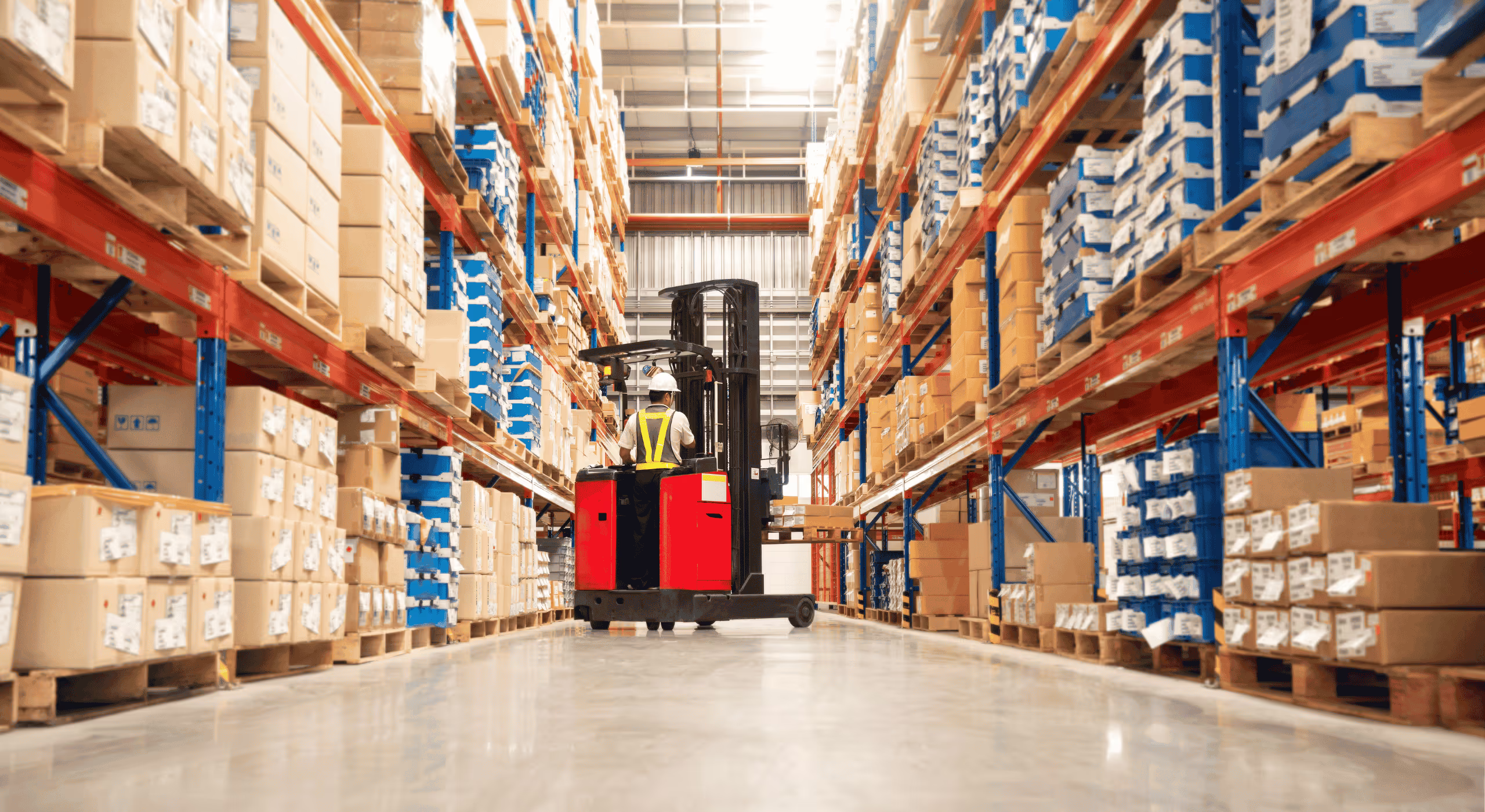
The equipment’s use, age, condition and seller help shape the financing conversation.
Commercial vehicles, trailers and fleet purchases.
Explore truck & trailer financing →Machinery for construction and other equipment-intensive operations.
Explore heavy equipment financing →Equipment purchases and specialised rental options for hospitality businesses.
Explore restaurant equipment / rent-try-buy →Replacing a failed forklift is a different decision from adding an untested production line. Explain why the asset is needed, how long it should remain useful and what work will support the payments. That context helps compare a loan, a lease or another structure. A product label or a low monthly figure should not replace an assessment of the asset’s role in the business.
A business intending to retain equipment for its full working life should examine the total cost of ownership. A business that expects to replace it sooner should examine the conditions and cost of changing or returning it. Leases do not automatically provide unrestricted upgrades, and loans do not remove the need to settle security before a sale. The written terms determine those rights and obligations.
If you already own the equipment, refinancing or sale-leaseback may be more relevant than financing a new purchase. These transactions can change payments, security or ownership and should be assessed separately. For an asset needing major work, compare repair with replacement before choosing the financing route. The right starting point is the business need, not simply which product can provide cash.
Prepare an itemized quote with the asset’s make, model, condition and seller details. Include serial numbers and hours or mileage where available. Dealer, private-sale and auction purchases can have different documentation and settlement requirements. Confirm ownership and existing claims before making an unconditional commitment. Financing approval does not substitute for inspecting the equipment or checking that it meets the operational requirements of the job.
Freight, installation, training, attachments and warranties can materially change the cash needed before the equipment works. Ask which costs may be financed and which must be paid separately. Also budget for insurance and maintenance after delivery. A financing amount matching the advertised equipment price may still leave a gap if the wider project has not been costed.
A newer business can explain industry experience, the operating plan and any supporting work arrangements. An established business can show historical performance and the reason for adding or replacing capacity. Neither is guaranteed a particular outcome. Prepare a realistic forecast with slower receipts or delayed installation so the payment discussion reflects the actual business rather than only the expected best case.
Compare upfront amounts, scheduled payments, fees and any final purchase or residual amount. A lower regular payment may result from a longer commitment or larger final obligation. Ask how early settlement works and what happens if the asset must be replaced sooner. The most useful comparison follows the same expected period of use and ownership intention for each proposal.
Equipment creates costs beyond financing: operators, fuel or power, service, insurance and downtime can all affect cash flow. Include existing debt and the time customers take to pay. If the asset supports seasonal work, review the full annual pattern. Any seasonal payment arrangement remains subject to the specific proposal and should not be assumed from the industry or the asset type.
Mehmi serves businesses in Canada and the USA. Identify the legal entity, province or state, equipment location and invoice currency so the correct options can be considered. Cross-border purchases may involve additional costs and documentation. Tax and accounting consequences also depend on the business and agreement, so ask the appropriate adviser to review the actual transaction rather than relying on a general financing description.
Use this checklist to compare actual proposals for the same asset and period of use. It does not establish that a particular structure is available or cheaper. Record the answer to each question, including amounts still payable at the end, so the comparison reflects the complete commitment rather than a selected monthly figure.
Relevant equipment can include Bobcat, Rational, Hobart, Volvo. These links provide equipment context; brands are examples, not partners or endorsements. Eligibility depends on the specific asset, condition, seller and financing review.
For a dealer quote, ask for a clear equipment specification and itemized extras. For an auction or private seller, clarify ownership, inspection and payment conditions before committing. An equipment page or brand listing is not a pre-approval for a particular purchase. Keep the intended location, currency and operating purpose consistent across the quote and application so the review addresses the real transaction.
Bring the supplier quote and timing. Include costs that might sit outside the equipment price.
| Purchase details | Operating considerations | Financing questions |
|---|---|---|
| Make, model, year, condition, seller and delivery date. | Attachments, transport, installation, insurance and maintenance. | Payment, term, fees, security, early exit and end-of-term obligations. |
Find guidance for your sector and how your business operates.
9 industries · Swipe, scroll or choose a group below.
Explore financing considerations for carriers, logistics businesses and freight operations.
Explore industry →Plan around project costs, contract timing and day-to-day business needs.
Explore industry →Explore financing for production, order cycles and wholesale operations.
Explore industry →Consider seasonal cash flow, operating needs and long-term farm investment.
Explore industry →Explore financing for food-service businesses, hospitality operations and growth.
Explore industry →Plan financing around practice operations, patient services and business expansion.
Explore industry →Explore financing considerations for project delivery, hiring and growth.
Explore industry →Consider contract cycles, operating requirements and investment in resource businesses.
Explore industry →Explore financing considerations for commercial aviation and marine operations.
Explore industry →A lower monthly payment is only one part of the decision. Compare ownership, remaining cash, end-of-term obligations and applicable taxes side by side.
| Decision | Lease | Loan | Cash purchase |
|---|---|---|---|
| Ownership | Use the asset under a lease. Ownership at the end depends on the agreement and purchase option. | Purchase the asset, normally subject to security until obligations are met. | Purchase the asset outright; existing liens and title still need checking. |
| Main advantage | Spread access costs and choose an end-of-term structure that suits the asset’s use. | Spread the purchase cost while planning for long-term ownership. | Avoid financing charges and recurring finance payments. |
| Main trade-off | Total rentals, buyout, return conditions and early termination can make the full cost higher than expected. | Debt service, security and any guarantees reduce financial flexibility. | A large upfront outlay leaves less liquidity for payroll, stock and repairs. |
| Upfront cash | May include deposits, advance rentals, fees and applicable taxes. | May include a down payment, fees and purchase taxes not financed. | Full purchase price, applicable taxes and transaction costs are paid from available funds. |
| Canada: possible income-tax treatment | Eligible business lease costs may be deductible, subject to the actual agreement and applicable limits. | Qualifying ownership costs may be recovered through CCA; eligible interest may be deductible. Principal repayment is not itself an expense deduction. | Qualifying capital equipment is generally considered under CCA rules rather than treating the cash payment as an automatic expense deduction. |
| USA: possible income-tax treatment | A true lease may allow rent deductions. A conditional sale is treated as a purchase, regardless of the lease label. | Eligible owners may claim depreciation and eligible interest deductions, subject to tax rules. | Eligible owners may claim depreciation. Paying cash does not itself determine an immediate write-off. |
| When purchase or rental taxes arise | Canada: GST/HST generally follows taxable lease payments as due or paid; a buyout can be a separate taxable purchase. USA: state rules may tax rentals or the purchase price. | Applicable purchase taxes generally arise on the sale under local rules, even if their cost is financed. Financing changes the cash schedule, not automatically the tax event. | Applicable purchase taxes generally arise on the sale under local rules. Registration, exemptions and asset use can affect the result. |
| Best question to ask | What will I owe if I return, buy, renew or exit early? | Can the business carry repayments through a slower season, and what remains at maturity? | What cash reserve remains after the purchase and tax outlay? |
Tax benefits are potential deductions or credits, not a guarantee that an option costs less. In Canada, eligible GST/HST registrants may recover tax through input tax credits when the requirements are met; provincial sales taxes can work differently. U.S. sales/use tax varies by state and asset, including special vehicle rules. Confirm the invoice, tax due dates and any exemption with your accountant before signing.
Income-tax deductions and sales taxes are separate calculations. Ask for an after-tax comparison using the same equipment price, holding period, residual assumption and business-use percentage. Do not compare a lease payment excluding tax with a cash price including tax.
Tax references: CRA input tax credits; CRA capital cost allowance; IRS lease or conditional sale; California lease-tax example. General education; treatment depends on the transaction.
Supply the age, condition, usage and seller details. Eligibility depends on the asset and lender.
They can both involve equipment already owned, but the ownership and contract arrangements differ. Ask your financing contact to explain the proposed structure.
It is a specialised program. Confirm eligible equipment, rental conditions and purchase options for the specific request.
Mehmi accepts financing enquiries from businesses in Canada and the United States. Include your province or state, business activity and transaction currency. Available structures and requirements vary by location and request.
Compare the total amount payable, upfront cash, payment frequency, security, personal guarantees and early-settlement terms. Check what happens at the end of the agreement and whether the payments remain manageable in a slower month.
Describe the equipment purchase and operating budget separately. An equipment agreement may cover approved purchase-related costs, while payroll, inventory or other operating needs may require working capital financing. Confirm the permitted use of each facility.
CANADIAN FINANCING GUIDE
Review asset condition, seller information and the documents needed for a used-equipment request.
Read article →CANADIAN FINANCING GUIDE
Prepare the equipment details and business records for a heavy-equipment financing review.
Read article →Start with the country where your business operates and where the equipment or funds will be used. Product availability and documentation requirements vary by location; a program available in one country may not be available in the other.
Identify the province or territory, business registration and proposed transaction currency. Confirm any provincial requirements and applicable taxes in the written proposal.
Identify the state, business entity and proposed transaction currency. Confirm program availability, supporting documents and any state-specific requirements before committing.
Review the payment and title-transfer conditions of an equipment purchase arrangement.
Explore conditional sales contracts →Explore business borrowing supported by eligible equipment, receivables or inventory.
Explore asset-based lending →Assess a repair estimate alongside the value and useful life of the equipment.
Explore repair and maintenance financing →Tell us what you’re planning, where your business operates and when you need to move forward.
Financing is subject to application review and approval. Availability, terms, costs and documentation requirements vary by product, business and location. Information on this page is general and does not constitute a financing offer.
Related resources:Daycare & Childcare Facility Financing Canada.