

Waiting on customer payments can squeeze cash needed for payroll, fuel or materials. Invoice factoring can turn eligible unpaid invoices into working capital; here are six providers and financing paths to compare, starting with Mehmi Financial Group.
We analyzed 41 comments and questions from Reddit, Quora and YouTube about invoice factoring and found that 39% mentioned the mechanics of invoice factoring.
1. Mehmi Financial Group
Mehmi Financial Group is a Canadian business financing brokerage that helps you compare lending options, prepare an application and connect with suitable lenders. Its invoice and vendor financing programs serve businesses in Canada, the United States, the United Kingdom and Australia.

This can suit a business that wants help assessing more than one route to cash flow support. We can help you frame a request around your invoices, payment cycle and operating needs, then prepare the information a lender may ask to review. Each lender sets its own terms, and any financing is subject to review and approval.
Factoring usually means selling eligible invoices to a provider, while other receivables financing may be structured as borrowing against them. The distinction affects who owns the receivable and how repayment works. If you're comparing invoice-based options, our invoice and freight receivables financing options explain the service we help arrange.
For a Canadian business billing customers in more than one country, location matters. Mehmi Financial Group works with businesses in four markets, which may be worth discussing if your customers or operations cross borders. A financing partner still needs to confirm that your specific invoices and business fit its program.
That cross-border angle can apply to digital businesses too. A business with receivables tied to app sales may want to review the details in our Apple App Store receivables financing overview when considering how customer location affects a request.
2. Riviera Finance: Established Receivables Financing Experience
Riviera Finance is an invoice factoring and accounts receivable financing company serving businesses in Canada and the United States since 1969. Its Canadian offices are in Mississauga, Calgary and Laval, and its Toronto office supports businesses in Central and Eastern Canada.
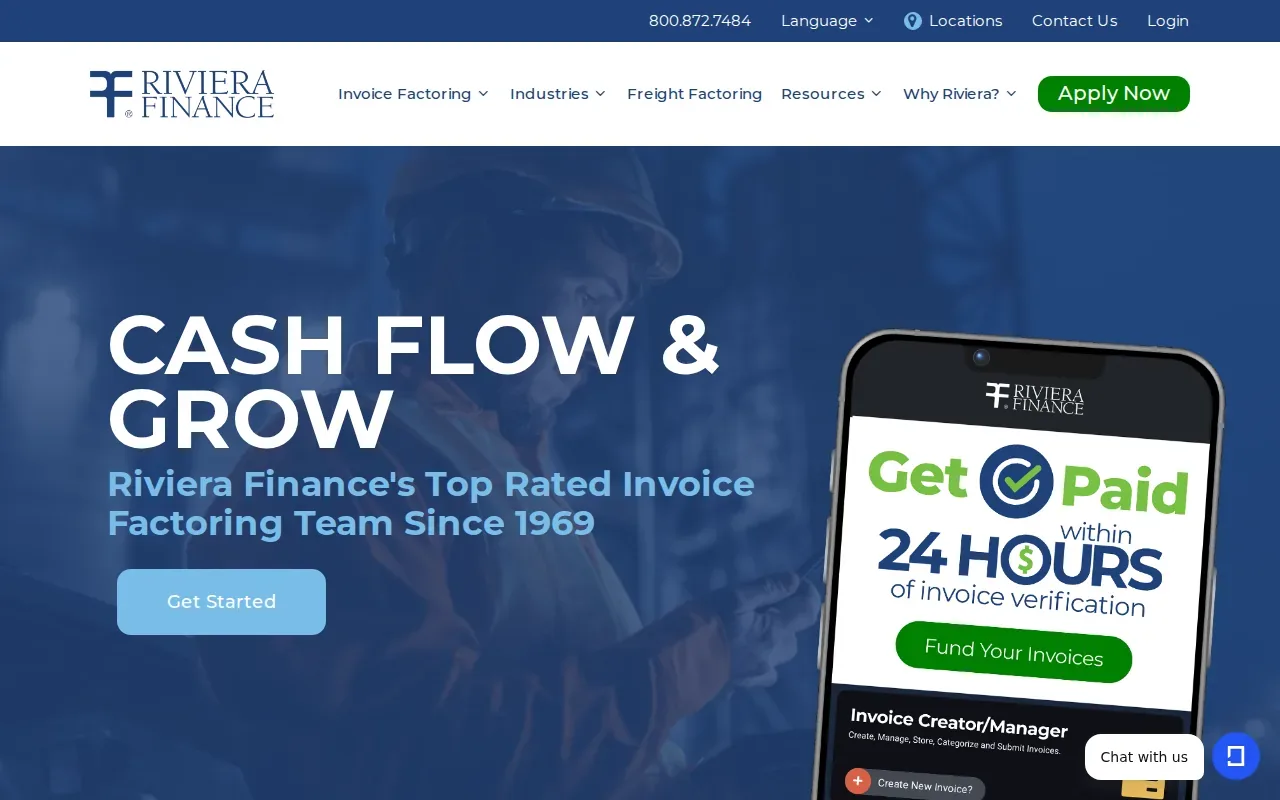
Riviera may be worth considering if your business wants an established provider with local Canadian offices. Its Canadian service information describes invoice factoring, freight factoring, accounts receivable finance and other working capital services. The company also says businesses can select which invoices to factor, which may help if you only need to fund selected receivables rather than every invoice.
Riviera describes its factoring as non-recourse and says it takes the credit risk on invoices it factors. In general, non-recourse terms can shift specified customer insolvency risk to the provider. Read the contract carefully: the exact protection depends on the written terms and may not cover a dispute about the work or invoice.
Ask how the provider handles customer contact and collections before you sign. If a customer pays the factor directly, your accounts team should know where to direct payment questions and how to reconcile the transaction. That handoff matters when a long-standing customer expects to deal with your staff.
Riviera's focus on receivables may suit a business with completed work and creditworthy business customers. It is less useful to assume that an invoice alone decides eligibility. Share the customer list, invoice terms and any known disputes when requesting a review.
3. 1st Commercial Credit: A Canada-Focused Factoring Option
1st Commercial Credit provides invoice factoring and accounts receivable financing in Canada. It was established in 2001, began serving Canada in 2019 from Toronto and expanded its stated service reach to Quebec in 2024.

It may fit a business that wants to compare receivables funding with other trade finance needs. Its services include funding for Canadian businesses with cash flow needs, as well as programs connected with freight and government contracts. A company that pays drivers or suppliers before its customer pays may want to ask how its particular invoices would be assessed.
Factoring and receivables financing are related, but they aren't always the same transaction. In factoring, the provider purchases invoices and may collect payment from your customer. In a borrowing arrangement, your business may remain responsible for the debt while using receivables as security. The agreement should say who owns the invoice and who must repay if the customer pays late.
Before you send an application, map the cash timing for one real job. Note when you issue the invoice, when payroll or supplier bills fall due, and when the customer usually pays. This helps a provider see whether the gap is short-term or part of a recurring working capital need.
Ask for the full fee schedule and written terms for collections, reserves and invoice eligibility. If a customer disputes a bill, the provider may handle it differently from a routine late payment. Get that process in writing rather than assuming a factoring agreement removes your role in resolving service or delivery issues.
4. JD Factors: A Longstanding Canadian Receivables Finance Provider
JD Factors has supported businesses in Canada and North America since 1989. Its focus includes non-recourse factoring, with Canadian offices in Calgary, Mississauga and Pointe-Claire.

Its reported industry focus includes transportation, manufacturing, staffing, oil and gas, and wholesale. These businesses often issue invoices before they receive payment, while costs such as wages or materials arrive on a different schedule. If that timing gap is the main problem, compare how each provider treats your customer base and invoice terms.
JD Factors describes its pricing as transparent. That doesn't replace a quote tied to your own invoices. Ask for the discount rate and any other charges in writing, then compare the total cost over the expected time until the customer pays.
Clarify what “non-recourse” means in the agreement. Ask which events are covered and what happens if a customer disputes an invoice, claims the work was incomplete or pays outside the agreed terms. A promise about customer insolvency risk doesn't automatically settle every payment problem.
Staffing firms may have a different invoice pattern from wholesalers. A staffing company can pay workers on a regular schedule while clients use longer payment terms. A wholesaler may need cash to restock before a buyer's invoice clears. Share these details up front so the proposed facility matches the actual cash cycle.
JD Factors is one option to put on a Canadian shortlist if non-recourse terms matter to you. Compare its written coverage against your customer contracts, not just the label used to describe the service.
5. Accord Financial: Financing for Small and Midsized Businesses
Accord Financial is a business financing provider established in 1978. Since 2021, Accord Financial has lent CA$250 million to more than 1,500 small businesses in Canada. Its financing work can include receivables, inventory and equipment, along with other business needs.

This broader scope may suit a company whose cash pressure isn't limited to invoices. For example, a manufacturer might need working capital while it waits for a buyer to pay, but also face a separate need to finance inventory or equipment. Ask whether a receivables facility can address the invoice gap without tying it to a different financing request.
Accord is also described as serving businesses in Canada and the United States. If your business has cross-border customers, ask which receivables are eligible and how currency, customer location and payment routing affect the proposed terms. Don't assume that a provider's broader market reach means every invoice qualifies.
A financing request can become harder to compare when several needs are bundled together. Ask the provider to set out the amount tied to receivables separately from any inventory or equipment financing. Then you can compare each payment obligation with the cash flow it is meant to support.
If a bank has declined a request, that doesn't tell you whether a receivables-based option will fit. The business still needs to show the invoices and explain its cash cycle. Our page on receivables financing after a bank decline describes how a business can think through that next conversation.
6. eCapital: A Broad-Industry Option to Verify for Canadian Availability
eCapital provides invoice factoring and working capital financing for a range of industries. Its supplied company information says it has funded more than $10 billion in working capital since 1999. Separate information describes Canadian financing activity, including a facility for a Canada-based energy staffing company.

That makes eCapital a candidate to ask about if your business operates in a sector such as staffing or transportation and has complex cash timing. The provider describes invoice factoring as a way to sell unpaid invoices for an advance, followed by customer payment to the factor and release of the remaining balance after fees.
Before moving forward, confirm that the exact service is available to your business in Canada. Ask whether your customer type, province, invoice currency and contract structure fit the program under review. A provider's general North American reach does not confirm that every program is open to every Canadian company.
Also ask how the provider handles customer collections and account access. A service that takes over collection can reduce some internal work, but it changes how payment questions move between your customer, your team and the factor. Decide who will handle disputes and who will tell customers where to pay.
eCapital's broad industry reach may be useful for a business that needs a tailored review. Compare the proposed advance, reserve, fees and recourse terms with the same details from other providers. The headline amount alone won't tell you what cash will land in your account or when the reserve will be released.
What to compare before you choose
The right provider depends on the invoice, your customer and the timing of your bills. Start with a single recent invoice and trace the cash from issue date to customer payment. That small exercise can expose costs or delays that a headline advance rate won't show.
Understand the transaction and cash flow
In a common factoring arrangement, your business submits an unpaid invoice for review. The factor verifies it and may advance part of its value. The remainder is held as a reserve. After the customer pays, the factor deducts the agreed charges and releases any balance due to your business.
Terms vary. Confirm the advance percentage, reserve method, fee calculation and payment timing. Ask whether there are minimum volume rules, contract length requirements, notice periods or charges for ending the arrangement. The written agreement should explain these points clearly.
Factoring can bring cash forward, but it has a cost. Compare the total amount you receive with the invoice value, not just the initial advance. A fee that grows with the time a customer takes to pay can cost more when invoices stay open longer than expected.
To test a sample transaction, use our invoice factoring calculator as a planning aid. Treat any result as an estimate based on your inputs, then ask the provider for a quote and written fee terms. A calculator cannot confirm eligibility or replace the contract.
Our overview of how factoring fees work can help you prepare questions about discount rates, service charges and other costs.
Compare the alternatives
A business line of credit may offer reusable borrowing room, subject to its limit and terms. A term loan gives you a set amount to repay over an agreed schedule. Factoring instead relies on eligible invoices and customer payment. These products solve different cash flow problems, so compare the full cost and repayment duties.
A merchant cash advance may use a different repayment method and fee structure. Don't compare only the amount deposited. Check the total repayment, how often payments are taken and what happens to day-to-day cash flow while the balance is being repaid.
Factoring can reduce the wait for cash, but it doesn't make an invoice dispute disappear. It can also change your customer relationship if the factor contacts customers or collects payment. Tell customers about any payment process change in a clear, timely way.
Check documents, records and reporting
Prepare a receivables list, sample invoices, customer payment history and a short note on any overdue or disputed accounts. A provider may also ask for business financial records. Organized business records can help support tax reporting and financial reviews.
Ask your accountant how the proposed transaction should be recorded in your financial statements and what tax treatment applies to your circumstances. Accounting treatment can depend on the contract and applicable standards. Don't assume every sale of receivables is recorded the same way as a loan.
For a Canadian business, check the governing agreement and ask a qualified adviser about any province-specific requirements that affect the transaction. Make sure the contract states who owns each receivable, what happens after a dispute and which party bears customer non-payment risk.
Frequently asked questions
What is invoice factoring?
Invoice factoring is a financing arrangement where a business sells eligible unpaid invoices to a factor for cash. The factor may advance part of the invoice value, then collect payment from the customer. After the customer pays, the factor deducts agreed fees and releases any remaining reserve. Read the agreement to confirm who owns the receivable and which risks stay with your business. Wikipedia's overview of factoring also describes the basic concept.
How does the factoring process work?
The process usually starts when you submit an invoice and supporting details for review. If it qualifies, the provider advances an agreed portion and holds a reserve. Your customer pays according to the invoice terms, often to the factor. The factor deducts fees and sends any remaining balance to your business. The exact steps depend on your contract.
Can I factor recurring invoices?
Recurring invoices may be eligible if they meet the provider's rules and come from customers it accepts. Ask whether you can choose specific invoices or must submit a set share of your receivables. Also confirm how the agreement treats recurring work, customer concentration and invoices that are disputed or paid late.
What happens if a customer disputes an invoice?
A disputed invoice can delay or change funding because the factor needs to know whether the customer owes the amount. Your contract should explain who manages the dispute and whether your business must repay an advance. Share known disputes before applying, and keep records of the work, delivery and customer communication.
Does factoring affect my credit or financial statements?
Factoring doesn't work exactly like a standard term loan, but its effect on credit and financial reporting depends on the contract and your business's situation. Ask the provider whether it checks business or customer credit, and speak with your accountant about recording the transaction. Keep the agreement and related payment records with your books.
Conclusion
If you want help comparing invoice-based financing across markets, start with Mehmi Financial Group and share a recent invoice plus your expected cash timing. We can help prepare the request and compare suitable lender options, subject to review and approval.