
Quick answer: A reefer trailer sale-leaseback can potentially allow an established trucking company in Marietta, Cobb County, or the greater Atlanta area to convert equity in qualifying refrigerated trailers into cash while continuing to use the same equipment in daily operations.
Financing options to compare
| Option | Best suited for | Repayment structure | What to compare |
|---|---|---|---|
| Equipment loan | Businesses planning to own the asset | Fixed scheduled payments | Down payment, term, fees, lien, prepayment |
| Equipment lease | Businesses prioritizing payment flexibility | Scheduled lease payments | End-of-term option, residual, fees, buyout |
| Business line of credit | Smaller recurring purchases or deposits | Revolving balance | Draw limits, interest, renewal, security |
Terms, eligibility and costs vary by lender and borrower profile. Compare the full financing agreement rather than relying on a single payment or rate.
Quick answer: Own paid-off reefer trailers in Marietta, GA? A sale-leaseback may convert trailer equity into working capital without taking the equipment out of service. Learn eligibility, valuation, documents, and common decline reasons.
If your trucking company owns paid-off refrigerated trailers, you may already have a source of business capital sitting in your yard.
That can be useful when the business needs capital for:
- Truck or trailer repairs
- Insurance renewals
- Fuel and payroll
- Driver recruitment
- Adding another tractor or trailer
- Paying down higher-cost business debt
- Bridging slow customer payments
- Contract mobilization
- Seasonal cash-flow needs
- Building an emergency operating reserve
The key distinction is that you are not selling the trailer because you no longer need it. The transaction is structured so the financing company acquires an eligible asset and leases it back to your business, subject to the lender's documentation, credit and collateral requirements.
For the right established trucking company, this can provide another way to access capital without immediately disposing of productive equipment.
The U.S. Small Business Administration’s equipment guidance explains why the details of a lease matter.
“Every lease can be structured differently”
Read the purchase or return option, payment schedule and early-exit terms before comparing the proposed lease with a financed purchase.
Why Sale-Leaseback Can Make Sense for Marietta Trucking Companies
Marietta sits inside a major transportation and distribution market.
Cobb County describes itself as a logistical hub with access to I-75, I-285, I-85 and I-20, along with regional airports, rail and ports. SelectCobb's 2025 economic-development report also identified logistics and supply chain among its project-win industries, with the Marietta/Smyrna area accounting for 26% of active projects at year-end. (SelectCobb)
That matters for trucking businesses because a refrigerated trailer isn't merely an accounting asset. It may be producing revenue every week moving grocery, produce, frozen food, beverage, pharmaceutical or other temperature-controlled freight through Georgia and the Southeast.

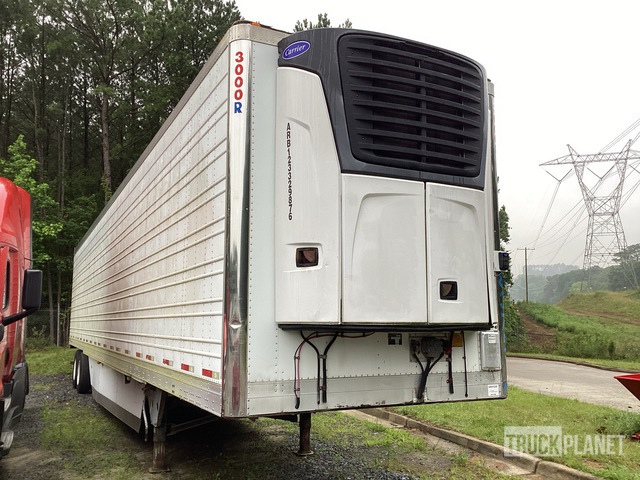

If you own that equipment outright, a sale-leaseback may allow you to unlock part of its value while keeping the trailer working.
What Is a Reefer Trailer Sale-Leaseback?
A sale-leaseback generally has two parts:
1. Your business sells qualifying equipment to a financing company.
2. The financing company leases that equipment back to your business.
Your company continues operating the trailer, but the ownership and financing structure changes according to the transaction documents.
This is different from simply selling the reefer trailer to another trucking company because the objective is to retain use of the asset while releasing capital tied up in it.
Simple example
Imagine a Marietta carrier owns:
- Four refrigerated trailers
- No liens on the trailers
- Established operating history
- Active customer contracts
- Consistent business deposits
Instead of selling one trailer and reducing fleet capacity, the carrier could ask a financing provider to evaluate those trailers for a sale-leaseback.
If approved, cash is released based on the lender-supported value and transaction structure, while the carrier continues using the trailers and makes scheduled lease payments.
The amount of cash available is not automatically equal to what the company originally paid for the trailers.
That distinction is important.
How Much Cash Can You Pull Out of a Reefer Trailer?
This is usually one of the first questions a trucking company asks.
The answer depends heavily on current collateral value.
A lender may evaluate factors such as:
- Trailer year
- Manufacturer
- Model
- VIN
- Current market value
- Wholesale or liquidation value
- Overall trailer condition
- Reefer unit make and model
- Reefer unit operating hours
- Maintenance history
- Tire and brake condition
- Structural damage
- Current ownership
- Existing liens
- Geographic location
- Ease of remarketing the equipment
The financing company may determine an eligible value and then apply its maximum advance or financing percentage to that number.
Think of it this way:
Eligible trailer value × lender advance = potential gross financing
Then subtract, where applicable:
Existing lien payoff + transaction costs = estimated net cash to business
The value used by the lender may be lower than retail asking prices you see online.
A carrier saying, "I could sell this trailer for $70,000," does not automatically mean a lender will use $70,000 as its collateral value.
What Reefer Trailers Are Stronger Candidates?
Marketable equipment generally creates a stronger sale-leaseback opportunity than highly specialized or difficult-to-resell equipment.
A financing provider may look more favorably at established commercial trailer manufacturers such as:
- Utility
- Great Dane
- Wabash
- Hyundai Translead
- Vanguard
- Stoughton
- Other established commercial manufacturers
The refrigeration unit matters too.
Common reefer systems from manufacturers such as Thermo King and Carrier can be easier to understand and value because there is an established service and secondary market.
But the brand alone does not determine eligibility.
A lender still wants to understand:
How old is it?
How many hours are on the refrigeration unit?
Does it run properly?
Is the box structurally sound?
Is the title clean?
Is there meaningful resale value left?
Trailer Age and Reefer Hours Matter
A refrigerated trailer is really two pieces of collateral being evaluated together:
The trailer
The lender may review:
- Model year
- Floor
- Roof
- Walls
- Doors
- Suspension
- Tires
- Brakes
- Landing gear
- Structural condition
- Evidence of accidents or damage
The refrigeration unit
The lender may review:
- Thermo King or Carrier model
- Unit year
- Engine hours
- Maintenance records
- Current operation
- Recent repairs
- Remaining useful life
An attractive 53-foot trailer with a failing refrigeration unit is not equivalent to the same trailer with a properly maintained low-hour unit.
For sale-leaseback underwriting, condition can matter nearly as much as age.
Can You Do a Sale-Leaseback on Older Reefer Trailers?
Potentially.
There is rarely a meaningful answer based solely on model year.
An older refrigerated trailer with:
- Good structural condition
- Functional reefer
- Reasonable hours
- Strong maintenance
- Clean title
- Established manufacturer
- Active commercial use
may be more financeable than a newer trailer with significant damage or mechanical problems.
However, lenders generally need enough remaining useful life and collateral value to justify the requested financing term.
The older the trailer becomes, the more likely the lender is to scrutinize:
- Equipment value
- Reefer hours
- Maintenance
- Inspection
- Term length
- Downside liquidation value
Paid-Off Reefer Trailer vs Trailer With an Existing Loan
These are two different transactions.
Paid-Off Reefer Trailer
This is generally the cleaner sale-leaseback scenario.
You own the equipment free and clear and are asking a lender to release some of the equity.
You'll normally need to demonstrate clear ownership.
Reefer Trailer With an Existing Loan
There may still be options, but the lender needs to account for the existing lien.
Depending on the structure, the transaction might look more like an:
equipment refinance
or
cash-out refinance
rather than a straightforward sale-leaseback.
The existing lender will typically need to provide a payoff amount, and the new transaction must leave enough collateral value after that payoff to make the deal worthwhile.
For example:
Eligible financing amount: $50,000
Existing payoff: $38,000
That transaction has very different economics from:
Eligible financing amount: $50,000
Existing payoff: $0
The second scenario creates substantially more potential net liquidity.
Clean Title Is Critical
Ownership documentation matters considerably on trailer equity transactions.
Georgia states that trailers weighing 2,000 pounds or less do not require a title, meaning ordinary commercial semi-trailers above that threshold are generally within Georgia's titling framework. Georgia's official bill-of-sale guidance specifically addresses trailers weighing 2,001 pounds or more. (Department of Revenue)
For a typical commercial reefer trailer, expect the lender to verify:
- Legal owner
- VIN
- Title state
- Existing liens
- Lien releases
- Registration
- Business ownership
If an old lender still appears on the title even though the loan was paid years ago, that issue may need to be resolved before funding.
A lender cannot comfortably advance against collateral when ownership is unclear.
What If the Trailer Is Registered in Georgia?
Georgia says titles for commercial vehicles are handled through the county tag office where the business is located. Georgia also provides separate procedures for interstate commercial vehicle registration through its Trucking Portal when applicable. (Department of Revenue)
A sale-leaseback can therefore involve title and registration work in addition to the financing agreement.
For leased vehicles, Georgia directs registration to the applicable local county tag office, while qualifying interstate commercial operations use the state's IRP procedures. (Department of Revenue)
Your financing provider will determine the exact title, ownership and lien process required for the transaction.
What Does the Lender Review About the Business?
A strong trailer does not automatically create an approval.
The lender is generally evaluating both the collateral and the company expected to make the payments.
Expect questions about:
Time in business
An established carrier generally has more operating history for an underwriter to evaluate.
Business revenue
The lender wants to understand whether the trucking company is generating enough revenue to support existing obligations plus the proposed new lease payment.
Bank activity
Recent bank statements may show:
- Deposits
- Average balances
- NSFs
- Overdrafts
- Existing loan withdrawals
- Revenue consistency
Credit
Business and guarantor credit may influence:
- Approval
- Pricing
- Advance
- Term
- Required documentation
Existing debt
The lender may review:
- Truck payments
- Trailer payments
- Merchant cash advances
- Business loans
- Factoring
- Lines of credit
- Tax obligations
Fleet size
A company with ten tractors and twelve trailers presents a different risk profile from an owner-operator trying to monetize the only trailer required to generate revenue.
Documents to Prepare Before Applying
If you want a faster answer on a reefer trailer sale-leaseback, prepare the transaction before sending it to underwriting.
Business documents
Have available:
- Completed commercial credit application
- Business legal name
- EIN
- Business address
- Ownership information
- Recent business bank statements
- Business financials if requested
- Tax returns if requested
- Current debt schedule if requested
Trailer documents
For each reefer trailer:
- Year
- Make
- Model
- VIN
- Current title
- Registration
- Purchase documentation if available
- Current photographs
- Reefer manufacturer
- Reefer model
- Reefer serial number
- Reefer hours
- Maintenance records if available
- Current equipment location
If money is still owed
Also provide:
- Current lender
- Account number
- Approximate balance
- Formal payoff statement when requested
A complete package helps an underwriter determine whether there is actually enough equity to proceed.
Photos That Can Help Underwriting
Do not submit only one photograph from 20 feet away.
For a meaningful collateral review, consider providing:
- Front of trailer
- Rear doors
- Driver's side
- Passenger side
- Reefer unit
- Reefer hour meter
- VIN/data plate
- Interior
- Floor
- Tires
- Landing gear
- Any visible damage
If there is damage, show it.
Trying to hide equipment condition can create problems later when an inspection or appraisal reveals it.
Can You Sale-Leaseback an Entire Reefer Fleet?
Potentially.
In fact, multiple trailers can sometimes create a more meaningful financing opportunity than attempting to finance one relatively low-value asset.
For example, a Marietta-area carrier could ask a lender to evaluate:
3 Utility reefers + 2 Great Dane reefers + 2 Wabash reefers
as one collateral package.
The lender can then evaluate:
- Each VIN
- Each equipment value
- Overall fleet condition
- Total eligible collateral
- Business cash flow
- Requested funding amount
This can be particularly relevant for a business seeking meaningful working capital rather than a small cash injection.
Can the Tractors Be Included Too?
Possibly.
A business might own:
- Freightliner Cascadias
- Volvo VNLs
- Peterbilt 579s
- Kenworth T680s
- Reefer trailers
If there is sufficient equity in multiple qualifying assets, an equipment refinance or sale-leaseback package may potentially include more than just trailers.
That can create a larger collateral pool.
But each VIN should be reviewed individually.
A company saying "our fleet is worth $1 million" is not enough for underwriting.
The lender needs to know exactly what comprises the $1 million.
What Can the Cash Be Used For?
Depending on the lender and structure, released equity may potentially support legitimate business purposes such as:
Repairs
Engine work, transmission repairs, reefer repairs, DPF problems and other major maintenance can create sudden cash requirements.
Working capital
Use liquidity to support payroll, dispatch, insurance, fuel, tolls and ordinary operating costs.
Growth
A trucking company may need cash for hiring drivers, deposits or additional equipment when taking on new lanes or contracts.
Receivable gaps
Some shippers and brokers do not pay immediately. Equity financing can potentially provide liquidity while invoices remain outstanding.
Debt restructuring
Some businesses use equipment equity to replace shorter-term or more expensive obligations with a structure better aligned with the useful life of the collateral.
Whether a particular use is permitted depends on the lender.
Sale-Leaseback vs Selling the Trailer
These solve completely different problems.
Sell the TrailerSale-LeasebackReceive cashReceive cash if approvedTrailer leaves your fleetTrailer remains in operationNo future equipment paymentNew lease payment is createdLose future earning capacity from that trailerRetain use of the equipmentMay reduce fleet sizeFleet capacity can remain intact
If you no longer need a trailer, simply selling it may make more sense.
If the trailer is essential to producing revenue, a sale-leaseback may be worth evaluating.
Sale-Leaseback vs Unsecured Business Loan
An equipment-backed transaction and an unsecured loan are underwritten differently.
With an unsecured working-capital loan, the lender relies heavily on:
- Cash flow
- Credit
- Business performance
With an equipment-backed transaction, the lender also has identifiable collateral.
That does not mean credit or cash flow becomes irrelevant.
It means the trailer itself becomes an important part of the underwriting decision.
For trucking companies with substantial paid-off equipment, it can be worth evaluating the assets before immediately choosing expensive short-term unsecured financing.
Sale-Leaseback vs Factoring
Factoring monetizes accounts receivable.
Sale-leaseback monetizes equipment equity.
A refrigerated carrier may potentially have both.
For example:
Factoring: Turns unpaid customer invoices into faster cash.
Sale-leaseback: Turns owned trailers into capital.
The right solution depends on what is causing the working-capital requirement.
If the problem is a consistent 30–60 day payment cycle from customers, factoring may address the root cause more directly.
If the company has valuable paid-off equipment and needs a larger amount of capital for expansion or restructuring, equipment equity may be worth examining.
Why Reefer Trailer Sale-Leasebacks Get Declined
Knowing what can kill the deal before applying is valuable.
1. Not Enough Equity
The biggest issue can be simple mathematics.
If the lender-supported equipment value is $45,000 and you owe $43,000, there may not be enough equity to generate useful proceeds.
2. Trailer Is Too Old or Difficult to Resell
A lender needs an exit if something goes wrong.
Very old, specialized, damaged or poorly maintained assets may not provide sufficient collateral support.
3. High Reefer Hours
An aging refrigeration unit with extreme operating hours can reduce the collateral value substantially.
4. Title Problems
Common problems include:
- Title not in business name
- Existing lien never released
- VIN mismatch
- Missing title
- Ownership recently transferred
- Equipment belongs to another entity
These issues should be resolved early.
5. Trailer Doesn't Run
A "reefer trailer" whose refrigeration unit needs a $15,000 replacement may not be valued as a fully operational refrigerated trailer.
6. Business Cannot Support the New Payment
Equipment equity can help secure financing, but the company still needs a realistic repayment source.
7. Excessive Existing Debt
A company already carrying substantial short-term debt may have insufficient free cash flow for another obligation.
8. Recent Startup
A newly formed carrier with limited operating history may face more restrictive financing options even if an owner contributes equipment.
9. Unverifiable Equipment Value
An asking price from a marketplace listing is not necessarily a professional valuation.
The lender may require:
- Comparable sales
- Desktop valuation
- Inspection
- Appraisal
depending on the deal.
Is a Personal Guarantee Required?
That depends on the lender and transaction.
Many small and middle-market equipment-finance transactions can involve personal guarantees from significant business owners.
Owning the trailer does not automatically mean the transaction is non-recourse.
If avoiding a personal guarantee is essential, disclose that requirement at the beginning rather than after an approval has already been structured.
Does Credit Still Matter If the Trailer Is Paid Off?
Yes.
A paid-off trailer can strengthen the collateral position, but lenders may still review the guarantor and business.
Credit can influence:
- Amount financed
- Rate or lease factor
- Term
- Advance
- Deposit
- Documentation requirements
Strong equipment does not erase severe credit or cash-flow problems.
Likewise, less-than-perfect credit does not automatically mean every asset-backed transaction is impossible.
The complete file matters.
How Fast Can a Reefer Sale-Leaseback Fund?
A clean transaction can move considerably more efficiently than a file with unresolved title or valuation issues.
The major steps are usually:
Application → preliminary credit review → equipment review → valuation → approval → conditions → title/lien documentation → insurance → documents → funding
Common causes of delay include:
- Missing title
- Wrong VIN
- Unknown reefer hours
- Existing lien
- Slow payoff letter
- Incomplete bank statements
- Missing insurance
- Appraisal delays
- Multiple owners
- Equipment registered to another entity
If speed matters, prepare the collateral package before submitting the deal.
Does the Business Need Insurance?
Expect insurance requirements.
The lender or leasing company will generally want the equipment appropriately insured and may require itself to be shown as loss payee and/or additional insured depending on the structure.
Exact requirements should come from the financing company's documentation.
Do not cancel existing equipment coverage simply because the ownership structure is changing.
What Happens at the End of the Lease?
This depends entirely on the agreement.
Potential structures can include:
- Defined purchase option
- Residual purchase
- Fair-market-value option
- Other agreed end-of-term treatment
Do not compare sale-leaseback offers using monthly payment alone.
Review:
Amount of cash received + payment + term + fees + end-of-term obligation + total economics
Two offers with similar payments can have very different total costs.
What About Taxes?
A sale-leaseback can have tax and accounting consequences because there is an actual transfer or financing structure involving business property.
The IRS notes that whether an arrangement is treated as a lease or as a conditional sale depends on the facts and circumstances—not merely what the agreement is called. If an agreement is treated as a true lease, payments can generally be treated differently from a transaction considered a purchase/financing arrangement. (IRS)
Selling previously depreciated business equipment can also have tax consequences.
For that reason, your CPA or tax adviser should review the proposed structure before you rely on any assumed deduction or tax benefit.
Financing approval and tax treatment are separate questions.
Example: Marietta Reefer Fleet Equity Scenario
Consider an established Marietta trucking company with:
- 7 years in business
- 6 tractors
- 8 refrigerated trailers
- 5 trailers owned outright
- Good operating history
- Consistent commercial deposits
- Need for $150,000 of expansion capital
Instead of immediately applying for a $150,000 unsecured loan, the business could provide details on its five paid-off trailers.
The financing provider reviews:
- VINs
- Years
- Makes
- Reefer units
- Reefer hours
- Titles
- Photos
- Market values
- Business financial condition
Suppose the collateral supports only part of the requested amount.
The business could then evaluate whether to:
A. Complete a smaller sale-leaseback
B. Add eligible tractors to the collateral package
C. Combine equipment financing with another working-capital structure
D. Reduce the request
That's a more useful underwriting conversation than assuming paid-off equipment automatically guarantees $150,000.
Before You Apply: 60-Second Reefer Equity Checklist
A Marietta trucking company is generally worth reviewing when the answer to most of these questions is yes:
- Business has operating history
- Reefer trailers are commercially used
- Business owns the trailers
- Titles are available
- VINs match
- Equipment is operational
- Trailers have resale value
- Reefer units are functional
- There is meaningful equity
- Business deposits can support payments
- Insurance is available
- Funding will be used for a legitimate business purpose
Deal needs a closer look if:
- Trailer isn't titled to the applicant
- Large lien remains
- Reefer is non-operational
- Equipment has severe damage
- Business recently started
- Bank statements show chronic cash-flow problems
- Major tax or creditor issues exist
- Equipment location cannot be verified
- Applicant cannot provide ownership documents
Reefer Trailer Sale-Leaseback in Marietta, Georgia
For established trucking and transportation companies around Marietta, Smyrna, Kennesaw, Acworth, Cobb County and Metro Atlanta, paid-off trailers can represent more than equipment sitting on the balance sheet.
They may represent usable business equity.
A sale-leaseback can be worth evaluating when you want to:
- Keep your reefer trailers working
- Avoid selling productive fleet assets
- Release cash tied up in equipment
- Fund repairs or expansion
- Improve working-capital flexibility
- Consolidate or restructure business debt
The first question isn't simply:
"What's my trailer worth?"
The better question is:
"How much financeable equity does the lender recognize after considering the trailer, reefer unit, liens, condition and my business profile?"
That is what determines whether a sale-leaseback actually works.
Want to Know if Your Reefer Trailers Have Financeable Equity?
If you already own refrigerated trailers in Marietta or elsewhere in Georgia, start with the equipment—not a long application.
Have these six items ready:
Year + Make + VIN + Reefer Hours + Photos + Current Payoff
If the trailers are paid off, state that upfront.
From there, the transaction can be reviewed to determine whether a sale-leaseback, cash-out equipment refinance or another commercial financing structure makes the most sense.
Mehmi Financial Group helps businesses evaluate commercial equipment-financing options through financing partners. Approval, advance amount, pricing, term and structure are subject to lender criteria, credit, collateral value, documentation and availability. Not every applicant or asset will qualify.
Frequently Asked Questions
Can I get cash from a paid-off reefer trailer in Marietta, GA?
Potentially. A lender may evaluate the trailer's marketability, age, condition, reefer unit, operating hours, title, current value and your company's ability to support the proposed payment.
Can I keep using my trailer after a sale-leaseback?
That is generally the purpose of the transaction. The business sells eligible equipment and leases it back under the financing agreement so it can remain in operation.
Can I sale-leaseback a Great Dane or Utility reefer trailer?
Potentially. Established manufacturers can have active secondary markets, but eligibility still depends on the specific year, condition, value, refrigeration unit and borrower.
Can I refinance a reefer trailer that still has a loan?
Potentially. That may be structured as an equipment refinance or cash-out refinance.
The existing payoff must be considered when calculating available equity.
How are reefer trailer values determined?
Lenders may use market comparables, wholesale values, liquidation values, inspections or independent appraisals. Retail asking prices do not necessarily equal lender-supported collateral value.
Do Thermo King or Carrier hours matter?
Yes. The refrigeration unit is an important component of the trailer's value.
Model, age, hours, maintenance and current operating condition may all affect the lender's valuation.
Can I use the cash for truck repairs?
Potentially, depending on the financing provider's permitted use of proceeds. Repair costs are one common reason transportation companies seek working capital.
Can I sale-leaseback several trailers together?
Potentially. A fleet-level transaction can sometimes provide more meaningful collateral than a single-trailer request, provided each trailer is eligible.
Will bad credit automatically disqualify me?
Not necessarily, but credit still matters. Collateral quality, operating history, cash flow, existing debt and the requested transaction structure are also considered.
What is the fastest way to get a sale-leaseback reviewed?
Provide complete information upfront: business application, recent bank statements, title, VIN, year/make/model, reefer details and hours, photographs, equipment location and payoff information if applicable.