Highway trucks and trailers
Provide the vehicle configuration, VIN, age, mileage and maintenance history. For refrigerated trailers, include refrigeration-unit details and hours.

CANADA & UNITED STATES
Plan the vehicle purchase and the cost of putting it to work.
Apply for financing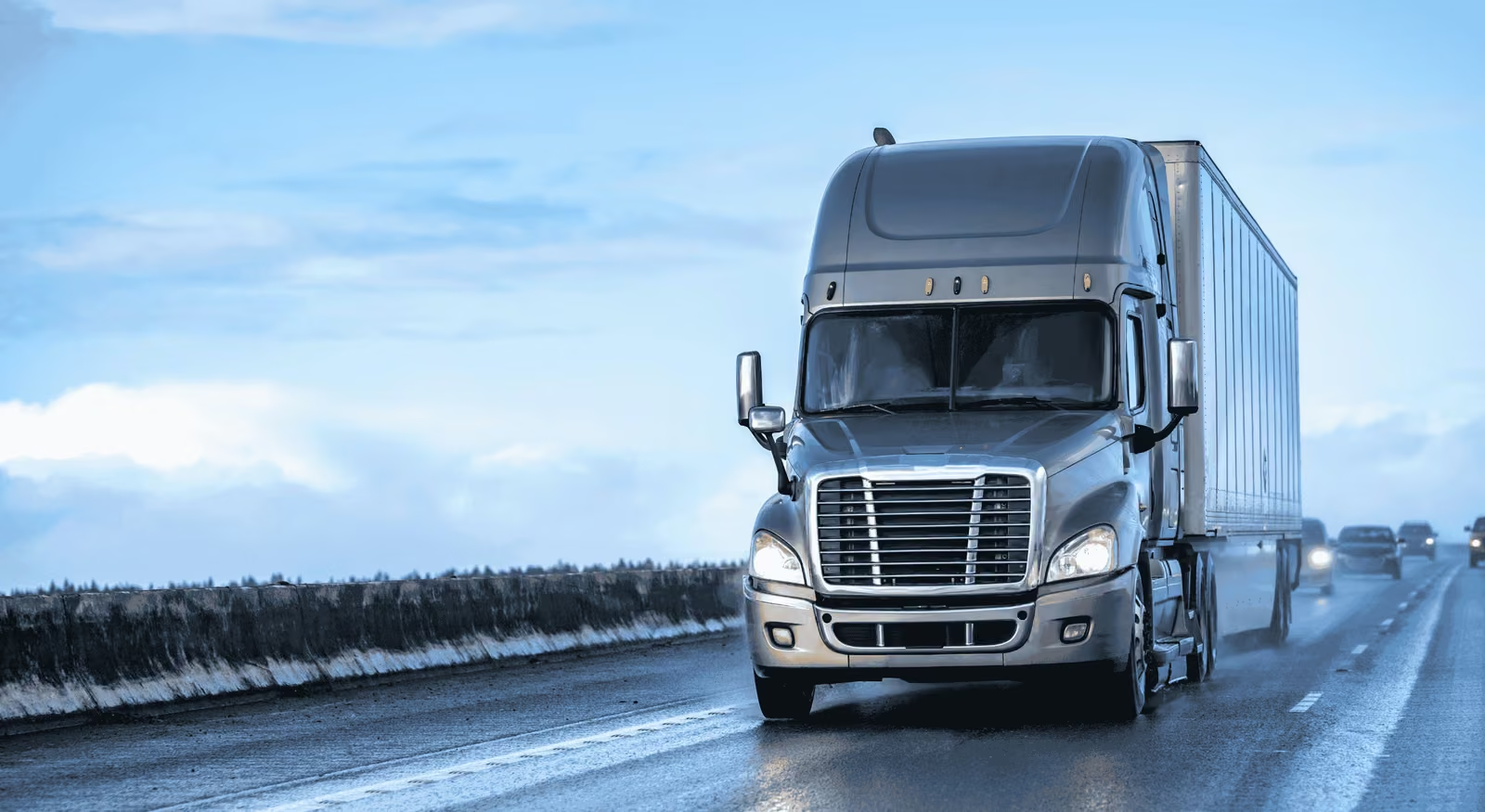
Truck and trailer financing can support a commercial vehicle purchase through a loan or lease. The unit, seller, operating plan and business finances all matter. Compare the acquisition cost with insurance, registration, maintenance and working cash.
Learn how this financing option works and what to prepare for a discussion.
Provide the vehicle configuration, VIN, age, mileage and maintenance history. For refrigerated trailers, include refrigeration-unit details and hours.
Describe the body, attachments, payload and intended work for dump trucks, service vehicles and other specialized units.
Provide the full unit list, deployment schedule and how the purchase fits existing work and fleet costs.
Confirm condition, ownership, liens and payment arrangements. Discuss auction or private-sale requirements before bidding.
Account for tax, delivery, registration, insurance, inspections, repairs and any body or equipment modifications.
Compare loan and lease commitments with maintenance reserves and the timing of customer receipts.
A highway tractor, vocational truck and refrigerated trailer have different operating requirements. Describe route length, expected mileage, payload, attachments and the work supporting the purchase. For a reefer, include refrigeration equipment and its service condition; for a vocational unit, identify the body and specialized equipment. The financing request should match the complete working unit, not just the base chassis or an attractive advertised price.
Record make, model, year, VIN, mileage, maintenance and known repairs. Review condition with a qualified mechanic where appropriate and include immediate work in the purchase budget. A clean exterior does not establish engine, transmission or aftertreatment condition. Private sales and auctions can be considered subject to review, but ownership, lien settlement and payment arrangements should be understood before an unconditional bid or non-refundable deposit.
A new operator can explain relevant experience, the operating plan and any supporting work arrangements. An established fleet should show how the added unit will be staffed and utilized. Neither experience nor a contract guarantees approval. Include insurance, fuel, maintenance and the time between completing a load and receiving payment when assessing the new obligation. A vehicle payment is only one part of the operating cost.
A Terminal Rental Adjustment Clause structure ties an agreed residual to the vehicle’s eventual settlement under the contract. Depending on the terms, sale proceeds above or below that residual can create a surplus or shortfall for the lessee. Availability varies by vehicle, program and jurisdiction. Ask specifically how the structure applies to the proposed transaction rather than assuming all Canadian and US vehicle leases work this way.
Assume an illustrative $100,000 vehicle has a $30,000 contractual residual. If net sale proceeds at the end are $35,000, the difference is $5,000 above residual; if net proceeds are $25,000, the shortfall is $5,000. Allocation follows the agreement and additional costs can affect the calculation. These figures explain residual exposure only. They do not quote a payment, approved residual or guaranteed resale value.
A TRAC-style agreement focuses on the residual adjustment. An FMV lease may offer purchase at a determined market value, return or renewal under its terms. A nominal-buyout arrangement is designed around an agreed small purchase option after conditions are met. Compare ownership intent, resale exposure, notices and total cost. A lower regular payment is not a substitute for understanding what remains due or required at the end.
A new unit can increase fuel, driver and maintenance spending before customers pay. Forecast that gap separately from the purchase. If the main need is unpaid eligible freight invoices, factoring may be a more relevant discussion than adding vehicle debt. If an existing unit needs major work, compare repair and replacement economics. The right financing question depends on whether you need another asset, operating cash or a repair.
Provide the legal entity, province or state, seller location and invoice currency. Cross-border buying can add conversion and delivery costs, while the vehicle’s intended operation can involve registration and other requirements. Include these in the plan and obtain the appropriate specialist advice. Mehmi’s Canada and USA service area does not mean every vehicle, seller or structure is available in every location.
Estimate the period you expect to keep the unit and review any final payment or purchase option. Test lower utilization and a repair interruption against the payment schedule. Ask how an early sale, trade-in or insurance loss would be handled. If the plan relies on a future resale value, recognize that age, mileage, condition and market demand can change that value; the finance agreement does not guarantee it.
Use this checklist to compare actual proposals for the same asset and period of use. It does not establish that a particular structure is available or cheaper. Record the answer to each question, including amounts still payable at the end, so the comparison reflects the complete commitment rather than a selected monthly figure.
Relevant equipment can include Kenworth, Peterbilt, Freightliner 114SD, Volvo. These links provide equipment context; brands are examples, not partners or endorsements. Eligibility depends on the specific asset, condition, seller and financing review.
For a dealer quote, ask for a clear equipment specification and itemized extras. For an auction or private seller, clarify ownership, inspection and payment conditions before committing. An equipment page or brand listing is not a pre-approval for a particular purchase. Keep the intended location, currency and operating purpose consistent across the quote and application so the review addresses the real transaction.
These details help frame the review. Additional documents may be requested for your business, location or proposed transaction.
Seller quote, VIN or serial number, specifications, mileage or hours, condition and available service records.
Business registration, experience, fleet details and information about expected work.
Requested financial records, current obligations, insurance and any purchase or trade-in arrangements.

Include the equipment quote, business location, intended use and available financial records. For used or privately sold equipment, ask which ownership, inspection and lien documents are needed.
Describe the business, equipment, location and purpose. Include the quote or asset schedule when available.
Respond to requests for documents and clarify the available structure, costs, conditions and any outstanding checks.
Read the written agreement and confirm obligations, conditions and next steps before signing or committing to the purchase.
Tell us where your business is registered, where the equipment will operate and the transaction currency. We serve businesses in Canada and the United States; individual products and transaction structures vary by location.
Include the province or territory, business registration and equipment location. Confirm applicable taxes, documentation and security requirements in the written proposal.
Include the state, business entity and equipment location. Confirm state-specific availability, documentation, taxes and any security requirements before committing.
Find guidance for your sector and how your business operates.
9 industries · Swipe, scroll or choose a group below.
Explore financing considerations for carriers, logistics businesses and freight operations.
Explore industry →Plan around project costs, contract timing and day-to-day business needs.
Explore industry →Explore financing for production, order cycles and wholesale operations.
Explore industry →Consider seasonal cash flow, operating needs and long-term farm investment.
Explore industry →Explore financing for food-service businesses, hospitality operations and growth.
Explore industry →Plan financing around practice operations, patient services and business expansion.
Explore industry →Explore financing considerations for project delivery, hiring and growth.
Explore industry →Consider contract cycles, operating requirements and investment in resource businesses.
Explore industry →Explore financing considerations for commercial aviation and marine operations.
Explore industry →Share your operating experience, work arrangements, business history and available contribution. Program fit and terms depend on the complete request.
Age, mileage, maintenance, condition and intended use are assessed together. Confirm fit before committing to a unit.
Provide a unit-by-unit schedule and the intended deployment. Each asset and the combined payment commitment need review.
Explore equipment refinancing and sale-leaseback. Ownership, value, current debt and new obligations need assessment.
You can discuss a planned purchase before selecting the final asset. A discussion or preliminary review is not an approval. A specific quote, seller and equipment details may be needed to complete the assessment.
Timing depends on the application, supporting documents, equipment and transaction checks. Ask what remains outstanding and when to expect the next update; no approval or funding timeframe is guaranteed.
CANADIAN FINANCING GUIDE
Review asset condition, seller information and the documents needed for a used-equipment request.
Read article →CANADIAN FINANCING GUIDE
Compare ownership plans, purchase options and end-of-term obligations.
Read article →Use estimates as a planning aid. Actual costs and conditions depend on the written proposal.
Equipment financing calculator →Compare commercial vehicle types and the details to prepare for a purchase.
Start with the business location, equipment or assets, and the purpose of your request.
Apply for financingFinancing is subject to application review and approval. Availability, terms, costs and documentation vary by product, business and location. This page provides general information and is not a financing offer. Tax and accounting treatment should be reviewed with your adviser.
Related resources:Reefer Truck Financing & Leasing Canada; Trailer Financing Canada.