Earthmoving and site equipment
Include the machine configuration, attachments, serial number, hours and service history.
.avif)
CANADA & UNITED STATES
Match the machinery, purchase budget and repayment plan to the job.
Apply for financing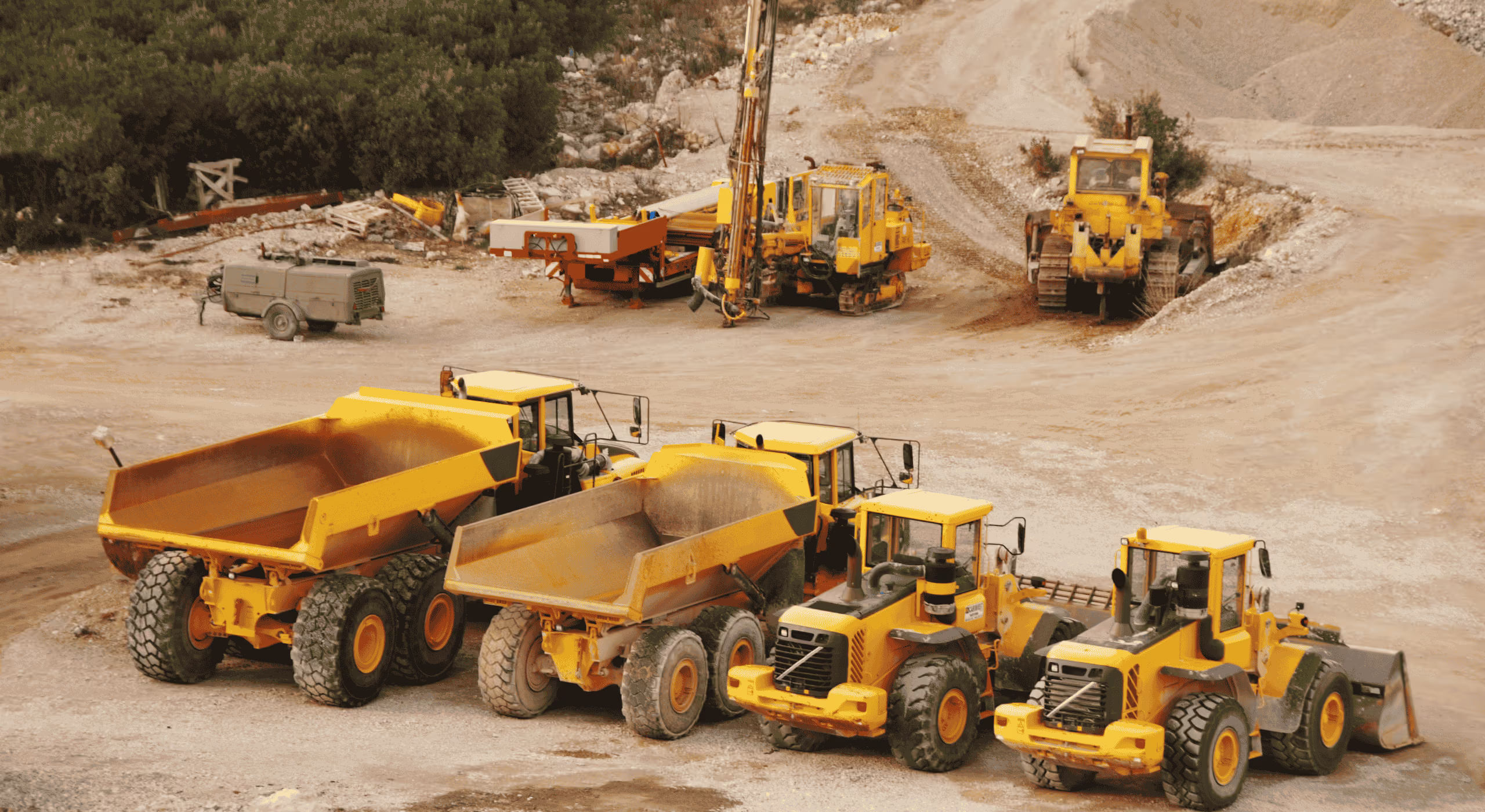
Heavy equipment financing supports purchases such as excavators, loaders, dozers and other commercial machinery. A loan or lease should be assessed alongside condition, expected utilization, transport and maintenance costs.
Learn how this financing option works and what to prepare for a discussion.
Include the machine configuration, attachments, serial number, hours and service history.
Compare the purchase with repair cost, downtime and the useful life remaining in the existing asset.
Explain the work the asset will support, seasonal usage and any operators or transport arrangements needed.
Obtain the available service records and discuss inspection requirements. Used machinery may need repairs before deployment.
Budget for transport, permits, attachments, installation, tax, insurance and initial maintenance as applicable.
Compare repayment commitments with the equipment’s expected use and maintenance needs. Do not choose solely on the periodic payment.
An excavator may need buckets or a hydraulic attachment; a crane may need transport and setup; a loader may require site-specific configuration. Itemize those costs with delivery, commissioning and training. Ask which can be included in the proposed financing. A complete quote helps prevent an approved machine purchase from leaving the business short of the cash required to put the asset to work.
A contractor considers a $90,000 machine, $12,000 of attachments and $3,000 of delivery. A $25,000 contribution leaves a preliminary $80,000 gap before taxes, financing costs and operating reserves. This is a budgeting illustration, not an offer. The contractor should then test utilization, fuel, transport and maintenance costs against confirmed work and a slower season, rather than assuming every available machine hour becomes billable revenue.
Explain lifting capacity, working environment, utilization and any specialist configuration. Excavators, dozers, wheel loaders, cranes and access equipment face different wear and resale conditions. A financing assessment does not establish safe capacity or suitability. Obtain the technical assessment needed for the job and distinguish verified contracts from prospective work when estimating how the purchase will support repayment.
Record serial numbers, hours, service history and known repairs. An inspection may identify wear in components that materially affect remaining useful life. Budget for necessary work and transport before relying on the asset for a new contract. Purchase price alone may not capture the real cost of putting a used machine into service, especially where parts lead times or specialist maintenance affect downtime.
Buying from another contractor or an auction may be considered subject to asset and transaction review. Provide seller information and evidence of ownership, and disclose existing finance where known. If a lien must be settled, confirm how payment and release will be coordinated. Do not assume an auction deadline or a signed bill of sale removes these requirements. Check financing conditions before making an unconditional commitment.
Explain where the asset is stored and operated, whether it moves among sites and whether it crosses borders. Transport, insurance and any relevant operational requirements belong in the plan. For purchases in another currency, include conversion exposure and delivery-related costs. A machine suitable for one site or region is not automatically ready for another, and a financing agreement does not resolve those operating questions.
If work is concentrated in certain months, provide a forecast showing both peak receipts and quieter periods. Seasonal or reduced-payment arrangements may be available for some requests, but are not automatic. Ask for the complete schedule and total cost. Payments deferred or reduced at one point can increase later obligations, so the structure should be tested across the full year rather than judged by the slow-season payment alone.
A purchase loan may fit equipment you intend to keep, while a lease requires review of its ownership and return conditions. For an existing asset, repair or refinancing may deserve a separate assessment. Compare the cost of downtime and remaining useful life without assuming that retaining old equipment is always cheaper. Each choice has different cash requirements, documentation and end obligations.
Calculate whether the business can carry the proposed payments when billable hours fall or a project is postponed. Include operators, insurance, maintenance and existing debt. If repayment depends entirely on one unconfirmed job, disclose that assumption. A disciplined decision asks how the equipment fits the business under a reasonable downside, not simply whether the monthly payment looks small beside the machine’s advertised earning potential.
Use this checklist to compare actual proposals for the same asset and period of use. It does not establish that a particular structure is available or cheaper. Record the answer to each question, including amounts still payable at the end, so the comparison reflects the complete commitment rather than a selected monthly figure.
Relevant equipment can include Bobcat, Caterpillar 140 motor grader, John Deere 1050K dozer, Volvo. These links provide equipment context; brands are examples, not partners or endorsements. Eligibility depends on the specific asset, condition, seller and financing review.
For a dealer quote, ask for a clear equipment specification and itemized extras. For an auction or private seller, clarify ownership, inspection and payment conditions before committing. An equipment page or brand listing is not a pre-approval for a particular purchase. Keep the intended location, currency and operating purpose consistent across the quote and application so the review addresses the real transaction.
These details help frame the review. Additional documents may be requested for your business, location or proposed transaction.
Quote, make, model, year, serial number, hours, condition, attachments and seller details.
Intended work, location, utilization and replacement or expansion purpose.
Business details, existing obligations and financial information requested for assessment.

Include the equipment quote, business location, intended use and available financial records. For used or privately sold equipment, ask which ownership, inspection and lien documents are needed.
Describe the business, equipment, location and purpose. Include the quote or asset schedule when available.
Respond to requests for documents and clarify the available structure, costs, conditions and any outstanding checks.
Read the written agreement and confirm obligations, conditions and next steps before signing or committing to the purchase.
Tell us where your business is registered, where the equipment will operate and the transaction currency. We serve businesses in Canada and the United States; individual products and transaction structures vary by location.
Include the province or territory, business registration and equipment location. Confirm applicable taxes, documentation and security requirements in the written proposal.
Include the state, business entity and equipment location. Confirm state-specific availability, documentation, taxes and any security requirements before committing.
Find guidance for your sector and how your business operates.
9 industries · Swipe, scroll or choose a group below.
Explore financing considerations for carriers, logistics businesses and freight operations.
Explore industry →Plan around project costs, contract timing and day-to-day business needs.
Explore industry →Explore financing for production, order cycles and wholesale operations.
Explore industry →Consider seasonal cash flow, operating needs and long-term farm investment.
Explore industry →Explore financing for food-service businesses, hospitality operations and growth.
Explore industry →Plan financing around practice operations, patient services and business expansion.
Explore industry →Explore financing considerations for project delivery, hiring and growth.
Explore industry →Consider contract cycles, operating requirements and investment in resource businesses.
Explore industry →Explore financing considerations for commercial aviation and marine operations.
Explore industry →Discuss the auction, asset and payment deadline before bidding. Equipment acceptance, inspection and transaction requirements must be confirmed.
List each attachment with its value and intended use. Confirm whether the proposed agreement covers it.
Provide experience, work arrangements, financial information and available contribution. Requirements vary by business and program.
Compare repair cost, downtime and expected life with replacement. Repair financing and an equipment purchase address different needs.
You can discuss a planned purchase before selecting the final asset. A discussion or preliminary review is not an approval. A specific quote, seller and equipment details may be needed to complete the assessment.
Timing depends on the application, supporting documents, equipment and transaction checks. Ask what remains outstanding and when to expect the next update; no approval or funding timeframe is guaranteed.
CANADIAN FINANCING GUIDE
Prepare the equipment details and business records for a heavy-equipment financing review.
Read article →CANADIAN FINANCING GUIDE
Review asset condition, seller information and the documents needed for a used-equipment request.
Read article →Use estimates as a planning aid. Actual costs and conditions depend on the written proposal.
Equipment financing calculator →Consider the machinery alongside the costs and timing of the work it supports.
Start with the business location, equipment or assets, and the purpose of your request.
Apply for financingFinancing is subject to application review and approval. Availability, terms, costs and documentation vary by product, business and location. This page provides general information and is not a financing offer. Tax and accounting treatment should be reviewed with your adviser.