
Quick answer: The “best” financing in Laval is rarely the lowest advertised rate—it’s the best-fit structure with the lowest total dollars paid and the fewest restrictions for your next purchase.
What to compare before choosing an option
| Factor | Why it matters | What to verify |
|---|---|---|
| Total cost | The payment alone can hide fees or end-of-term costs. | Rate or factor, fees, taxes, residual or buyout, and total dollars paid. |
| Repayment structure | Frequency and term affect cash flow. | Daily, weekly, monthly, seasonal, amortization, and maturity. |
| Security and guarantees | Collateral and guarantees change borrower risk. | Liens, personal guarantees, covenants, and insurance requirements. |
| Flexibility | Exit terms matter if plans change. | Prepayment, payout, renewal, refinance, upgrade, and end-of-term options. |
BDC’s equipment-financing guide emphasizes the complete financing structure when comparing offers.
“Don’t focus only on interest rates”
For the equipment decision discussed here, compare the amount financed, payment schedule, collateral and remaining obligations alongside the quoted rate.
Best Equipment Financing and Leasing in Laval: The 2026 Approval-First Guide
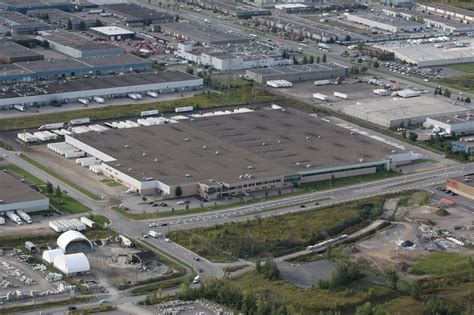
If you’re looking for the best equipment financing and leasing in Laval, you’re usually trying to solve one of three problems: (1) you need the equipment fast, (2) you want the lowest total cost without hidden traps, or (3) your bank is slow (or said no). In Laval, where a huge share of businesses operate out of industrial parks and along highway corridors, “best” almost always means the deal that gets approved cleanly and stays flexible—so you can keep buying equipment as you grow. (Ville de Laval)
Below is a practical, people-first guide written from an underwriter lens (how lenders actually decide), with Quebec-specific realities, a realistic case study, and a checklist you can use today.
Table of contents
- What “best” really means (and why most people pick wrong)
- Laval context: why location changes approvals and structure
- Leasing-first basics (in plain language)
- The underwriter brain: the 5Cs + risk components (without the math lecture)
- The Laval playbook: how to get approved faster
- Best options in Laval: banks vs lessors vs vendors vs brokers
- Deal structures that approve (term, down payment, residual, seasonal)
- Documentation checklist (what delays funding)
- Quebec tax gotchas (GST/QST and deductibility)
- Used equipment + private sales in Laval (how to avoid funding blow-ups)
- Refinance & sale-leaseback (when cash flow is the real issue)
- Case study: Laval manufacturer upgrades without choking cash
- FAQs (Canada + Quebec specific)
- Calm next step
What “best” really means (and why most people pick wrong)
t purchase.
Most regret comes from picking based on one number (monthly payment or “rate”) and missing:
- Residual/buyout surprises (cheap payment → expensive end)
- Fee stacking (docs/admin/PPSA/inspection)
- Early payout math (you sell the asset, but the payoff is brutal)
- Covenants/conditions that trip you later (more on that below)
If you want a quick baseline of Canadian lender types and how they differ, use our internal fit guide: how to compare equipment financing companies in Canada.
Laval context: why location changes approvals and structure
Key point: Laval’s business mix pushes lenders to care more about asset mobility, utilization, and proof of revenue, because many operations are industrial, logistics-adjacent, or multi-site.
A few local realities that change the advice:
- Industrial park density affects asset use and risk. Laval has 5 municipal industrial parks and a very large industrial footprint—many businesses operate close to major corridors, which often means higher utilization and faster replacement cycles. (Ville de Laval)
- Highway access changes what lenders think is “re-marketable.” Equipment that can be moved and resold easily (forklifts, compressors, CNCs, trailers, common construction equipment) tends to underwrite smoother than ultra-specialized gear that only fits one niche.
- Cross-province movement is common (and it changes sales tax treatment). If equipment leased in Quebec relocates to Ontario (or elsewhere), how GST/QST/HST applies can change depending on circumstances—this matters if your fleet or assets move. (Revenu Québec)
- Quebec documentation expectations are strict on funding packages. Many funders will not release money until the file is “funding-clean” (invoice format, void cheque/PAD, insurance wording, IDs). That process discipline matters more than geography—but it shows up constantly in Quebec-originated deals.
Leasing-first basics (in plain language)
Key point: Leasing is often the fastest path to approval because the lender is underwriting a specific asset with a clear recovery plan—not just your balance sheet.
In simple terms:
- You use the equipment now, spread cost over time, and choose an end-of-term option (buyout, renew, or return).
- Your payment is driven by: term + down payment + residual/buyout + fees + tax.
If you’re actively deciding whether to own or lease, see: Lease vs Buy Equipment in Canada.
The underwriter brain: how approvals really work (5Cs + risk components)
Key point: Lenders don’t approve equipment deals because they “like the story.” They approve because the file proves the 5Cs—and because the risk is containable.
The 5Cs (translated into real-world lender questions)
Character
Do you pay obligations on time? Are there unresolved collections, tax arrears, or patterns of broken commitments?
Capacity
Can the business carry the payment in a normal slow month? Lenders look for cash-flow support: bank statements, revenues, margins, and sometimes a “payment-to-revenue” comfort test.
Capital
Do you have skin in the game (down payment), equity, or retained earnings? For startups, “capital” often shows up as stronger guarantor credit + cash buffers.
Collateral
Is the equipment financeable and re-marketable? Is it common, easy to insure, and correctly documented (serials, year, make/model)?
Conditions
What’s happening in your industry right now? Are you growing, seasonal, or exposed to one customer/contract?
Risk components (no math lecture)
Under the hood, most lenders are balancing:
- Probability of default (how likely trouble happens)
- Exposure at default (how much they’d be out)
- Loss given default (how much they can recover by repossessing/reselling)
This is why structure matters: a sensible down payment, realistic term, and appropriate residual can reduce “loss severity” even when the file isn’t perfect.
Conditions precedent + covenants (what this means in practice)
- Conditions precedent = “must be true before funding.” Typical examples: correct invoice, proof of deposit, insurance certificate naming the funder properly, delivery acceptance, IDs.
- Covenants = “what gets monitored after funding.” On smaller equipment leases, covenants can be light, but monitoring still happens through:
- returned payments,
- insurance lapses,
- NSF patterns on bank statements in renewals,
- late tax remittances,
- or sudden utilization/revenue drops when renewals or add-ons are requested.
Contrarian (but fair) take: In equipment finance, a “cheap” deal that locks you into rigid payout terms can be more expensive operationally than a slightly higher payment that protects upgrades, early buyout flexibility, and repeat approvals.
The Laval playbook: how to get approved faster
Key point: Speed comes from packaging, not persuasion. Your job is to remove underwriter uncertainty.
Step 1: Match the lender to the asset (not the other way around)
Ask: is this equipment common and liquid, or specialized? Common assets attract more lenders and better structures.
Step 2: Decide the right structure before you apply
Most approvals improve when you pick:
- term length that matches useful life,
- a down payment that signals commitment but doesn’t drain working capital,
- a residual/buyout that matches your real plan (keep vs upgrade vs return).
If you need a fast close, read: Fast equipment financing in Canada (real timelines + playbook).
Step 3: Pre-empt the “funding package” delays
This is the most common Laval/Quebec delay: you get “approved,” then funding stalls because the paperwork doesn’t meet funder rules.
Examples lenders repeatedly enforce:
- Void cheque / PAD is required; direct deposit forms may be rejected.
- Vendor invoice must be a true invoice—quotes/proformas aren’t accepted.
- Invoice must include serials for serialized assets and show proper “sold to / ship to” fields (often “sold to” the funder and “ship to” the lessee).
Step 4: Don’t let bank statements sabotage you
For many industries (including transport and others), lenders may require 3 months of bank statements in a single PDF—not scattered photos.
Step 5: Startups: prove experience, not just optimism
If you’re 0–2 years in business, many lenders want a summary of relevant prior experience, and for some sectors they require a work letter/contract.
Best options in Laval: banks vs lessors vs vendors vs brokers
Key point: The “best” provider category depends on whether you’re optimizing for price, speed, flexibility, or approvals on used/private-sale equipment.
Here’s a practical comparison.
If you’re benchmarking leasing providers, start here: Top Canadian equipment leasing companies (and what each is best for).
Where Mehmi fits (briefly): Mehmi Financial Group typically helps when the goal is approval reliability + structure quality (especially used assets, faster closes, private sales, or refinance/sale-leasebacks). Keep your focus on fit first—then negotiate price inside the right lane.
Deal structures that approve (and why they lower your real cost)
Key point: Your payment is shaped as much by structure as by “rate.”
Term
- Longer term = lower payment, but can trap you if the equipment ages out before the lease ends.
- Shorter term = higher payment, but cheaper total interest and more flexibility.
Down payment (cash down)
Down payment often improves approval and pricing because it reduces lender exposure. The trick is choosing a number that helps approval without starving operations.
Mini “stress test” (do this in 2 minutes):
- Take your proposed monthly payment.
- Multiply by 1.2 (buffer for slow months).
- Ask: “Can the business carry this for 3 slow months in a row without missing payroll or tax remittances?”
If not, change the structure (term, down, residual) before you sign—don’t “hope” it works.
Residual / buyout
Residuals lower payments, but they’re not free—you’re deciding when you pay for ownership.
If you want a line-by-line way to avoid fee and buyout traps, use: How to compare equipment financing offers in Canada (fees + payout math).
Documentation checklist (what delays funding in Quebec deals)
Key point: In equipment finance, approvals die at funding when documents are incomplete or formatted wrong.
Here are lender-grade requirements that repeatedly show up:
Credit-side (to get the “yes”)
- For startups (0–2 years): prior sector experience summary; sometimes proof if lenders can’t verify it.
- Bank statements may be required in a clean PDF.
- For refinancing: full specs, registration, photos, reason for refinancing, and bank statements.
Funding-side (to actually release money)
- Signed lease docs, IDs, void cheque/PAD, and a current vendor invoice/bill of sale.
- Direct deposit forms may be rejected—plan on a void cheque or properly stamped PAD.
- Vendor invoice rules: quotes/proformas not accepted; serial numbers required for serialized assets; GST/HST/QST numbers included.
If you want the “full file” checklist in one place, see: Equipment financing approval requirements and documents checklist.
Quebec tax gotchas (Canadian reality most US articles miss)
Key point: In Quebec, tax treatment can affect cash flow timing—especially if equipment moves across provinces during the lease.
Two practical reminders:
- Lease payments are generally deductible when incurred for business-use property (subject to CRA rules and exceptions). (Canada)
- GST/QST/HST on lease payments can change depending on where the equipment is used/stored (place-of-supply rules matter when assets relocate). (Revenu Québec)
Also remember the rate environment affects lease/finance pricing and approvals. The Bank of Canada influences short-term rates through its policy rate decisions (as of Dec 2025, the BoC held the target overnight rate at 2.25% in its Dec 10, 2025 announcement). (Bank of Canada)
Used equipment + private sales in Laval (how to avoid funding blow-ups)
Key point: Used/private-sale deals fail for boring reasons: missing serials, unclear ownership, weak invoices, or equipment that doesn’t match the business activity.
In Laval, used equipment is common because the industrial ecosystem is dense and secondary markets move fast. That’s fine—just package it correctly.
Underwriter “red flags” you can fix early
- Seller can’t produce clean ownership chain (registration/title where applicable)
- Invoice doesn’t show year/make/model/serial (for serialized assets)
- Asset is too old relative to requested term (ask for shorter term or higher down)
- Bank statements show stress (NSFs/overdrafts) with no explanation
Simple due diligence checklist (before you apply)
- Confirm exact equipment specs (year/make/model/serial/hours)
- Confirm who owns it today
- Confirm where it will be located and how it’s insured
- Confirm your real plan: keep long-term vs upgrade
Refinance & sale-leaseback when cash flow is the real issue
Key point: If your real problem is working capital—not the equipment itself—refinance or sale-leaseback can be a cleaner fix than stretching a new purchase too thin.
Two common Laval scenarios:
- You own valuable equipment outright, but cash is tight (inventory, payroll, slow-paying customers).
- You need to consolidate higher-cost obligations into a structured equipment facility.
For a practical guide, see: Equipment refinance in Canada (cash-out / sale-leaseback).
And for a sale-leaseback overview: Sale-leaseback on equipment in Canada.
Case study: Laval manufacturer upgrades without choking cash
Key point: The win wasn’t “getting a lower rate.” The win was structuring the lease so cash flow stayed stable while approvals stayed repeatable.
Business (anonymous): A small packaging and light-manufacturing company in Laval, operating near an industrial corridor.
Need: A used CNC upgrade + a forklift to reduce downtime and increase throughput.
Problem: Their bank offered a slow process and wanted stronger financial statements; the company needed delivery within weeks.
What the underwriter cared about (5Cs in real life)
- Character: clean payment behavior, no major unresolved issues
- Capacity: bank statements supported the payment—especially in slower weeks
- Capital: a modest down payment to tighten the risk
- Collateral: both assets were common and re-marketable; specs were complete
- Conditions: the upgrade tied to production needs and customer demand
The structure that solved it
- A lease-first structure with a term matched to useful life
- A reasonable down payment (enough to improve approval odds, not enough to strain cash)
- A buyout aligned with their plan to keep the forklift longer, upgrade CNC sooner
The packaging that prevented funding delays
- Single PDF bank statements (not screenshots)
- Proper vendor invoice with full specs + serials
- Void cheque/PAD in the format the funder accepts
- Insurance certificate wording completed correctly
Result: Approval and funding progressed without last-minute document rework, and the business preserved cash for payroll and raw materials.
Authoritative references
- Innovation, Science and Economic Development Canada — Canada Small Business Financing Program:
The Canada Small Business Financing Program makes it easier for small businesses to get loans from financial institutions by sharing the risk with lenders.
Program eligibility, lender criteria, tax treatment, and product terms can change. Verify current official guidance and the final financing documents before making a decision.
FAQs: Best equipment financing and leasing in Laval (Canada + Quebec)
1) What credit score do I need for equipment financing in Laval?
There isn’t one universal minimum. Think in approval “bands” and compensating strengths (down payment, time in business, strong bank statements). If you want the practical ranges and how lenders compensate, see: credit score guide for equipment financing in Canada.
2) Is it better to lease or finance equipment in Laval?
If approval speed and flexibility matter, leasing often wins—especially for used equipment and fast timelines. If your goal is ownership from day one, you may prefer a finance-style structure. Use: Lease vs Buy (Canada) to choose based on your plan (keep vs upgrade vs return).
3) How fast can I get equipment financing funded in Laval?
Fast approvals are possible when the file is “funding-clean”: correct invoice (not a quote), proper void cheque/PAD, IDs, insurance certificate wording, and proof of delivery when required. For timelines and how to avoid delays, see: fast equipment financing playbook.
4) What’s the #1 reason Laval deals stall after approval?
Funding package issues: invoice format, missing serial numbers, direct-deposit forms rejected in favour of void cheque/PAD, or incomplete insurance wording.
5) Are lease payments tax-deductible in Canada (including Quebec)?
Lease payments are generally deductible when incurred for property used to earn business income (subject to CRA rules and exceptions). (Canada) Quebec sales tax application can depend on place-of-supply and where the equipment is used. (Revenu Québec)
6) When does sale-leaseback make sense in Laval?
When you have equity locked in equipment and need working capital, or you want to lower payments without shutting down operations. Start with: sale-leaseback on equipment in Canada and the deeper cash-out guide: equipment refinance (cash-out) playbook.
Calm next step
If you already have a quote (or you’re comparing two offers), the safest move is to pressure-test structure + fees + end-of-term + early payout before you sign. If you want a second opinion, Mehmi can review the quote from an underwriter lens and tell you what would improve approval odds and reduce “trap risk” without overcomplicating the deal.