
Quick answer: Nunavut is different. The “best” equipment financing or leasing option isn’t the one with the lowest advertised rate—it’s the one that actually funds on your timeline , survives the realities of sealift/air logistics , and doesn’t blow up later with delivery conditions, insurance gaps, or resale/repo assumptions .
What to compare before choosing an option
| Factor | Why it matters | What to verify |
|---|---|---|
| Total cost | The payment alone can hide fees or end-of-term costs. | Rate or factor, fees, taxes, residual or buyout, and total dollars paid. |
| Repayment structure | Frequency and term affect cash flow. | Daily, weekly, monthly, seasonal, amortization, and maturity. |
| Security and guarantees | Collateral and guarantees change borrower risk. | Liens, personal guarantees, covenants, and insurance requirements. |
| Flexibility | Exit terms matter if plans change. | Prepayment, payout, renewal, refinance, upgrade, and end-of-term options. |
BDC’s equipment-financing guide emphasizes the complete financing structure when comparing offers.
“Don’t focus only on interest rates”
For the equipment decision discussed here, compare the amount financed, payment schedule, collateral and remaining obligations alongside the quoted rate.
Best Equipment Financing and Leasing in Nunavut (2026 Guide)
This guide is built for Nunavut operators (construction, logistics, mining services, municipal contractors, retail/service businesses): you’ll learn how lenders think, what structures approve most often, what documents matter most, and how to pick the best offer with confidence.
What “best” means in Nunavut (it’s fit, not hype)
In Nunavut, the best financing is the structure that matches your logistics + cash flow + lender risk appetite—and still leaves you enough breathing room to run the business.
Most borrowers get burned by one of these:
- Choosing the “cheapest” quote that can’t fund private sales or won’t accept remote delivery
- Underestimating lead time (sealift windows, air freight cost) and losing the asset
- Approving a payment that looks fine in summer—but breaks in your worst month
- Ignoring “fine print” like payout language, fees, insurance requirements, or usage limits
If you want a baseline on options and how deals are commonly structured across Canada, start with Mehmi’s Equipment Financing & Leasing overview. (Mehmi Financial Group)
The Nunavut reality that changes equipment funding
Nunavut’s equipment finance isn’t “remote Canada with a few tweaks.” The fundamentals of how goods move—and how assets can be serviced or resold—change lender behaviour.
Here are the four local realities that most affect approvals:
No road or rail link to southern Canada
A major underwriting issue is simple: if the lender ever needs to recover the asset, it’s harder and more expensive. Transport Canada notes that Nunavut has no road or rail linkages with southern Canada, shaping how freight and mobility work. (Transport Canada)
Sealift is a yearly planning constraint (not a shipping option)
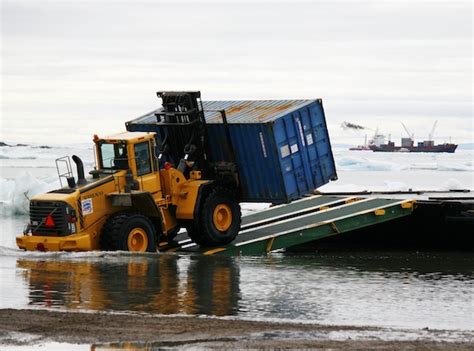
Many communities depend on annual sealifts for bulk goods and heavy items; missing the window can mean months of delay. Transport Canada describes communities like Kinngait as having no road connection, relying on yearly sealifts for essential supplies—this is the same constraint equipment buyers feel. (Transport Canada)
Delivery/acceptance is part of credit risk
In Nunavut, “delivery confirmed” can be a conditions-precedent item (something that must be true before funding is released). Expect lenders to ask:
- Where the asset will live (community/site)
- Who is receiving it
- Proof it arrived (bill of lading, delivery receipt, photos, serial/VIN confirmation)
Maintenance & uptime matter more than price
If downtime is catastrophic (remote site, short season, limited mechanics), the “best” deal is often:
- Slightly higher monthly payment
- Better warranty/condition
- Faster funding + reliable vendor
Because the real risk isn’t interest—it’s lost operating days.
Contrarian but practical take: In Nunavut, paying a bit more for a lender and structure that can fund the exact asset you can actually get delivered often costs less overall than chasing the lowest rate and missing the sealift window.
Lease vs finance in Nunavut: the simple decision rules
Leasing-first usually wins when your priority is cash preservation and flexibility—especially when you’re operating in an expensive logistics environment.
If you want the deep Canadian framework (tax, cash flow, approval logic), read Equipment Leasing Canada and Lease vs Buy Equipment in Canada (2026). (Mehmi Financial Group)
Here’s the Nunavut-specific shortcut:
If you’re comparing scenarios quickly, Mehmi’s Equipment Financing Calculator is a good starting point for payment intuition (then you still sanity-check the structure and conditions). (Mehmi Financial Group)
The underwriter lens: how approvals actually work (5Cs + risk)
Approvals feel personal. They aren’t. Underwriters are trying to control three things:
- Probability of default (PD): how likely you miss payments
- Exposure at default (EAD): how much is outstanding if you default
- Loss given default (LGD): how much they might lose after recovery/resale
Nunavut mainly pushes on LGD (recovery/resale/logistics) and sometimes PD (seasonality, contract concentration).
Underwriters translate that into the 5Cs:
Character (track record)
- Time in business, experience in the trade
- Payment history (trade lines, prior leases)
- Clean story: why now, what changed, what’s the plan
Capacity (can you carry the payment?)
They’ll look at:
- Bank statements (often more than financial statements for SMBs)
- Contract/revenue support (especially if seasonal or project-based)
- Payment-to-revenue sanity checks (not just “can you afford it today?”)
Capital (skin in the game)
In Nunavut, down payments can be more common—not because lenders “want cash,” but because capital reduces LGD risk. Capital can also show up as:
- Strong average bank balances
- Extra reserves
- Lower leverage (less other debt)
Collateral (the equipment itself)
This is where Nunavut bites. Underwriters ask:
- Is it a standard, liquid asset with known resale demand?
- Can it be serviced and kept running?
- Can it be recovered if things go sideways?
Conditions (industry & environment)
- Contract structure (government/major counterparties vs. many small customers)
- Seasonality (construction windows, shipping timelines)
- Local operating constraints (parts, labour, weather)
Bottom line: the “best” lender is usually the one who understands the collateral and can get comfortable with LGD in a remote environment—often through smarter structure, not brute-force pricing.
What equipment lenders fund most easily in Nunavut
Nunavut deals approve fastest when the asset is:
- Recognizable (common makes/models)
- Easy to value (bookable, appraisable, comparable sales)
- Easy to insure
- Supported by clean documentation (invoice, serial/VIN, seller verification)
Generally “easier” categories:
- Commercial trucks and common trailers (when specs and condition are clear)
- Yellow iron / construction equipment with strong resale markets
- Material handling (forklifts, telehandlers) if mainstream brands
- Generators and power equipment (with reputable vendors)
“Harder” categories (still possible, but structure matters):
- Highly specialized or custom-built equipment
- Very old/high-hour equipment with limited resale comps
- Assets with unclear ownership chain (private sale without proper paperwork)
If your deal is truck/trailer-related, use a partner that lives in that world—especially for used units and private sales. Mehmi’s Truck & Trailer Financing page lays out what’s typically acceptable and how pre-approvals work. (Mehmi Financial Group)
Are you looking for a truck? Look at our used inventory (https://www.mehmigroup.com/inventory).
Deal structures that approve more often in Nunavut
The structure is where you win (or lose) approvals—especially when rates are broadly similar across lenders for your risk tier.
1) Step payments for ramp-up periods
If you’re mobilizing to a job site, hiring, or waiting for a project start, step payments can reduce early pressure:
- Months 1–3 lower
- Months 4+ normal
Underwriters like this when the ramp is real and documented (contract start date, mobilization schedule).
2) Seasonal payments (when cash flow is seasonal)
Seasonal structures can match real revenue:
- Lower payments in off-season
- Higher payments during peak months
This is common in construction, remote services, and businesses tied to shipment windows.
3) Residual-based leasing (to keep payments sane)
Leases with a residual (FMV/TRAC-style structures) can reduce monthly payments by not amortizing the full cost to zero. In practical terms: you’re paying for the portion you “use,” not the whole purchase price during the term.
This can be a strong fit for:
- Assets you may rotate
- Assets with predictable resale value
- Fleets that want flexibility at end-of-term
Taxes in Nunavut: GST timing + CCA timing (the Canada-specific “gotcha”)
Taxes don’t usually decide approvals—but they absolutely affect cash flow and true cost.
GST is 5% in Nunavut (no territorial sales tax)
CRA’s rate guidance shows Nunavut is 5% GST (not HST). (Canada)
Why it matters: on a lease, you typically pay GST on each payment; on a purchase/loan, GST is often paid upfront (then recovered through ITCs if you’re registered and eligible).
For plain-language GST/HST mechanics on leases, see HST/GST on equipment leases in Canada. (Mehmi Financial Group)
CCA vs lease deductibility (timing matters more than theory)
CRA’s CCA classes set out depreciation rates by asset class. (Canada)
In real life:
- Financing/owning: you generally recover cost through CCA over time (plus interest deductibility)
- Leasing: you generally deduct the lease payment as an expense (subject to normal rules)
If you want the clean “how the math differs” explanation, read CCA vs leasing and Canadian Tax Benefits of Leasing vs Financing (2026). (Mehmi Financial Group)
Also worth reading: Tax Benefits of Equipment Financing in Canada (this is where owners usually find the biggest “missed” planning opportunities). (Mehmi Financial Group)
Rates and timing: why the Bank of Canada still matters (even for leasing)
Even when you’re not borrowing from a bank, the cost of money influences pricing.
As of Dec 10, 2025, the Bank of Canada held the target overnight rate at 2.25%. (Bank of Canada)
Most lenders price off their cost of funds + risk tier + collateral/structure. In Nunavut, the structure (residual, down payment, term) can move the needle as much as rate.
Practical takeaway: don’t “rate shop” before you “structure shop.” You’ll waste time and still risk a decline.
The Nunavut approval checklist (what gets you funded faster)
Fast approvals happen when the file answers the underwriter’s questions before they ask them—especially around delivery and collateral.
If you’re restructuring an existing deal (or pulling equity out of owned equipment), use the Refinance calculator to estimate whether the cash-flow improvement is real. (Mehmi Financial Group)
Local option to know: Nunavut Business Credit Corporation (NBCC)
If you’re an SME in Nunavut, NBCC is a territory-specific resource worth knowing. NBCC describes providing financing solutions to small and medium enterprises in Nunavut requiring loans/guarantees in the $150,000 to $5 million range (program fit depends on your situation). (nbcc.nu.ca)
How to use this smartly: NBCC can be part of the capital stack or a fallback when traditional lenders won’t get comfortable. But for equipment with tight timelines, you still want a process that can move at “deal speed.”
How to compare offers like a credit analyst (not like a shopper)
A “good” offer in Nunavut is the one that minimizes surprises. Compare offers on these dimensions:
- Total cash required at signing
Down payment + fees + first/last + shipping deposits (if you’re paying them) - True monthly obligation
Payment + insurance + maintenance reserve + any required service plans - Flexibility
Early payout language, upgrade options, end-of-term options, residual/buyout clarity - Conditions
What must happen before funding? (insurance, delivery proof, inspections) - Risk of getting stuck
If you’re buying used/private sale, does the lender accept it without shifting requirements mid-stream?
If you want to source equipment and pair it with financing in one place, Mehmi’s Equipment Sales & Leasing inventory hub is designed for that “one workflow” approach. (Mehmi Financial Group)
Anonymous Nunavut case study: “Approved on structure, not just credit”
A Nunavut-based contractor (small team, consistent work but seasonal cash flow) needed a used wheel loader and a flatdeck trailer to support municipal and commercial jobs. The challenge: the unit was available in the south, and the delivery plan depended on timing.
The initial problem
- Bank said “maybe,” but wanted stronger financial statements and moved slowly.
- The contractor couldn’t risk losing the equipment or missing the shipping window.
- Underwriter concerns: remote collateral, recovery cost, and early-term cash flow pressure.
How the deal was structured (what changed)
- Leasing-first structure with a residual to keep payments manageable
- Step payments for the first 90 days to match mobilization and invoice cycles
- Included clear delivery plan and a funding condition: proof of insurance + confirmation of serial/VIN at receipt
- Added a realistic maintenance plan and operator experience summary (character + conditions)
Result
- Conditional approval landed quickly because the file answered the big three risks:
- capacity (bank flow + contract support)
- collateral (clean equipment details and valuation confidence)
- conditions (delivery plan and insurance ready)
The real win: The business didn’t just “get approved”—it avoided the classic Nunavut mistake of winning a low-rate quote and losing the asset to timing.
One calm next step
If you want the “best” option for your specific community, asset, and delivery plan, the fastest path is usually: structure first → package once → place correctly. Mehmi can help you do that through the lens of approvals (not just payments), starting with the Equipment Financing & Leasing options and moving quickly when timing matters. (Mehmi Financial Group)
Authoritative references
- Innovation, Science and Economic Development Canada — Canada Small Business Financing Program:
The Canada Small Business Financing Program makes it easier for small businesses to get loans from financial institutions by sharing the risk with lenders.
Program eligibility, lender criteria, tax treatment, and product terms can change. Verify current official guidance and the final financing documents before making a decision.
FAQ: Equipment financing and leasing in Nunavut (Canada-specific)
1) Do I pay GST in Nunavut on a lease?
Typically, you pay GST on each lease payment and many fees; Nunavut is 5% GST (not HST). CRA’s rate guidance confirms Nunavut uses 5% GST. (Canada)
2) Why do lenders ask more questions about delivery in Nunavut?
Because delivery and recoverability change the lender’s loss risk. In many Nunavut communities, there are no road connections and bulk goods rely on sealift/air logistics—so lenders treat delivery confirmation as a real risk control. (Transport Canada)
3) Can I finance used equipment or private sales in Nunavut?
Often yes, but the paperwork has to be clean (bill of sale/invoice, serial/VIN verification, photos, and sometimes inspection). “Best” is the lender who accepts private sales without changing requirements mid-deal.
4) Is leasing or financing better for tax in Nunavut?
It depends on your profit level and timing goals. Buying typically lines up with CCA timing (CRA CCA classes/rates guide the depreciation), while leasing generally lines up with deducting payments as expenses. In Nunavut, GST timing can also affect cash flow. (Canada)
5) Do rates in Nunavut follow Bank of Canada rates?
Indirectly, yes—many lenders’ cost of funds is influenced by broader rates. As of Dec 10, 2025, the Bank of Canada held the policy rate at 2.25%, which affects pricing ranges even outside banks. (Bank of Canada)
6) Are there local Nunavut financing resources besides national lenders?
Yes. Nunavut Business Credit Corporation (NBCC) is a territory-specific financing resource for SMEs, describing loans/guarantees in the $150,000–$5 million range depending on fit. (nbcc.nu.ca)