
Quick answer: “Best” isn’t the lowest advertised payment—it’s the best approval + structure + total cost + flexibility for your business.
What to compare before choosing an option
| Factor | Why it matters | What to verify |
|---|---|---|
| Total cost | The payment alone can hide fees or end-of-term costs. | Rate or factor, fees, taxes, residual or buyout, and total dollars paid. |
| Repayment structure | Frequency and term affect cash flow. | Daily, weekly, monthly, seasonal, amortization, and maturity. |
| Security and guarantees | Collateral and guarantees change borrower risk. | Liens, personal guarantees, covenants, and insurance requirements. |
| Flexibility | Exit terms matter if plans change. | Prepayment, payout, renewal, refinance, upgrade, and end-of-term options. |
BDC’s equipment-financing guide emphasizes the complete financing structure when comparing offers.
“Don’t focus only on interest rates”
For the equipment decision discussed here, compare the amount financed, payment schedule, collateral and remaining obligations alongside the quoted rate.
Best Equipment Financing and Leasing in Montreal: How to Get Approved (Without Overpaying)
Montreal equipment financing and leasing isn’t just about finding “a lender.” It’s about structuring a deal that survives underwriting and fits how you actually operate—seasonality, contracts, delivery timelines, winter wear-and-tear, and Québec tax details.
Here’s the core takeaway: the “best” equipment lease in Montreal is the one that funds cleanly, protects cash flow, and has no end-of-term surprises—even if the headline rate isn’t the lowest.
This guide gives you a practical way to:
- choose the right lease structure (FMV vs $1 buyout vs fixed buyout),
- understand what Montreal/Québec lenders really care about,
- avoid common quote traps (fees, residual math, early payout),
- and submit a file that gets approved faster.
Leasing-first perspective: In Canada, many equipment “financing” offers are structured as leases in practice—because leases can be faster, more flexible, and more approval-friendly (especially for used assets and tight timelines).
What “best equipment financing in Montreal” really means (and what it doesn’t)
r business.
When Montreal owners search “best equipment financing,” they’re usually trying to solve one of these real problems:
- You need the equipment now (vendor pressure, project start dates).
- You want to preserve working capital (inventory, payroll, marketing).
- Your bank is slow or cautious (especially on used equipment or newer businesses).
- You’ve got a quote—but you’re not sure if it’s a good deal.
A good Montreal lease offer will be clear on:
- term (e.g., 36/48/60/72 months),
- down payment (including whether it’s truly required),
- residual / buyout (the part that causes most “gotchas”),
- fees (when they’re charged and whether they’re refundable),
- insurance + registration requirements (what blocks funding),
- and early payout math (how expensive it is to exit early).
If you want a quick baseline on how leasing differs from “financing,” start here: Leasing vs Financing Equipment in Canada (2026).
Montreal-specific realities that change the advice
Key point: Montreal’s logistics, winter conditions, and Québec tax rules change what underwriters ask for—and what delays funding.
Here are four Montreal/Québec factors that commonly change the structure:
1) Port + intermodal activity increases “uptime risk” (and urgency)
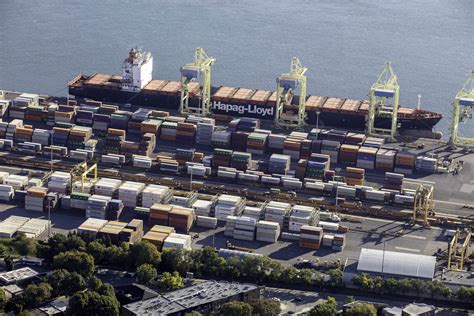
If you operate near the Port of Montréal ecosystem—drayage, warehousing, container handling, cold chain—downtime is expensive and timelines are tight. The Port reports 2,000+ vessels per year and up to 2,500 trucks per day, which helps explain why “we need it this week” is a normal reality here. (Use this as context in your credit story if you’re in logistics.)
Source: Port of Montréal statistics. (Port of Montreal)
2) Montréal–Trudeau cargo activity supports time-sensitive sectors
If you’re financing equipment tied to air cargo—pharma handling, high-value parts, perishables—timeline + compliance matter. Aéroports de Montréal highlights 24/7 cargo handling capability for goods at Montréal–Trudeau (YUL) and Mirabel (YMX).
Source: Aéroports de Montréal – Cargo. (admtl.com)
3) Winter wear-and-tear isn’t just operational—it’s underwriting
Freeze/thaw cycles, road salt, and heavy idling show up as:
- more maintenance invoices,
- faster depreciation on vehicles/material handling gear,
- and higher scrutiny on used equipment condition (hours/KM, photos, service records).
If you’re buying used, lenders often want proof the asset will hold value (collateral) and keep working (capacity).
4) Québec GST/QST rules can be a “gotcha” when equipment moves provinces
If equipment is leased in Québec and later moved (common for contractors working Ontario jobs), the tax treatment can change depending on place-of-supply rules. Revenu Québec provides examples where early lease payments are subject to GST + QST, and subsequent payments can shift to HST if the equipment relocates to Ontario and remains there.
Source: Revenu Québec – Leases of corporeal movable property. (Revenu Québec)
Montreal operator tip: If your crew crosses provincial lines, be ready to explain where the equipment will be stored/used most of the time. It prevents tax confusion and funding delays.
The underwriter lens: how approvals actually work (5Cs, in plain language)
Key point: Underwriters don’t “approve equipment.” They approve risk—using your business story plus proof.
A simple way to understand underwriting is the 5Cs:
Character (trust + track record)
- Do you pay obligations on time?
- Any avoidable surprises (NSFs, tax arrears, collections)?
- Are you straightforward and consistent in your story and documents?
Capacity (cash flow to make payments)
- Can your business comfortably carry the monthly payment even in slower months?
- Is there a realistic “payment-to-revenue” fit (not stretched)?
Capital (skin in the game)
- Down payment, equity in business, retained earnings, personal investment.
- Even when $0 down is possible, some capital often improves terms.
Collateral (the equipment itself)
- Is it a fundable asset type?
- Is it new/used? What’s the age/hours/KM? Is it easy to resell?
- Does it match your business (no “random asset” risk)?
Conditions (industry + timing + macro)
- Montréal market conditions, contract stability, seasonality.
- Rate environment matters too—especially for payment sensitivity.
On the macro side, the Bank of Canada’s policy rate influences borrowing costs and lender appetite. As of Dec 10, 2025, the Bank held the target overnight rate at 2.25%.
Source: Bank of Canada press release. (Bank of Canada)
Credit-brain translation: When rates are higher, underwriters get extra sensitive to “thin margin” deals—because one bad month can break repayment capacity.
Lease structures Montreal businesses use most (and when each wins)
Key point: Structure is the fastest way to change approval odds and total cost—without changing the equipment.
Fair Market Value (FMV) lease
Best when:
- you want the lowest payment,
- you plan to upgrade later,
- or the equipment has faster obsolescence (tech, certain production gear).
Watch-outs:
- end-of-term options matter (return conditions, purchase process).
- ask who pays return shipping/removal (if applicable).
$1 buyout lease (or “capital-style” lease)
Best when:
- you want ownership at the end,
- you expect long useful life,
- and you’re comfortable with a slightly higher payment.
Watch-outs:
- higher payment can stress capacity.
- early payout may be more expensive than you expect.
Fixed buyout / stated residual
Best when:
- you want ownership but want a lower payment than a $1 buyout.
- you want clarity on the purchase amount at the end.
Watch-outs:
- you must compare total dollars (fees + residual + taxes), not just payment.
If you want a Canada-wide framework on ownership vs leasing tradeoffs, this is a solid companion: Lease vs Buy Equipment in Canada.
A simple “payment sanity check” before you sign anything
Key point: A payment is only “good” if it’s survivable in a bad month.
Use this quick check:
- Estimate your worst-case monthly free cash (not average).
- Keep the equipment payment inside a comfortable range that won’t force you to miss payroll, fall behind on CRA/Revenu Québec, or delay maintenance.
A practical mindset: A deal that barely works in a good month is a decline waiting to happen.
If you’re comparing multiple quotes and they “feel similar,” you’re probably missing the real differences—fees, residual math, and payout terms. Use: Equipment Financing Fees in Canada: How to Compare Offers.
What lenders in Montreal actually need to fund fast (conditions precedent)
Key point: Approvals die at funding because conditions precedent weren’t ready.
In practice, the fastest “approvals” come from submissions where closing is frictionless—invoice matches, insurance is ready, IDs are clean, and the equipment is verifiable.
Here’s a lender-friendly checklist you can use before you apply:
For a ready-to-send package, this companion checklist is useful: Loan Preparation Checklist for Sellers & Customers.
And if speed is your priority, read this with a Montreal lens: Equipment Financing With Fast Approval in Canada.
The “best” providers in Montreal: who to choose (banks vs lessors vs brokers)
Key point: The right provider depends on your asset type, timeline, and credit story—not your preference for one brand.
Banks (good when your file is strong and time is flexible)
Banks can win on pricing when:
- financials are clean,
- time in business is solid,
- collateral is straightforward (newer, mainstream assets),
- and you’re not rushing delivery.
But banks can be slower and more rigid—especially for used assets, private sales, and newer businesses.
Independent leasing companies / specialty lessors (good when structure matters)
These groups often win when:
- the asset is used or niche,
- you need speed,
- you need a structure that matches cash flow (seasonal/step-up),
- or your credit profile is “not perfect.”
Brokers (good when lender fit is the real problem)
A good broker can be valuable when:
- you don’t want to guess which lender appetite fits your deal,
- your first attempt got declined,
- or your transaction needs packaging (story + documents + structure).
If you want a Canada-wide list to benchmark against: Best Equipment Financing Companies in Canada.
And if you’re deciding whether a broker is worth it, this breaks down the reality: Alternative to Bank Equipment Financing in Canada.
A defensible (contrarian) take: “lowest rate” is often the wrong goal
Key point: The cheapest-looking deal can be the most expensive if it triggers refinancing, penalties, or downtime.
In equipment deals, owners often over-optimize for the lowest payment—and under-optimize for:
- early payout terms,
- hidden fees,
- restrictive usage clauses,
- end-of-term obligations,
- and “paperwork friction” that delays delivery.
If you want to compare offers like an underwriter, use:
- Best Equipment Financing Company Canada (2026 Guide)
- and the deeper fee breakdown: Equipment Financing Fees in Canada: How to Compare Offers
Canada/Québec tax basics (the “gotchas” Montreal owners should know)
Key point: Tax treatment affects after-tax cash flow—and Québec has extra layers to get right.
Lease payment deductibility (general CRA concept)
CRA guidance generally allows businesses to deduct lease payments incurred in the year for property used in the business (subject to the usual rules and exceptions).
Source: CRA – Leasing costs. (Canada)
Québec consumption tax on leases (place-of-supply matters)
As noted earlier, Revenu Québec’s place-of-supply rules can shift which taxes apply if equipment relocates (common for contractors).
Source: Revenu Québec – Leases of corporeal movable property. (Revenu Québec)
Practical tip: Tell your lender up front if the equipment will regularly work in Ontario or elsewhere. It avoids confusion and rework during closing.
(Always confirm tax treatment with your accountant—especially for ASPE/IFRS reporting and how you want the lease treated.)
Montreal operations note: equipment use rules can affect your plan (construction noise hours)
Key point: If your equipment use is tied to construction schedules, make sure your “revenue story” matches what’s legally workable.
The City of Montréal provides public guidance indicating construction work and the use of construction machinery is permitted 7 a.m. to 8 p.m. Monday–Friday, and 10 a.m. to 8 p.m. Saturdays and Sundays (for complaints/context).
Source: Montréal – Construction noise complaint guidance. (Montréal)
Why this matters for financing: if your revenue plan assumes overnight work but your site/job reality doesn’t support it, underwriters may push for more documentation—or a more conservative structure.
Anonymous Montreal case study: approved fast by fixing structure (not “shopping lenders”)
Key point: Approval happened when the deal was packaged like a lender file—clear story, clean docs, and a structure that matched cash flow.
Business: A Greater Montreal light manufacturing company (industrial corridor near Saint-Laurent)
Need: A used CNC machine + installation and rigging
Problem: Their bank moved slowly and wanted stronger financials; vendor timeline was tight.
Complication: Seasonal cash spikes (large customer payments quarterly), plus winter-related maintenance costs on delivery equipment.
What changed the outcome:
- Character + Capacity story (5Cs):
- Explained customer concentration and why it was stable (renewal history + purchase orders).
- Provided a simple cash flow view that focused on “worst month,” not best month.
- Collateral clarity:
- Full machine specs, serial, photos, service records, and a clean invoice trail.
- Installation/rigging separated clearly on the invoice (no “misc” line items).
- Structure:
- FMV lease to keep the payment lower and improve capacity.
- Step-up payments aligned to their high-receipt months (lower at start, higher after ramp-up).
- Conditions precedent handled early:
- Insurance arranged before final docs.
- Vendor delivery details confirmed and matched lender requirements.
Result: Approval issued quickly after the file was “deal-ready,” and funding followed without the usual Montreal vendor back-and-forth. The owner’s feedback was simple: “The structure made it affordable—and the paperwork stopped being a surprise.”
Where Mehmi fits (one calm next step)
If you’re in Montreal and you want the best odds of a clean approval, Mehmi Financial Group is most helpful when you don’t want to gamble on one lender’s appetite—especially for used equipment, tight timelines, or deals where lease structure is the difference between approval and decline.
A practical next step: bring (1) your quote with full specs, (2) the last 3 months of bank statements if your file needs them, and (3) a 5–10 sentence “credit story” that explains what the equipment changes in the business.
If you’re still deciding what kind of partner you need, compare provider types first: Top Equipment Financing Brokers in Canada.
Authoritative references
- Innovation, Science and Economic Development Canada — Canada Small Business Financing Program:
The Canada Small Business Financing Program makes it easier for small businesses to get loans from financial institutions by sharing the risk with lenders.
Program eligibility, lender criteria, tax treatment, and product terms can change. Verify current official guidance and the final financing documents before making a decision.
FAQ (Montreal + Canada-specific)
1) Do I pay GST/QST on equipment lease payments in Montreal?
Often, yes—Québec consumption tax applies based on place-of-supply rules. If equipment relocates to another province, tax treatment can change. Use Revenu Québec guidance and confirm with your accountant. (Revenu Québec)
2) Are lease payments deductible for Canadian businesses?
CRA guidance generally allows deduction of lease payments incurred in the year for property used in the business, subject to normal rules and exceptions. Always confirm with your accountant for your specific structure. (Canada)
3) How fast can I get equipment financing approved in Montreal?
If your file is “deal-ready” (clean invoice, verifiable equipment, insurance ready, and any required bank statements provided), some approvals can be issued quickly—often faster through leasing channels than traditional bank timelines. A practical guide: Equipment Financing With Fast Approval in Canada.
4) Can I finance used equipment from a Montreal private seller?
It’s often possible, but expect more verification: serial/VIN, photos, condition, and a clean proof trail. Used assets usually drive stricter document requirements and sometimes higher down payments.
5) Can I include installation, shipping, or software in the lease?
Often yes—if the invoice is clear and the items are legitimate “soft costs” tied to getting the equipment operational. Keep line items clean; “misc” is where delays start.
6) What’s the biggest mistake Montreal owners make when comparing quotes?
Comparing monthly payment alone. Fees, residual/buyout terms, early payout math, and end-of-term obligations can make two similar-looking offers very different in total cost. Use: Equipment Financing Fees in Canada: How to Compare Offers.