.avif)
Compare construction equipment financing in South Carolina for excavators, loaders, skid steers and more. Learn approval factors, costs and taxes.
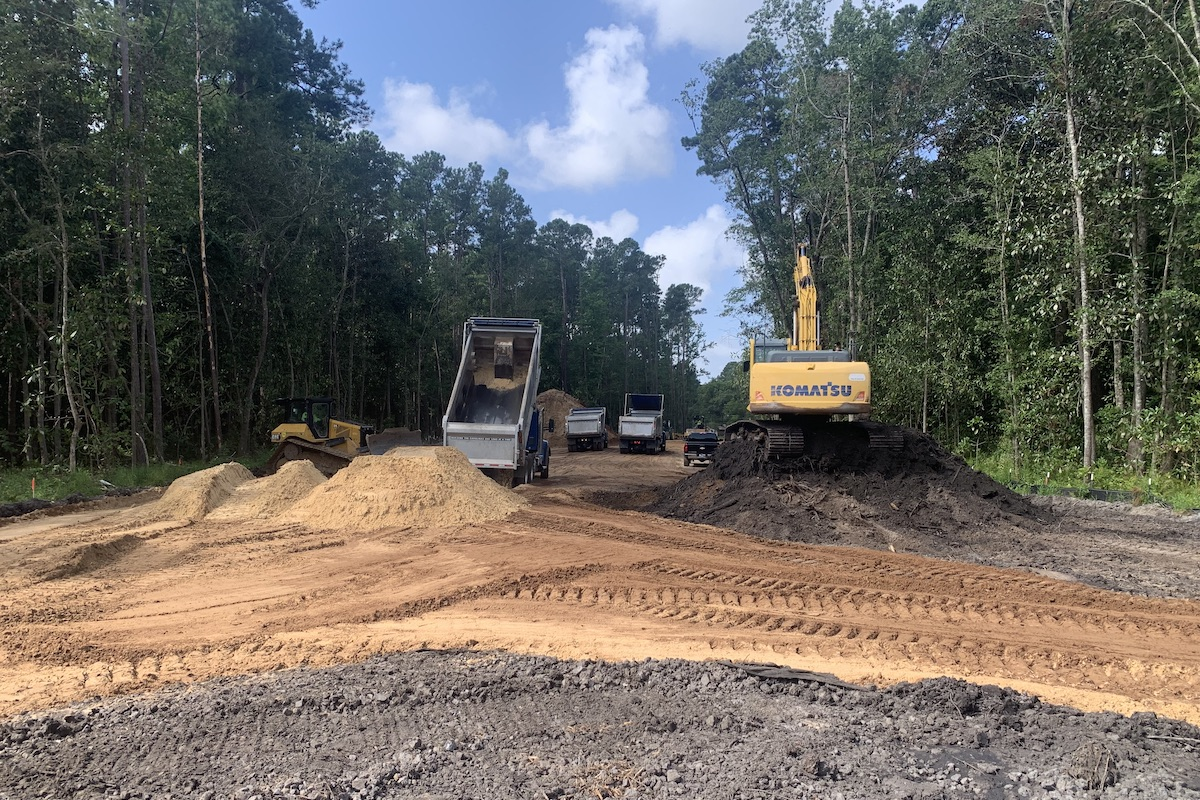
South Carolina contractors often need an excavator, skid steer, loader, dozer, telehandler, compactor, or dump truck before the jobs using that equipment have generated enough cash to pay for it outright.
Construction equipment financing can spread the acquisition cost over time while leaving more working capital available for payroll, fuel, materials, mobilization, repairs, and customer-payment delays.
Quick Answer: Construction equipment financing in South Carolina can help contractors acquire new or used machinery without paying the full price upfront. Approval generally depends on cash flow, existing debt, credit history, equipment age and value, seller quality, available liquidity, and whether the machine is replacing an existing cost or supporting documented work.

The financing provider evaluates two things at the same time: the contractor and the machine.
Credit needs to understand whether the business can carry the payment and whether the equipment has enough useful life and commercial value to support the proposed term.
A typical review can include:
The same underwriting principles apply across productive commercial assets. Mehmi's North Carolina equipment financing guide provides a broader U.S. explanation of how cash flow, debt, equipment quality, and seller information fit together.
The objective should not be the largest approval available. It should be a payment the contractor can still carry when a job starts late, retainage is outstanding, weather interrupts work, or another machine requires an unexpected repair.
Common equipment can include:
Mehmi's heavy equipment financing page identifies construction machinery such as excavators, bulldozers, loaders, skid steers, graders, compactors, and cranes as equipment categories within its broader North American offering.
For telehandlers specifically, the telehandler invoice and financing guide shows why the dealer invoice should identify the machine, hours, serial number, attachments, deposit, and final purchase price before closing.
Do not assume every project expense is equipment.
Payroll, fuel, general overhead, job materials, and recurring operating losses are working-capital needs. Combining them into an equipment request can make both the economics and collateral harder to understand.
Statewide activity provides context, not repayment capacity.
The U.S. Bureau of Labor Statistics reported approximately 128,900 construction jobs in South Carolina in August 2026, seasonally adjusted, up about 3.9% from August 2025. (Bureau of Labor Statistics)
That confirms a substantial construction workforce, but it does not tell an individual contractor whether another excavator or loader is justified.
Credit will learn more from facts such as:
"Construction is growing in South Carolina" is a market observation.
"We rented a 20-ton excavator for $58,000 over the last 12 months and have two awarded projects requiring one for another year" is an equipment-financing argument.
Start with how long the machine will be used and how predictable utilization is.
A loan or Equipment Finance Agreement can fit a contractor that expects to keep the machine through most of its useful life.
This may make sense for an excavator, dozer, loader, or skid steer that will remain a core fleet asset after the financing term ends.
Mehmi's College Park excavator EFA-versus-lease guide goes deeper into how ownership-focused equipment financing differs from a lease.
A lease can deserve consideration when preserving upfront cash, scheduled replacement, or end-of-term flexibility matters.
But "lease" does not tell you enough.
Review:
Do not choose a lease simply because its monthly payment is lower.
Rental can be better when the machine is needed for one project, utilization will be inconsistent, or the contractor does not want long-term maintenance and resale exposure.
Owning a $200,000 machine that works two months each year can be worse than paying a high daily rental rate.
Paying cash removes financing cost but also removes liquidity.
A contractor should ask what remains after the purchase for payroll, materials, insurance, repairs, mobilization, and delayed customer payments.
For another U.S. example of balancing equipment ownership with operating liquidity, see Mehmi's Charlotte equipment loan and lease guide.
Revenue alone is not enough.
A $7 million contractor with several loaders, trucks, and excavators already financed may have less room for another payment than a $3 million contractor that owns most of its fleet outright.
Credit typically needs to understand what cash remains after normal operations and current debt service.
Replacing an existing machine usually has a historical operating story.
Provide:
An addition requires stronger evidence of future utilization.
Awarded contracts, recurring rental costs, subcontractor invoices, and existing fleet utilization are stronger than a forecast based only on hoped-for work.
A larger down payment reduces the financed balance but can create another problem if it leaves the contractor with very little cash.
Construction businesses regularly fund labor, fuel, materials, mobilization, and insurance before collecting the associated receivable.
Preserving an appropriate operating reserve can therefore matter as much as minimizing the machine payment.
Credit may consider:
A strong operating business does not make an overpriced or worn-out machine good collateral.
Potentially.
Used equipment can reduce acquisition cost substantially, but the buyer takes on more mechanical and valuation risk.
For an excavator, inspect more than the hour meter. Consider the undercarriage, hydraulics, pins and bushings, final drives, engine, boom, stick, bucket, electronics, service history, and any major repairs.
For a used machine with an extended warranty or prepaid service package, ask the dealer to itemize those amounts. Mehmi's Concord excavator warranty-cost guide explains why equipment value and warranty value should not be treated as the same thing.
The financing term should make sense relative to remaining useful life.
A low payment achieved by stretching an old, high-hour machine over an aggressive term can leave the contractor paying for equipment that has already become unreliable.
Private-sale and auction equipment can potentially work, but the ownership trail becomes more important.
A private-sale file may need:
For broader U.S. private-sale due diligence, Mehmi's South Florida equipment financing guide discusses seller verification, ownership, liens, and equipment documentation.
Auction transactions have an additional problem: settlement deadlines.
Do not bid above an amount the business can fund if financing is delayed or unavailable. An auction win is a purchase obligation, not a financing approval.
South Carolina generally imposes a 6% statewide Sales and Use Tax on retail sales of tangible personal property, and counties may impose additional local sales tax. Leases of tangible personal property can also be taxable. (SCDOR)
Construction equipment has an important South Carolina-specific exception.
The South Carolina Department of Revenue says qualifying self-propelled light construction equipment with compatible attachments and no more than 160 net engine horsepower can be subject to the state's Maximum Tax: 5% of the price or $500 per item, whichever is lower. Local sales taxes do not apply to items qualifying for this Maximum Tax. (SCDOR)
Form ST-405 further states that the equipment must be used for qualifying construction purposes, such as building or making additions to real property. Equipment being purchased for maintenance or repair activities does not automatically qualify. (SCDOR)
That distinction can materially change the cash needed at closing.
Do not assume every skid steer, loader, or excavator receives the $500 maximum simply because it is construction equipment. Horsepower, use, transaction structure, and tax rules matter.
Have the dealer and your tax professional confirm the exact treatment before finalizing the financing amount.
No.
Financing gives a business access to equipment. It does not expand the construction work the business is legally permitted to perform.
South Carolina's Contractor's Licensing Board states that a General or Mechanical Contractor license is required for regulated commercial construction costing more than $10,000, and the license's classifications and financial group limits govern the work the contractor may undertake. (SCLLR)
That matters financially.
A contractor should not justify a new $300,000 machine using projects it is not currently licensed or otherwise legally able to perform.
Equipment capacity and contracting authority should grow together.
Potentially.
South Carolina's Secretary of State is the central filing office for UCC financing statements covering security interests. A UCC-1 can provide public notice of a secured party's interest in collateral. (SC Secretary of State)
Before signing financing documents, understand:
A security interest in the financed excavator is different from broad collateral language covering substantially all business assets.
Read the actual agreement.
Consider an illustrative South Carolina excavation contractor purchasing a used excavator.
Assume:
The calculated payment would be approximately $3,653.98 per month.
Over 60 payments, scheduled payments would total approximately $219,238.93, including about $44,238.93 of interest.
After adding the $35,000 cash contribution and $1,750 illustrative fee, total cash outflow would be approximately $255,988.93, before taxes and the other excluded costs.
These are illustrative mathematical assumptions, not Mehmi pricing or a financing offer.
Now compare the payment against a current cost.
Suppose the contractor has been renting a comparable excavator for an average of $6,500 per active month for eight months each year, or $52,000 annually.
The illustrative financing payments equal roughly $43,848 annually.
That does not automatically make ownership $8,152 cheaper.
An owner now carries maintenance, major repairs, insurance, transport, storage, taxes, downtime, and resale risk.
The useful conclusion is that existing rental demand may provide evidence that the machine will be utilized. Management still needs to calculate the complete ownership cost.
A clean initial package can include:
If the business has previously been declined, find out why before applying again.
A bank may have objected to equipment age, high existing debt, insufficient cash contribution, or a policy issue rather than the contractor itself. Mehmi's dump truck second-look financing guide explains why identifying the original decline reason is more useful than repeatedly submitting the same file.
Compare the entire obligation, not the quoted payment.
Review:
Vocational trucks deserve additional review because the chassis and working body both matter. Contractors adding hauling capacity can use Mehmi's Florida dump truck financing guide as a checklist for engine, mileage, dump body, hydraulic system, and operating-cost considerations.
Potentially.
For tax years beginning in 2026, the IRS states that the maximum Section 179 expense deduction is $2,560,000, with the limit beginning to phase down when Section 179 property placed in service exceeds $4,090,000. The deduction is also subject to other eligibility rules and a business-income limitation. (IRS)
Section 179 is a tax deduction, not a financing rebate.
Do not purchase more equipment simply to create a deduction, and do not assume every lease or financing structure gives the same taxpayer the depreciation benefit.
Have your CPA review the exact equipment and contract.
Waiting, renting, or borrowing less can be stronger when:
Construction equipment financing works best when the machine solves a measurable operating problem.
That could be replacing rental expense, eliminating downtime, supporting awarded projects, bringing subcontracted work in-house, or replacing worn equipment.
"Buy the machine first and find work later" is a much weaker financing plan.
Potentially, but a startup has less operating history. Credit may place more weight on owner experience, available capital, personal credit where applicable, contracts, equipment value, and whether the proposed fleet is realistic for a new business.
There is no universal percentage. The required contribution can vary with cash flow, credit, equipment age, purchase price, seller, transaction size, and existing debt. A larger down payment is not always better if it leaves the company short of working capital.
Potentially. Providers can consider used equipment when age, hours, condition, value, maintenance, resale demand, and remaining useful life support the transaction. Older or unusual machines may require additional inspection or valuation.
Potentially. Buckets, breakers, forks, grapples, grade-control systems, and similar attachments are easier to evaluate when itemized on the same vendor quote and clearly connected with the machine's commercial use.
Potentially, but a dump truck is evaluated as a commercial vehicle as well as construction equipment. Credit may review VIN, mileage, engine, chassis, dump body, hydraulics, seller, condition, and intended hauling work.
Not necessarily. Funding can still depend on signed documents, seller verification, equipment identification, insurance, UCC conditions, down payment, and other closing requirements.
Mehmi Financial Group operates as a financing brokerage rather than the lender making the final credit decision. Its broader construction and contractor financing resources and equipment loan information explain the types of equipment and financing structures it coordinates.
To discuss a transaction, have the amount required, South Carolina business location, equipment quote, use of funds, existing equipment obligations, and desired purchase timing available.
Call 833-863-4644 or contact Mehmi Financial Group. Any financing remains subject to provider underwriting, documentation, equipment eligibility, transaction structure, and confirmation that the applicable product is available in South Carolina.
.svg)