
Quick answer: Business funding should match the specific cash-flow gap and a repayment plan the business can sustain. Compare a fixed-term facility, revolving credit or eligible receivables financing by net proceeds, total cost, payment frequency, security and exit terms.
At-a-glance financing chart
| Decision factor | What to review | Why it matters |
|---|---|---|
| Cash flow | Revenue, deposits, margins and existing payments | Shows repayment capacity |
| Credit | Business and guarantor credit history | Affects lender fit and pricing |
| Existing debt | Loans, MCAs, leases, liens and payment load | Shows total leverage |
| Use of funds | Payroll, inventory, project costs, expansion or refinance | Helps match the right product |
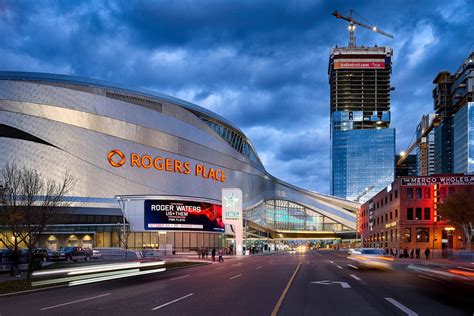
Edmonton Franchise Financing: How Lenders Value Your Franchise Deal
Takeaway (read this first): In Edmonton, lenders don’t “value” your franchise the way a buyer does. They value it the way a risk team does: predictable cash flow + proven brand unit economics + clean documentation + a location plan that can survive Edmonton’s seasonality and construction detours. If you build your deal around what underwriters actually score—the 5Cs (character, capacity, capital, collateral, conditions)—you’ll usually get better terms, fewer conditions, and a faster path to funding.
Why “value” matters more than “price” in a franchise purchase
Most Edmonton franchise buyers focus on purchase price and down payment. Lenders focus on a different question:
“If revenue is 20% lower than plan for 90 days, does this deal still pay us back—without drama?”
That’s why two franchisees can buy the same brand and get totally different approvals. The deal structure and the approval package change the lender’s view of risk more than the logo does.
If you want the broad Canada-wide overview first, start here: Franchise Financing in Canada: A Practical Guide (Mehmi) (Mehmi Financial Group)
The underwriter’s lens: how lenders score a franchise deal (the 5Cs)
Here’s the plain-language version of what a credit team is doing behind the scenes.
Character: “Do we trust how you operate?”
Key point: Clean bank conduct and consistent reporting often beats a perfect story.
Underwriters look for:
- Stable deposits (not wild swings with no explanation)
- No repeated NSF/overdraft patterns
- Taxes filed on time (and plans for arrears if not)
- A realistic operator narrative (experience, hours, partner roles)
Contrarian but true: A “great” franchise can still get declined if the borrower’s conduct shows chaos. Lenders fund patterns, not promises.
Capacity: “Can the business safely make the payments?”
m leverage.
They’ll pressure-test:
- Royalties + ad fees + labour + rent + debt payments
- Seasonality (winter slowdowns, summer spikes, event-driven sales)
- Ramp-up periods (especially new builds)
A quick mental model:
- If your plan only works when everything goes right, it won’t underwrite well.
- If your plan works when sales are merely okay, lenders relax.
To sanity-check payments before you apply, use Mehmi’s Franchise Financing in Canada + Free Payment Calculator (Mehmi Financial Group)
Capital: “How much of your own money is really at risk?”
Key point: Capital isn’t just the cheque you write. It’s your buffer.
Lenders like to see:
- A clear equity injection (down payment)
- Working capital left over after deposits, renovations, initial inventory, and soft costs
If you drain your cash to “get in,” the lender sees a fragile deal—even if the franchise is strong.
Collateral: “If things go sideways, what can we sell?”
Key point: In many franchise deals, lenders can’t rely on “goodwill.”
What collateral actually helps:
- Equipment with resale value (kitchen, vehicles, signage, hard assets)
- Assignable contracts (sometimes)
- Personal guarantees (common, especially for newer owners)
This is why Mehmi often structures franchises leasing-first—equipment is one of the few tangible pieces lenders can underwrite cleanly.
Start with: Equipment Leasing Canada (Mehmi) (Mehmi Financial Group)
Conditions: “What external factors could break the plan?”
Key point: Edmonton deals get evaluated through a local disruption lens.
Think:
- Construction detours, access changes, parking impact
- Local traffic flows and commuter patterns
- Labour availability
- Exposure to cyclical sectors (depending on the franchise category)
Edmonton-specific example: West-end builds and commuter-driven sites can be affected by major transit construction phases—credit teams care because access changes sales. The City of Edmonton’s Valley Line West project is a real-world example lenders may consider when they look at timelines, access, and ramp-up risk. (City of Edmonton)
What lenders mean by “value” in a franchise deal
Most franchise financing decisions come down to three value buckets:
- Cash flow value (unit economics and payment safety)
- Asset value (equipment and build components that hold resale value)
- Brand value (system strength and predictability—not hype)
Edmonton localization: 4 local factors that change how deals are underwritten
Edmonton factor 1: “Traffic is not uniform—micro-location matters”
In Edmonton, site economics vary drastically between:
- destination retail zones (e.g., West Edmonton area),
- commuter corridors and ring-road access,
- south-side retail clusters,
- industrial/service adjacency (where weekday demand matters more than weekends).
Lenders don’t need you to be a city planner—they need you to show you understand who your customer is and why they’ll be there.
Edmonton factor 2: Construction timelines and access risk show up in lender conditions
Major infrastructure projects can change access, parking, and commute patterns. Underwriters may respond with:
- larger working capital requirements,
- delayed draws tied to milestones,
- tighter covenants early on.
Valley Line West is one current example that can affect west-side mobility and access patterns during construction phases. (City of Edmonton)
Edmonton factor 3: Airport and logistics adjacency can support certain franchises
If your franchise serves:
- business travellers,
- logistics workers,
- shift-based operations,
- industrial/service hubs,
your site logic may lean toward south-of-city access and travel corridors. That can be a positive in underwriting when you can show stable weekday demand (not only weekend spikes).
Edmonton factor 4: Seasonality is real—and lenders expect you to plan for it
Edmonton winter affects:
- walk-in traffic,
- staffing reliability,
- marketing efficiency,
- delivery and service timelines (depending on the franchise).
A lender-friendly plan includes:
- a winter marketing play,
- labour contingency,
- a cash buffer that doesn’t assume “best month” performance.
How to structure an Edmonton franchise deal to look “higher value” to lenders
Lease-first financing: why it often improves approvals
Key point: Leasing separates asset risk from startup cash risk.
In practice, you often get better outcomes when you:
- Lease the equipment (clear collateral, predictable payments, keeps cash in business)
- Finance fit-out and franchise costs separately (where appropriate)
- Preserve working capital for ramp-up and seasonality
If your project includes heavy equipment or specialized build elements (common in food, auto, medical, and service franchises), this guide helps: Franchise equipment & fit-out financing options (Mehmi) (Mehmi Financial Group)
Also useful for cost clarity: How to Calculate Equipment Financing Costs in Canada + Free Calculator (Mehmi) (Mehmi Financial Group)
Government-backed financing: where it fits (and where it doesn’t)
Key point: Government-backed programs can be great—but they’re not magic.
The Canada Small Business Financing Program (CSBFP) is commonly used for things like equipment and leasehold improvements (and related categories), depending on eligibility and lender participation. (ISED Canada)
In real underwriting terms:
- CSBFP can improve lender comfort on certain costs
- But you still need a strong 5C story (especially capacity + capital)
The Canada-specific “gotcha” many franchise buyers miss: GST/HST timing on leases and rent
Key point: Even when costs are “recoverable,” timing can strain cash early.
Lease payments and rent commonly include GST/HST, and registrants may claim input tax credits (ITCs) when eligible—but timing matters (especially around registration and the period the expense relates to). (Canada)
This is one reason lenders value working capital buffers so heavily in Canadian franchise deals.
CRA lease deductibility: why lenders like leasing (when it fits)
From a cash-flow lens, lease payments are often straightforward to model, and CRA generally allows lease payments incurred in the year for property used in the business (subject to the usual rules). (Canada)
This isn’t “tax advice,” but it’s why leasing tends to be underwriting-friendly: predictable payment + predictable accounting treatment.
Deal “guardrails”: conditions precedent and covenants (what they mean in real life)
Conditions precedent (CPs): what must be true before funding
Common franchise CPs:
- Signed franchise agreement and proof of training schedule
- Final equipment list + vendor invoices/quotes
- Signed lease + landlord consents (as required)
- Proof of insurance (liability, property, sometimes business interruption)
- Proof of equity injection / down payment source
- Entity docs (corporation, directors, banking)
If you want to speed up, treat CPs like a closing checklist, not a negotiation after approval.
Covenants: what gets monitored after funding
Covenants vary, but common “small business reality” examples:
- Maintaining a minimum cash balance
- Providing monthly bank statements or quarterly financials
- Staying current on taxes
- Not taking on new debt without permission (especially early on)
Monitoring triggers lenders watch before a missed payment:
- deposits trending down for multiple weeks,
- rising NSF/overdraft activity,
- merchant processing declines (for some businesses),
- tax arrears showing up.
A simple “Franchise Deal Value Scorecard” you can use before you apply
Score yourself (honestly) from 0–2 in each category:
- Brand proof: comparable unit sales data and support (0–2)
- Location logic: clear customer story + access/parking plan (0–2)
- Operator plan: who runs what, staffing plan, hours covered (0–2)
- Capital buffer: cash remaining after opening (0–2)
- Documentation: clean invoices/quotes/lease/franchise docs (0–2)
- Payment comfort: plan works if revenue is 20% lower for 90 days (0–2)
10–12: lender-friendly
7–9: financeable but expect conditions or more equity
0–6: restructure before applying (or you’ll waste time)
Anonymous Edmonton case study: how a “good brand” became a financeable deal
Profile:
A first-time franchisee buying a service franchise in Edmonton (not food), targeting a west-end territory with vehicle needs and a small warehouse/office footprint.
The original problem:
The buyer wanted one lump-sum loan for everything:
- franchise fee
- vehicles
- tools/equipment
- initial marketing
- working capital
The lender concern wasn’t the brand—it was fragility:
- too little cash left after close,
- projections based on “best months,”
- equipment list was vague (no serializable assets, no clean quotes).
How we restructured (leasing-first):
- Leased the vehicles and core equipment (clean asset schedule, better collateral story).
- Kept working capital separate and right-sized to ramp-up.
- Rebuilt projections with a conservative first 90 days and a winter scenario.
- Presented an “operator cadence” plan (weekly KPIs, staffing, marketing cadence).
What changed in underwriting terms (the 5Cs):
- Capacity improved because payments matched realistic revenue timing.
- Capital improved because we preserved liquidity instead of spending it all at close.
- Collateral improved because assets were documented and financeable.
- Conditions improved because the location/operations plan included disruption and seasonality assumptions.
Outcome:
Approval came back with fewer conditions, and the owner opened with enough buffer to survive the slower first stretch without missing supplier payments.
Next steps (practical, not salesy)
If you’re financing a franchise in Edmonton, your goal isn’t “getting approved.” It’s getting approved without starting the business cash-tight.
A good next step is to build your package around:
- equipment list + quotes,
- lease terms + opening timeline,
- conservative cash flow plan,
- proof of down payment and post-close liquidity.
If you want help structuring it leasing-first (especially when equipment and fit-out are involved), Mehmi’s Franchise Loan page outlines what we typically fund and what we look for. (Mehmi Financial Group)
For Edmonton-specific options, see: Business Loan Edmonton (Mehmi). (Mehmi Financial Group)
Authoritative references
- Innovation, Science and Economic Development Canada — Canada Small Business Financing Program:
The Canada Small Business Financing Program makes it easier for small businesses to get loans from financial institutions by sharing the risk with lenders.
Program eligibility, lender criteria, tax treatment, and product terms can change. Verify current official guidance and the final financing documents before making a decision.
FAQ: Edmonton franchise financing (Canada-specific)
1) What down payment do Edmonton franchise lenders typically expect?
It depends on brand strength, your experience, and the asset mix. Strong deals with leaseable equipment often require less cash pressure than “all soft cost” deals. The bigger issue is usually how much cash you have left after opening, not just the minimum down payment.
2) Can I finance franchise equipment separately from the franchise fee and build-out?
Yes—and it often helps approvals. Leasing equipment can improve collateral quality and preserve working capital. Start with Mehmi’s Franchise equipment & fit-out financing options. (Mehmi Financial Group)
3) Is CSBFP available for franchise purchases in Canada?
CSBFP is commonly used for eligible categories like equipment and leasehold improvements (among others), subject to program rules and lender participation. (ISED Canada)
4) What documents matter most for Edmonton franchise approvals?
The “big three” are usually:
- lease + location details (rent, term, inducements),
- equipment list and vendor quotes,
- bank statements and a conservative cash flow plan.
5) Are franchise lease payments tax-deductible in Canada?
CRA generally allows deducting lease payments incurred in the year for property used in your business (subject to the usual rules). (Canada)
Always confirm specifics with your accountant.
6) Do I pay GST/HST on franchise lease payments and rent?
Often yes, and GST/HST registrants may claim ITCs when eligible—but timing and registration details matter. (Canada)
Source perspective
BDC distinguishes a revolving operating facility from a term loan when explaining cash-flow financing.
“A line of credit is appropriate for short-term financing needs”
Match the repayment structure to when cash is expected to arrive. Confirm whether the facility revolves, how repayments work and which security and renewal conditions apply.