
Quick answer: Equipment refinancing in Burnaby can help a business turn owned equipment into working capital without selling the asset or stopping operations. The practical idea is simple: if your company owns machinery, vehicles, trailers, production equipment, forklifts, shop assets, medical equipment, or other hard assets with real resale value, a lender may advance funds against that equity and structure repayment over time.
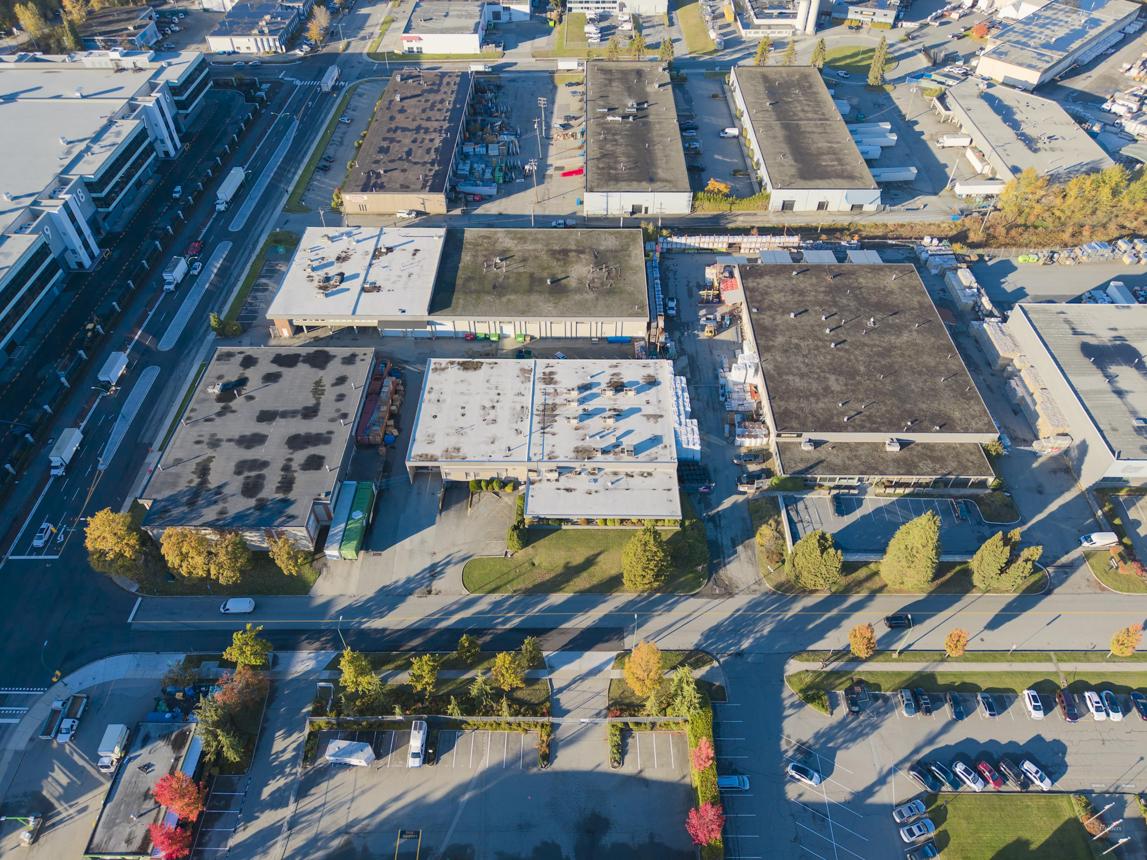
Equipment Refinancing in Burnaby: Unlock Equity From Existing Assets
For Burnaby businesses, this can be useful because the city has a deep base of industrial, technology, film, distribution, light manufacturing, and service businesses. Burnaby’s business centres include areas such as Burnaby Business Park and Glenwood Industrial Estates in Big Bend, where the City describes a mix of light industrial firms, manufacturing, warehousing, food, film, logistics, and related operators with quick access to Highway 1, SkyTrain stations, and bus routes. (City of Burnaby)
What equipment refinancing means
Equipment refinancing means using the value in equipment your business already owns to access capital. The asset keeps working in the business, while the lender advances funds based on its value, condition, age, ownership proof, and your ability to repay.
There are two common forms. The first is a refinance of equipment that still has debt attached to it, where the new lender pays out the existing obligation and may provide additional cash if there is enough equity. The second is a sale-leaseback, where your business sells owned equipment to a funder and immediately leases it back.
For example, a Burnaby manufacturer may own a paid-off CNC machine worth $180,000. A lender may not advance the full $180,000, because the asset could sell for less in a distressed situation. But if the lender is comfortable with the asset, business cash flow, and documentation, the company may be able to unlock part of that value for payroll, inventory, supplier deposits, tax cleanup, contract mobilization, or debt consolidation.
Mehmi’s main page on equipment refinancing and sale-leaseback options is the best starting point if you already own business assets and want to compare structures.
Why Burnaby businesses use refinancing
Burnaby businesses often use equipment refinancing when the business is asset-rich but cash-tight. The goal is to turn existing equipment value into usable liquidity without interrupting production, deliveries, service calls, or customer work.
This is especially relevant in a city where industrial land, logistics, production capacity, and specialized business assets matter. Burnaby is expected to keep growing, with the City’s Burnaby 2050 planning materials noting more than 100,000 additional people and more than 50,000 additional jobs by 2050. (yourvoice.burnaby.ca) Growth can create demand, but it can also create pressure: larger contracts, higher payroll, more inventory, tighter industrial space, more vehicle use, and faster replacement cycles.
Burnaby’s economy is also diverse. The Burnaby Board of Trade describes local industry clusters including information technology, wireless communication, biotechnology, life sciences, film, digital media, education, environmental technologies, professional services, and light industry. (Burnaby Board of Trade) That variety matters because equipment equity may sit in very different assets: production machinery, film equipment, forklifts, delivery vehicles, shop tools, lab equipment, commercial kitchen assets, or warehouse equipment.
A practical example: a film-support business near North Burnaby may own grip, lighting, vehicles, or storage equipment. A food distributor in Big Bend may own refrigerated equipment, pallet racking, forklifts, and delivery units. A construction subcontractor may own compact equipment and trailers. Each asset class has a different resale market, which changes how much equity a lender may unlock.
Refinance vs sale-leaseback vs asset-based lending
The best structure depends on ownership, liens, asset value, and why the cash is needed. A refinance, sale-leaseback, and asset-based facility can all unlock value, but they do it differently.
A sale-leaseback is often the cleanest structure when the business owns the equipment outright. The uploaded sale-leaseback funding reference lists items such as signed lease documents, IDs, void cheque, vendor invoice or bill of sale, original purchase invoice, original proof of payment, insurance certificate, lien search, inspection if applicable, and registration transfers where required.
If your business also has strong receivables, inventory, or multiple asset classes, compare asset-based lending. If the need is smaller and not tied to an asset, a working capital loan may be simpler.
How much equity can you unlock?
The amount you can unlock depends on forced-sale value, not what you paid for the equipment. Lenders usually discount equipment value because they must consider resale risk, removal costs, market demand, age, hours, condition, and whether the asset is specialized.
A lender may start with an estimated fair market value, then apply an advance rate. The stronger the asset and borrower, the higher the possible advance. Mainstream assets with active resale markets usually perform better than custom equipment that only a few buyers can use.
A useful rule: the more easily the asset can be identified, moved, insured, appraised, and resold, the more useful it is as collateral. If the equipment is bolted into a facility, custom-built, missing serial numbers, poorly documented, or subject to liens, the refinance gets harder.
For deeper planning, read Mehmi’s guide to cash-out equipment refinancing in Canada.
When refinancing makes sense
Refinancing makes sense when the asset has value, the business has a clear use for funds, and the new payment improves or protects cash flow. It should solve a timing or growth problem, not hide a broken business model.
Good uses include supplier deposits, payroll timing, contract mobilization, inventory purchases, seasonal cash gaps, refinancing expensive short-term debt, covering a temporary tax issue with a credible plan, or funding equipment repairs that protect revenue.
A Burnaby warehouse business, for example, may refinance paid-off forklifts and delivery equipment to fund racking, inventory, and staff before a new distribution contract starts. A contractor may use equipment equity to fund materials before progress payments arrive. A clinic may refinance existing medical equipment to upgrade a treatment room without using all available cash.
Mehmi’s guide on when to refinance vs replace equipment in Canada can help if the real question is whether to keep an aging asset or move into newer equipment.
When refinancing is the wrong move
Refinancing is not a cure for permanent losses. If the business is losing money every month and there is no realistic fix, unlocking equipment equity may only delay the problem while putting important assets at risk.
Be cautious if the funds will cover repeated operating losses, owner draws the business cannot support, unpriced jobs, weak margins, overdue supplier balances with no new cash plan, or stacked debt payments. Also be careful if the equipment is essential and the business could not operate if it were repossessed.
My direct opinion: equipment refinancing is powerful, but it should not be treated as “free cash.” You are converting owned asset value into a new obligation. That can be smart when it creates breathing room or growth capacity. It can be dangerous when it simply turns a hard asset into another monthly payment.
If the problem is recurring receivable timing, compare invoice and freight factoring. If the problem is recurring seasonal cash flow, a business line of credit may be cleaner than repeatedly refinancing equipment.
Burnaby-specific deal considerations
Burnaby’s local operating environment can strengthen or weaken the refinancing story. A lender wants to understand how the asset fits the business, the local market, and the repayment plan.
First, equipment location matters. Assets in business centres with quick access to Highway 1, SkyTrain, and industrial routes are easier to contextualize if they support warehousing, delivery, logistics, production, or field service. The City describes Burnaby’s business centres as serving a range of industries with connected transportation routes, transit options, and high-speed fibre services. (City of Burnaby)
Second, business licensing matters. The City of Burnaby says all businesses in Burnaby, including commercial, home-based, residential rental, professional, personal service, industrial undertakings, and non-profits, require a valid business licence. (City of Burnaby) If the equipment is tied to a regulated use, a relocation, or a new operating location, make sure licensing is current before asking a lender to rely on future revenue.
Third, development or building approvals can affect timing. Burnaby’s development, permits, and construction page directs owners, developers, and builders to approvals required for developing property in the city. (City of Burnaby) If an asset requires electrical work, ventilation, tenant improvements, anchoring, environmental controls, or site changes, the cash flow forecast should reflect approval and installation timing.
Fourth, industrial land pressure matters. Burnaby 2050 materials state that the City needs to protect employment and industrial land while creating job opportunities as it grows. (yourvoice.burnaby.ca) For equipment-heavy businesses, this means space, relocation, and facility planning can be as important as the equipment itself.
How lenders underwrite a refinance
Lenders underwrite both the business and the asset. The equipment may be the security, but the business cash flow is still the first repayment source.
The plain-language underwriting framework is the 5Cs: character, capacity, capital, collateral, and conditions. Character is your repayment history and owner conduct. Capacity is whether the business can afford the new payment. Capital is the owner equity or retained cash in the business. Collateral is the equipment and any supporting security. Conditions include industry, location, asset use, rate environment, and the purpose of funds. A credit risk reference in the uploaded material describes 5C analysis as character, capacity, capital, collateral, and conditions.
Behind the scenes, lenders also think in probability of default, exposure at default, and loss given default. In plain English: how likely is the business to miss payments, how much money is outstanding if it does, and how much could be recovered from the equipment or other security.
This is why a strong refinance package explains more than the asset value. It should answer: why cash is needed, why now, how the equipment supports operations, how repayment will happen, and what changes after funding.
Documents you should prepare
A complete file makes equipment refinancing faster and cleaner. Missing proof of ownership, unclear serial numbers, weak photos, or unresolved liens can slow the transaction even when the business is otherwise financeable.
Prepare:
Recent business bank statements, usually three to six months.
Business registration or articles of incorporation.
Government ID for signing owners or guarantors.
Equipment list with year, make, model, serial number, hours, kilometres, and location.
Photos of each side of the asset and odometer or hour meter where applicable.
Original invoice, bill of sale, or proof of purchase.
Proof of payment showing how the asset was originally acquired.
Registration, if applicable.
Lien search or payout statement if existing debt remains.
Insurance details.
Recent financial statements for larger requests.
A short use-of-funds note.
The uploaded credit guideline reference specifically lists refinancing requirements such as full equipment specs, equipment registration, buyout if applicable, pictures from four sides plus odometer where applicable, reason for refinancing, sales accommodation or private sale details, recent bank statements, and repair invoices where relevant.
How to calculate whether the deal works
A refinance should improve liquidity after the new payment is included. The test is not “Can I get the money?” It is “Will the business be stronger after the payment starts?”
Use this simple structure:
Then test the payment. If the new payment is $3,200 per month, ask whether the business can still handle rent, payroll, GST/PST, supplier payments, insurance, repairs, and existing debt in a slower month. If the answer depends on perfect sales, the advance may be too high or the term may be too short.
For a broader collateral discussion, review Mehmi’s guide to collateral for equipment financing in Canada.
GST, PST, and BC tax gotchas
BC businesses need to watch both GST and PST when equipment is leased, refinanced, or moved into a sale-leaseback structure. The tax treatment can affect the true payment and cash-flow timing.
As of May 2026, CRA guidance says registrants can generally claim input tax credits only for the part of GST/HST paid or payable that relates to consumption or use in commercial activities. (Canada) That matters when equipment has mixed business and personal use, or when documentation is incomplete.
BC has a separate provincial sales tax layer. The Province of British Columbia’s PST guidance for rentals and leases of goods explains PST rules for leased goods and includes examples around supplying goods with or without an operator. (Government of British Columbia) The Canada-specific and BC-specific gotcha is that GST recoverability and PST cost are not the same thing. GST may be recoverable through ITCs if rules are met, while PST can still be a real cost depending on the equipment and structure.
Before signing, compare Mehmi’s guides to GST/HST input tax credits on financed equipment in Canada and PST on equipment leases in BC, Saskatchewan, and Manitoba. Confirm final treatment with your accountant.
How interest rates affect refinancing in 2026
Rates affect whether the refinance creates breathing room or simply adds pressure. The payment has to work at today’s cost of capital and under a realistic slower-sales scenario.
As of April 29, 2026, the Bank of Canada held its target overnight rate at 2.25%, with the Bank Rate at 2.5% and the deposit rate at 2.20%. (Bank of Canada) This does not tell you your exact refinance rate, because equipment refinance pricing depends on credit, time in business, asset type, loan-to-value, term, down payment or equity, guarantees, and lender appetite.
The smarter test is payment resilience. A Burnaby business should model what happens if receivables pay 15 days slower, a customer delays a project, a major asset needs repair, or sales come in 10% below plan. If the refinance still works, the structure is more defensible.
BDC’s equipment-financing guide emphasizes the complete financing structure when comparing offers.
“Don’t focus only on interest rates”
For the equipment decision discussed here, compare the amount financed, payment schedule, collateral and remaining obligations alongside the quoted rate.
Conditions precedent, covenants, and monitoring
Approval does not mean funds are released immediately. Lenders often require specific items before funding and may monitor the account after funding.
Conditions precedent are items that must be completed before money is advanced. In an equipment refinance, this may include signed documents, proof of title, lien discharge, insurance, inspection, registration changes, payout confirmation, proof of ownership, and completed security.
Covenants are rules or reporting requirements after funding. Smaller equipment refinances may have limited covenants, while larger or higher-risk files may require financial statements, bank statements, insurance renewals, tax compliance, borrowing-base updates, or restrictions on selling the equipment. The uploaded commercial lending reference explains that conditions precedent are requirements before funds are lent, while covenants allow a lender to monitor business performance after money has been advanced.
Monitoring is practical. Lenders watch for missed payments, frequent NSF items, declining deposits, cancelled insurance, tax arrears, unauthorized sale of equipment, new high-cost debt, or a major customer loss. A missed payment is usually not the first warning sign; it is the late-stage symptom.
Anonymous case study: Burnaby logistics company unlocks equity
A Burnaby logistics and warehousing company owned several forklifts, two older delivery units, and warehouse equipment. The business had grown quickly after adding regional distribution work, but cash was tight because payroll and fuel costs hit before customer invoices were collected.
The owner first asked for an unsecured working capital loan. The bank statements showed solid deposits, but the existing short-term payment load was already heavy. A better approach was to refinance equipment the company already owned.
The lender ordered a valuation review, confirmed serial numbers, checked registrations, reviewed photos, and requested proof of ownership. The strongest collateral was the forklifts and one delivery unit with clear title and good resale value. The older vehicle with higher mileage was discounted more heavily.
The final structure unlocked enough cash to pay down expensive short-term debt, fund payroll timing, and leave a smaller working capital buffer. The payment was lower than the stacked debt the business was replacing. The file worked because the 5Cs lined up: strong character, enough capacity after consolidation, real owner capital in paid-off assets, identifiable collateral, and conditions supported by Burnaby’s industrial and distribution base.
The result was not just cash out. It was a cleaner balance sheet and a payment schedule the business could manage.
Refinancing vs replacing equipment
Sometimes refinancing an existing asset is smart. Other times, replacing the asset is the better financial decision.
Refinance when the equipment is still productive, maintenance is predictable, ownership is clear, and the cash unlocked will improve the business. Replace when downtime is rising, repairs are frequent, technology is outdated, or the equipment limits revenue.
A Burnaby manufacturer with a reliable press may refinance it to fund raw materials. But if that press is creating bottlenecks, rejects, or downtime, the better option may be leasing newer equipment. For new asset planning, compare equipment lease structures or broader equipment financing options.
For sector-specific needs, Mehmi also has guides for construction equipment financing, medical equipment financing, and restaurant equipment financing.
Next steps for Burnaby business owners
The best next step is to build a clean refinance package before applying. A strong file helps the lender value the asset, understand the repayment source, and reduce conditions.
Create a one-page brief with your business history, equipment list, ownership proof, estimated values, current debt, use of funds, repayment source, and why the timing matters. Add Burnaby-specific context where it helps: industrial location, customer base, Highway 1 delivery routes, film or production work, warehousing, manufacturing demand, or licensing status.
Mehmi can help compare equipment refinancing, sale-leaseback, leasing, asset-based lending, and working capital structures so the business does not over-borrow against important assets. The right structure should unlock cash while keeping the operating business safer after funding.
Authoritative references
- Innovation, Science and Economic Development Canada — Canada Small Business Financing Program:
The Canada Small Business Financing Program makes it easier for small businesses to get loans from financial institutions by sharing the risk with lenders.
Eligibility, pricing, tax treatment, and program terms can change. Verify current official guidance and final financing documents.
FAQ
Can I refinance equipment I still owe money on?
Yes, if there is enough value after the existing payout. The new lender will review the asset value, payout statement, lien position, ownership documents, and your ability to handle the new payment.
If the payout is too close to the equipment’s current value, there may be little or no cash-out available.
Can I use equipment refinancing to pay CRA or suppliers?
Sometimes. Lenders may consider tax arrears, supplier cleanup, or debt consolidation if there is a credible plan and enough repayment capacity after funding.
They will be cautious if the refinance simply covers recurring losses without fixing the cause.
What types of equipment are best for refinancing?
Mainstream hard assets usually work best: forklifts, trailers, yellow iron, vocational vehicles, production machinery, medical equipment, and certain shop or warehouse assets. Highly customized, obsolete, low-value, or difficult-to-resell equipment may receive a lower advance or be declined.
Do I need an appraisal?
Possibly. Lenders may use internal valuation, market comparables, inspection, or a third-party appraisal depending on asset type, value, age, specialization, and transaction size.
Larger or more specialized assets are more likely to require a formal valuation.
Is sale-leaseback taxable in BC?
It can have GST/PST implications depending on structure, asset type, registration status, and use. GST and PST are not the same.
GST may be recoverable through ITCs if eligibility rules are met, while PST may still affect lease cost. Confirm the final treatment with a qualified accountant before signing.
Will refinancing hurt my ability to get new equipment later?
It can, if the new payment uses too much cash flow or if key collateral becomes fully encumbered. It can also help if it consolidates expensive debt and improves liquidity. The lender will look at total debt load, cash flow, and whether the business still has room for future asset financing.