
Quick answer: Avoid delays, rework, and declines. Learn how shipping terms, customs docs, deposits, and delivery steps affect equipment leasing approvals in Canada.
Financing options to compare
| Option | Best suited for | Repayment structure | What to compare |
|---|---|---|---|
| Equipment loan | Businesses planning to own the asset | Fixed scheduled payments | Down payment, term, fees, lien, prepayment |
| Equipment lease | Businesses prioritizing payment flexibility | Scheduled lease payments | End-of-term option, residual, fees, buyout |
| Business line of credit | Smaller recurring purchases or deposits | Revolving balance | Draw limits, interest, renewal, security |
Terms, eligibility and costs vary by lender and borrower profile. Compare the full financing agreement rather than relying on a single payment or rate.
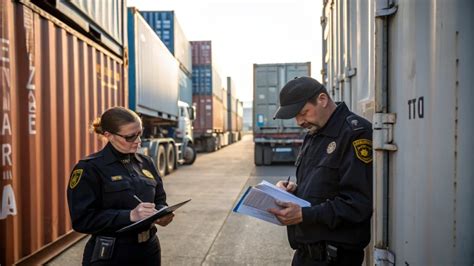
Shipping, Customs, and Financing: How to Keep a Canadian Equipment Deal Fundable
When a Canadian equipment deal goes sideways, it’s usually not because the asset is “unfinanceable.” It’s because shipping + customs + documentation introduce uncertainty that lenders (and lessors) hate.
Here’s the promise: by the end of this guide, you’ll know how to structure an imported (or cross-border) equipment deal so it stays approvable, fundable, and on time—with fewer surprises around deposits, Incoterms, customs paperwork, and delivery/acceptance.
Who this is for
- Equipment dealers selling across Canada with shipping/install complexity
- Importers buying from the U.S., Europe, or overseas
- Canadian business owners buying machinery, trucks, trailers, shop equipment, medical/industrial gear, and anything with attachments or installs
How we wrote this (the “credit brain” angle)
This is written from an underwriting lens: what a credit team is actually trying to control—delivery risk, documentation risk, title/lien risk, and “who owes what” risk—using the 5Cs (character, capacity, capital, collateral, conditions).
If you want a broader starting point first, see our overview of how to choose an equipment financing and leasing company in Canada.
BDC’s equipment-financing guide emphasizes the complete financing structure when comparing offers.
“Don’t focus only on interest rates”
For the equipment decision discussed here, compare the amount financed, payment schedule, collateral and remaining obligations alongside the quoted rate.
Why shipping and customs can break an otherwise good approval
Key point: Financing doesn’t fail because shipping exists; it fails because shipping creates “unknowns” (timing, cost, ownership, condition) that increase lender risk.
From a credit standpoint, lenders worry about three things:
- Probability of default (PD): Will payments be affordable if costs increase (duties, brokerage, storage, exchange rate swings, rework)?
- Exposure at default (EAD): How much money is out the door before the asset is safely delivered and accepted?
- Loss given default (LGD): If things go wrong, can the lender recover value (clear title, insurable asset, proper registration/lien position)?
This is why “easy” shipping choices sometimes cause declines. Example: an importer picks terms that look convenient, but the result is unclear invoices, mismatched parties, or no clean proof of delivery.
If you’re seeing delays or rework already, cross-check with the most common avoidable reasons equipment deals get declined.
The three fundability pillars: control, clarity, and timing
Key point: A fundable shipped/imported deal proves (1) who controls the transaction, (2) what the true landed cost is, and (3) when funding should happen.
1) Control (who is responsible for what)
The lender wants one clear story:
- Who is the buyer/lessee?
- Who is the vendor/seller?
- Who is the importer of record?
- Who is paying freight, insurance, duties, and taxes?
CBSA is explicit that the importer is ultimately responsible for accounting documentation and duties/taxes—even if a broker is used. (Canada Border Services Agency)
So if your deal structure makes the importer role unclear, you’ve created a funding issue, not just a logistics issue.
2) Clarity (documents match the reality)
Customs and financing both run on documentation:
- CBSA’s invoice requirements matter because they support valuation, classification, origin, and release processes. (Canada Border Services Agency)
- If invoices are incomplete, inconsistent, or “pro forma” without the right detail, you don’t just risk customs friction—you risk a lender refusing to fund because they can’t reconcile what’s being purchased.
3) Timing (when money moves vs when the asset is safe)
Financing teams love simple timelines:
- Signed docs → verified invoice/bill of sale → insurance → payment → delivery → acceptance
Their funding packages often require items like void cheque/PAD, current invoice/bill of sale, proof of initial payment (if applicable), and an insurance certificate.
When shipping stretches the timeline, you need a plan for:
- deposits,
- staged payments,
- prefunding conditions,
- delivery & acceptance.
Incoterms 101 (and the most “fundable” way to use them)
Key point: Incoterms don’t decide who owns the equipment; they define responsibilities for tasks, costs, and risk in transit—which directly impacts lender comfort.
Incoterms® 2020 are ICC rules that clarify tasks, costs, and risks between buyer and seller. (ICC - International Chamber of Commerce)
The contrarian (but practical) take
DDP (“Delivered Duty Paid”) is often worse for fundability than people assume.
It feels convenient (“seller handles everything”), but it can create documentation problems:
- importer-of-record confusion,
- duties/taxes embedded in pricing without clean breakdown,
- mismatched party names across commercial invoice vs customs paperwork,
- fewer clean “receipts” that match the buyer/lessee.
If you’re selling/importing regularly, a structure where the Canadian buyer’s side has clearer control and documentation (often using a broker) tends to be easier to finance.
Incoterms cheat sheet for financing risk (high-level)
Practical rule: whichever term you choose, your financing file must still show:
- what the equipment costs,
- what the landed extras cost (freight, brokerage, duties/taxes),
- who is paying each piece,
- and how delivery/acceptance will be proven.
Customs documentation: what matters for fundability (not just clearance)
Key point: Customs compliance and lender “proof” overlap more than most people realize.
1) A complete, defensible commercial invoice
CBSA’s guidance and memoranda focus heavily on invoice requirements because that invoice supports valuation and proper accounting. (Canada Border Services Agency)
From a lender view, a “good” invoice/bill of sale also:
- matches the legal vendor name,
- matches the buyer/lessee name,
- clearly lists make/model/year/serial (where applicable),
- separates equipment from shipping/installs/attachments (or at least itemizes),
- states the currency (and ideally the CAD equivalent for landed cost modeling).
A legal baseline for commercial import documentation can include a commercial invoice that contains the same information as a completed customs invoice. (Department of Justice Canada)
2) Value for duty and “landed cost” realism
CBSA notes the value for duty is typically the amount paid to the vendor and should be supported by a receipt/sales invoice; it also notes the value for duty must be in Canadian funds. (Canada Border Services Agency)
Why lenders care: if your landed cost is understated early, you can end up short on cash at delivery (storage fees, brokerage, unexpected duty), which becomes a capacity (cash flow) problem.
Mini landed-cost “calculator” (quick and usable)
- Equipment price (CAD)
- Freight & insurance (CAD)
- Brokerage fees (CAD)
- Duties (if applicable)
- GST/HST rules as applicable to your situation and province (Canada)
= Total landed cost
- GST/HST rules as applicable to your situation and province (Canada)
Then decide: what portion is being financed vs paid by the customer as down payment/deposit.
3) GST/HST on imports: the Canada-specific gotcha
In Canada, GST/HST treatment depends on the situation (imports, exports, drop-shipments, province, and registration status). (Canada)
Fundability impact: if you assume taxes are “handled later,” but they’re payable at import/release, you can create a surprise cash requirement right when the equipment arrives.
Financing mechanics that shipping complicates (and how to keep them clean)
Key point: In shipped/imported deals, approvals are common; funding is where deals die. The cure is a clean funding package and predictable conditions.
What funding packages typically require (and why)
Most lessors want a funding package that proves:
- the agreement is signed,
- identities and payment rails are verified,
- the invoice/bill of sale is current,
- insurance is in place,
- deposits (if any) are proven from the same account used for payments.
For standard vendor deals, funding requirements commonly include client void cheque/PAD (direct deposit forms not accepted), current vendor invoice/bill of sale, proof of initial payment (if applicable), and an insurance certificate.
For private sales, requirements can expand to include vendor ID and proof that any deposit/payment came from the lessee’s account (matching the void cheque).
For sale-leaseback structures, proof of the original purchase invoice and original proof of payment are typically required.
If you want the full “what to expect” timeline, see equipment financing process: step-by-step (application to funding).
The shipping/financing timeline that prevents re-work
Key point: A fundable deal has a timeline that matches how lenders release money.
Here’s the simplest model that works in real life:
Step 1: Pre-quote the deal you actually have
Before you present payments, collect:
- equipment specs (make/model/year/serial, hours/km),
- vendor legal name and location,
- Incoterm and shipping plan,
- expected delivery date,
- what’s included (attachments/installs/freight).
Dealers: this is exactly why a tight intake matters—use a dealer financing intake form that prevents re-work as your baseline.
Step 2: Separate “asset” from “everything else”
Lenders finance equipment best when the invoice makes it obvious what they’re financing.
If you routinely bundle attachments/installs, use how to offer financing for accessories, installs, and attachments to structure it cleanly.
Step 3: Match deposits to a fundable plan (no mystery money)
If a deposit is paid, many funders will ask for proof it came from the lessee’s account and matches the void cheque/PAD.
Common pitfall: the customer pays a deposit from a personal account or a different operating account “just to hold it.” Later, funding stalls because the paper trail doesn’t match.
Step 4: Plan for conditions precedent (CPs)
Conditions precedent are the “must be true before we fund” items. In shipped/imported deals, CPs often include:
- final invoice/bill of sale,
- insurance certificate,
- verified banking (void cheque/PAD),
- and sometimes prefunding/indemnification + delivery & acceptance once delivered.
Step 5: Build delivery & acceptance into your operations
If the asset arrives before funding (or funding is conditional on delivery), have a standard:
- photos/video at arrival,
- serial confirmation,
- install sign-off (if applicable),
- delivery & acceptance sign-off.
This single step prevents the “we paid but it wasn’t right” nightmare that underwriters are trained to avoid.
Underwriter lens: the 5Cs for shipped/imported equipment deals
Key point: Shipping adds risk mainly to collateral and conditions—but it can also expose character and capacity issues.
Character (trust + consistency)
- Clean story: same names across invoice, lease docs, customs paperwork
- No “rushed changes” to vendor, buyer, or deposit source late in the file
Capacity (can cash flow survive delays?)
- Can the business handle:
- port/yard storage charges,
- brokerage surprises,
- rework/installation overruns,
- delayed revenue start?
If the equipment is required to start a job, lenders may ask for stronger support (contracts/work letters) in some sectors.
Capital (skin in the game)
- Deposits/down payments are good—but only if documented cleanly (and from the right account).
Collateral (is the asset real, insurable, and recoverable?)
- Clear serial/VIN
- Clean title path (especially private sale)
- Insurance in place
Conditions (external risk + controllables)
- Incoterms and shipping route
- Import responsibilities (importer of record clarity) (Canada Border Services Agency)
- Customs invoice adequacy (Canada Border Services Agency)
Dealers: using financing to sell through shipping and customs friction
Key point: Financing isn’t only a payment method—it’s a process that can reduce deal friction if you package it properly.
- Put financing options where customers decide (not after the quote): offer financing options on your website
- Use financing to bundle higher-margin installs/attachments cleanly: financing as a sales tool (upsell playbook)
- When customers push for “fast approvals,” set expectations with documentation readiness: fast equipment funding: the exact checklist lenders want
Common “shipping + customs” deal killers (and fixes)
Key point: Most problems are predictable—and avoidable.
Deal killer 1: Pro forma invoices that don’t match the final transaction
Fix: Require a final commercial invoice/bill of sale that matches the financed amount and includes full equipment description. (Canada Border Services Agency)
Deal killer 2: Deposit paid from the wrong account
Fix: Make deposit rules part of your process (same account as the void cheque/PAD).
Deal killer 3: “We’ll figure out customs later”
Fix: Decide importer-of-record and broker plan up front; remember the importer is ultimately responsible. (Canada Border Services Agency)
Deal killer 4: Private sale with thin ownership proof
Fix: Use a private-sale package mindset: vendor ID, invoice/bill of sale, and proof of ownership/payment trail where needed.
If this is your scenario, start with best equipment financing for private-sale equipment.
Deal killer 5: Documentation sent as scattered photos
Fix: For bank statements (when required), send as a single PDF—not lots of separate JPGs.
Anonymous case study: Imported machine, bundled install, no funding delays
Key point: The win isn’t “finding a lender.” The win is making the deal easy to fund.
Scenario (realistic, anonymous):
A Quebec-based fabrication shop bought a specialized CNC package from the U.S. The vendor included crating, freight coordination, and an on-site installation team. Delivery window: 3–5 weeks. The customer wanted financing with minimal downtime.
What could have gone wrong:
- Deposit paid from the owner’s personal account to “hold the slot”
- Invoice bundled everything into one line item (“CNC package”) with no serial detail
- Shipping term implied the seller handled import, but paperwork showed the buyer as importer
- Installation wasn’t clearly priced vs equipment
How the deal was structured for fundability:
- Invoice clarity: vendor issued an itemized invoice separating:
- CNC machine (with serial),
- crating/freight,
- installation/service line items.
- Payment trail: the deposit was paid from the business operating account that matched the PAD/void cheque requirements (no mismatch later).
- Importer-of-record plan: the buyer used a customs broker and kept importer responsibility clear (no “mystery importer”). (Canada Border Services Agency)
- Funding package readiness: insurance certificate and current invoice/bill of sale were prepared before the funding request was triggered.
- Delivery & acceptance: a simple arrival checklist (photos, serial confirmation, install sign-off) was agreed in advance so acceptance could be issued immediately after installation.
Outcome:
Funding released without back-and-forth, install started on schedule, and the customer avoided a last-minute cash squeeze from “extras” that weren’t priced or documented properly.
A practical “fundable import” checklist (copy/paste)
Key point: If you can answer these items cleanly, you’re 80% of the way to a fundable shipped deal.
- Incoterm selected and documented (who pays/controls what) (ICC - International Chamber of Commerce)
- Importer of record is clear; broker plan confirmed (Canada Border Services Agency)
- Invoice/bill of sale is current and itemized (equipment vs extras) (Canada Border Services Agency)
- Equipment details: make/model/year/serial/hours/km (where applicable)
- Landed cost estimate completed (freight, brokerage, duties/taxes) (Canada Border Services Agency)
- Deposit rules followed (source account matches PAD/void cheque)
- Insurance certificate ready
- Delivery & acceptance plan defined (who signs, when, what proof)
Choosing the right financing offer when shipping is involved
Key point: With shipping complexity, the “best” offer is usually the one with the clearest funding path—not just the lowest payment.
Use our checklist for comparing equipment financing offers and pay special attention to:
- prefunding rules,
- documentation strictness,
- delivery/acceptance timing,
- what can/can’t be included (freight, install, attachments).
If you’re weighing bank vs broker channels for complex files, read broker vs bank: the real approval differences.
Calm next step (CTA)
If you have an imported/shipped deal in progress and want a fast “fundability check,” Mehmi can review your invoice structure, Incoterms plan, deposit trail, and funding conditions before you lose time (or the machine) to preventable rework.
FAQ (Canada-specific, People Also Ask style)
1) Can I finance equipment that hasn’t arrived in Canada yet?
Often yes—but the lender will usually require tighter conditions around invoice quality, insurance, and delivery/acceptance timing. Expect “conditions precedent” before money moves, especially if there’s any prefunding involved.
2) Who is responsible for customs paperwork if I use a broker?
Even if you use a broker, the importer is ultimately responsible for accounting documentation and paying duties/taxes. (Canada Border Services Agency)
3) What should be on the invoice to avoid customs and funding issues?
At minimum: a complete description, selling price, and terms/conditions of sale; and enough detail to support proper customs accounting. (Canada Border Services Agency)
For financing, add make/model/year/serial and itemize equipment vs non-equipment costs wherever possible.
4) Do duties and GST/HST affect approval?
They can—because they change the true cash requirement at delivery. GST/HST rules on imports depend on the situation and province, and businesses should plan for the correct timing of tax costs. (Canada)
5) Is a private sale harder to finance if it’s cross-border?
It can be, because lenders typically need stronger proof of ownership and identity (vendor ID, bill of sale, proof of payment trail).
Start here: private-sale equipment financing guide.
6) What’s the fastest way to prevent delays once a deal is approved?
Have the funding package ready before you ask for funding: void cheque/PAD, current invoice/bill of sale, proof of initial payment (if applicable), and insurance certificate—so the file doesn’t stall when shipping updates arrive.