.avif)
Key takeaways
- Approval depends on the business profile, financing purpose, documentation and lender criteria.
- Compare total cost, payment frequency, term, fees, security and prepayment terms.
- Use current documents and confirm lender-specific requirements before relying on an estimate.
Financing options to compare
| Option | Best suited for | Repayment structure | What to compare |
|---|---|---|---|
| Term loan | Defined one-time business need | Fixed scheduled payments | Total cost, term, fees, prepayment |
| Business line of credit | Recurring or uneven cash-flow needs | Revolving balance | Draw rules, interest, renewal, security |
| Secured financing | Larger requests backed by eligible assets | Structure varies | Collateral value, lien position, covenants, fees |
Terms, eligibility and costs vary by lender and borrower profile. Compare the full financing agreement rather than relying on a single payment or rate.
Quick answer: Learn how skidder/forwarder leases work in Canada—terms, down payments, docs, seasonal cash flow, and approval tips from an underwriter lens.
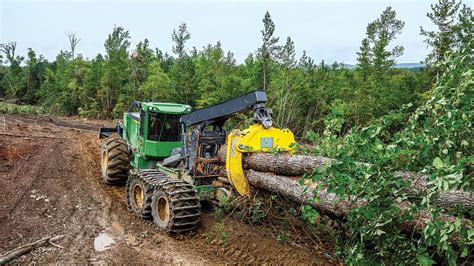
Skidder and Forwarder Leasing Options (Canada): Terms, Down Payments, and What Lenders Really Check
Forestry equipment is expensive, seasonal, and brutally hard on iron—so the “best” skidder or forwarder lease is usually the one that matches your production reality (m³/week, weeks/year, mill pay cycle) and keeps you liquid when roads shut down, spring thaw hits, or a mill slows. The practical goal: secure the machine you need without turning a good logging contract into a cash-flow trap.
Below is the complete, Canada-first guide to skidder and forwarder leasing options—with deal structures, approval logic (the 5Cs), documents, and a realistic case study.
What skidder and forwarder “leasing” usually means in Canada
Most Canadian forestry equipment financings fall into two buckets:
- FMV lease (Fair Market Value): Lower payment because the contract assumes the machine has value at the end. You can return, renew, or buy out at market value.
- $1 buyout / high-buyout lease (often structured like a conditional sale): Higher payment, but you’re effectively paying the machine off over the term.
Underwriter reality: for skidders/forwarders, lenders care less about what you call it and more about (1) resale risk, (2) usage risk, and (3) whether the payment schedule survives your slow months.
Skidder vs forwarder: how the machine changes the deal
Key point: Lenders price risk around how predictable the asset’s value and uptime will be.
- Skidders can be high-wear depending on terrain, operator behaviour, and the nature of the work (grapple vs cable, long drags, slope, slash). The lender will pay attention to condition, hours, and service history.
- Forwarders often have a different wear pattern (bogies, crane, hydraulic systems). If you’re running cut-to-length with stable haul distances, some lenders view the production story as more “plan-able.”
If you’re buying used, your approval improves dramatically when you can show:
- Hours + maintenance records
- Rebuild invoices (engine/hydraulics/major components)
- Photos and inspection info
- A credible production and pay cycle story (m³/week and weeks/year)
The underwriter lens: the 5Cs applied to forestry equipment
Key point: Approval is a narrative + evidence exercise. Underwriters don’t “love” forestry risk—they understand it when it’s well-documented.
A classic credit framework is the 5Cs: character, capacity, capital, collateral, and conditions—a judgment-based method still used widely in credit decisions.
Here’s what that looks like for skidder/forwarder deals:
Character (trust + track record)
- Time in the bush, reputation with mills/GCs, and clean file history.
- Do your bank statements show NSF chaos every spring? That’s a character red flag (not moral—operational discipline).
Capacity (cash flow to pay)
In forestry, “capacity” is not a T2-only debate. It’s:
- m³/week × price/m³ × weeks/year
- Less fuel, repairs, labour, trucking, insurance, and stump-to-mill costs
- Compared against the lease payment during your weakest months
A forestry credit write-up often asks specifically: where measurement is made (road vs mill), price per cubic meter, planned m³/week, weeks/year, and how you’re paid (weekly/bi-weekly/monthly).
Capital (your skin in the game)
- Cash down, trade equity, or additional security.
- Stronger capital can offset weak credit or thin financials.
Collateral (the machine + recoverability)
- Lenders view iron as collateral, but only if it’s identifiable, registrable, and saleable.
- Forestry collateral is tougher to liquidate than highway iron, so condition proof matters.
Conditions (industry + deal structure)
Wildfire seasons, mill curtailments, spring load restrictions, and access roads all affect “conditions.” Canada’s forest sector is economically significant, but it faces real volatility (and lenders know it). For example, Natural Resources Canada notes the forest sector contributed $27B to nominal GDP, employed 199,345 people, and exported $36.2B in forest products (2023 figures). That scale doesn’t eliminate risk—but it helps an underwriter believe your revenue sources are real.
Common skidder and forwarder lease structures (and when each fits)
Key point: The “best” structure is the one that aligns term + residual + seasonality with your contract and your maintenance curve.
FMV lease (best when you want flexibility)
When it fits
- You upgrade every few years
- You’re unsure how long the contract run-rate will last
- You want lower payments
Watch-outs
- End-of-term buyout is market-based
- Condition standards matter if returning the unit
$1 buyout / finance-style lease (best when you plan to keep it)
When it fits
- You know the machine will stay productive beyond the term
- You have stable mill relationships / multi-year harvesting plans
- You want ownership at the end
Watch-outs
- Higher payment can hurt spring/summer cash flow if you don’t seasonally structure it
Seasonal or custom payment schedules (often the smartest forestry move)
Forestry is not a 12-equal-payments business. Strong applications propose:
- lower payments during breakup / shutdown windows
- higher payments during peak hauling months
This is one of the most underused approval levers: you’re not asking for mercy—you’re presenting capacity in the way the business actually operates.
Typical terms, down payments, and “approval gravity”
Key point: Terms and down payments are less about a magic number and more about what risk you’re asking the lender to carry.
You’ll often see forestry term requests around 48–72 months with an example structure of 72 months / 10% cash down / residual shown in sector guidelines. That doesn’t mean every deal is 72 months—just that it’s a common packaging expectation.
Here’s a quick way to think about down payments:
- 0–10% down: Possible on strong files (experience + clean credit + provable contracts)
- 10–20% down: Common on used forestry iron, newer operators, or higher-hour units
- 20%+ down: Often required when credit is weak, documentation is thin, or the asset is older/harder to value
An “approval gravity” checklist (what makes a deal heavier)
- Startup forestry operator (0–2 years) without a work letter/contract
- No proof of experience when lenders can’t verify it (tax slips/returns showing employer)
- Used equipment with unknown hours, no inspection, unclear seller chain
- Payment schedule ignores spring thaw / access constraints
Canada-specific gotchas: tax and road restrictions that affect the lease
Key point: Two Canadian realities can change your real “cost of ownership” fast: indirect taxes and seasonal load restrictions.
GST/HST and input tax credits (ITCs)
Lease payments typically include GST/HST (and sometimes PST/QST depending on province and structure). If you’re GST/HST-registered and the equipment is used in commercial activity, you may be able to claim input tax credits—but timing and eligibility matter (especially for new registrants). CRA’s ITC guidance includes examples showing limitations on claiming ITCs for periods before registration.
Practical takeaway: if cash is tight, don’t assume “I’ll get the tax back immediately.” Build timing into your cash flow.
Spring load restrictions (breakup risk)
Road restrictions can crush hauling economics and reduce production right when fixed payments keep hitting. Ontario, for example, publishes seasonal load restriction information (spring thaw reduced loads).
Underwriter-friendly move: acknowledge breakup and show your plan:
- seasonal payment structure
- reserve account strategy
- alternate work (road building, hauling, maintenance) during restrictions
Documents lenders actually want (forestry edition)
Key point: Forestry approvals improve when you package the deal like an operator, not like a shopper.
Sector guidelines often request a forestry-specific activity summary including where wood is sold, measurement method, price per cubic meter, planned production, work weeks, pay frequency, employees, and existing equipment list.
For startups (0–2 years), a work letter/contract and 3 months of personal bank statements may be required, plus proof of relevant experience.
Credit guidelines also emphasize that some sectors (including forestry) may need the last 3 months of bank statements in a single PDF, and that for transport and forestry startups, a work letter/contract is mandatory.
Funding checklist table (use this to package cleanly)
A practical “lease choice” decision tool (fast, but accurate)
Key point: Choose based on your operational certainty and your upgrade cycle—not on the lowest advertised payment.
If you answer “yes” to 3+ of these, lean FMV
- I upgrade machines every 3–5 years
- Contract visibility is uncertain beyond 12–24 months
- I want the option to return if major component risk rises
- I’d rather preserve cash today than own the unit later
If you answer “yes” to 3+ of these, lean $1 buyout / ownership style
- I plan to keep the machine long-term
- I have stable mill relationships and repeatable wood flow
- I have maintenance discipline and a rebuild plan
- I want to build equity and reduce long-run cost per m³
If breakup is a threat, prioritize seasonal structuring
Even an ownership-style lease can be structured to match reality. The question isn’t “can you pay?” It’s “can you pay in March–May without borrowing from your fuel card?”
The contrarian (but fair) take: the cheapest rate is rarely the best forestry deal
Key point: In forestry, structure beats rate.
A “cheap” lease with:
- no seasonal adjustment,
- aggressive term (big payment),
- or punitive fees for changes
…can be more expensive than a slightly higher rate that:
- matches your pay cycle,
- protects working capital,
- and keeps you operating through downtime.
Underwriters often prefer a slightly stronger structure because it lowers default probability—meaning you can sometimes win approval even when the file isn’t perfect.
Anonymous case study: turning a “hard no” into an approval
Client profile (anonymous, realistic):
- New forestry contractor (under 2 years operating as a company), 10+ years operator experience
- Buying a used forwarder to service a primary mill relationship
- Strong seasonal production, but weak spring cash flow due to access and downtime
Initial challenge:
- Thin corporate history
- Concern about capacity during spring restrictions
- Used equipment with limited documentation
What fixed the deal (the underwriting-friendly version):
- Work letter + production story: The package included where wood was sold, price/m³, target m³/week, weeks/year, and pay frequency—exactly the details forestry credit write-ups look for.
- Bank statements in one PDF + explanations: 3 months personal bank statements were included (startup requirement), and the applicant explained one NSF cluster as a one-time repair + delayed mill pay, not chronic mismanagement.
- Equipment proof: Seller chain, photos, hour verification, and a major component inspection summary.
- Seasonal payment structure: Lower payments in the breakup window; higher during peak hauling.
Result:
Approved with a moderate down payment and a term that matched the expected productive window—without forcing the operator to finance fuel and repairs on high-cost short-term money.
Where Mehmi fits (calm CTA)
If you want, Mehmi can help you package the forestry story the way underwriters read it—production math, documents, and a lease structure that respects seasonality—so you’re not negotiating blind.
FAQ: Skidder and forwarder leasing options (Canada)
1) Can I lease a used skidder or forwarder in Canada?
Yes—used forestry equipment is commonly financed, but approvals improve with hours verification, inspection info, photos, and rebuild/maintenance records.
2) What if I’m a new forestry contractor (0–2 years in business)?
Expect more documentation. Forestry startup guidelines often require a work letter/contract, 3 months of personal bank statements, and proof of relevant experience if it can’t be verified easily.
3) Are seasonal payments possible on a forestry equipment lease?
Often, yes. If you can show a clear production cycle and breakup downtime, seasonal structures can reduce default risk—so they’re logical, not “special treatment.”
4) Do I get GST/HST back on lease payments?
If you’re GST/HST-registered and the equipment is used in commercial activity, you may be eligible for input tax credits, but timing rules (especially for new registrants) matter.
5) How do spring road restrictions affect financing decisions?
Restrictions can reduce hauling capacity and revenue temporarily. Ontario, for example, publishes seasonal load restriction guidance tied to spring thaw protection of highways. Lenders like to see a plan (seasonal payments, reserves, alternate work).
6) What’s the biggest mistake borrowers make with skidder/forwarder leases?
Choosing based on payment alone. In forestry, the winning deals align term + residual + seasonality + maintenance curve so the lease survives your worst quarter.
.svg)