
Quick answer: APIP is a provincial capital incentive for facility-scale investments—not a general equipment rebate.
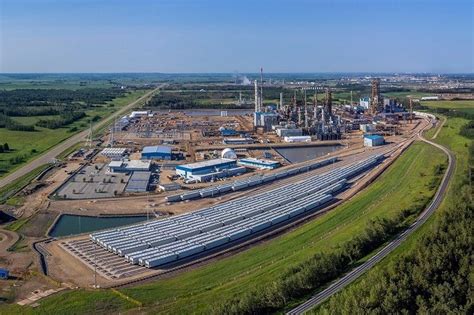
Alberta Petrochemicals Incentive Program (APIP): Equipment “Grants” for Alberta’s Energy Sector
If you searched “Alberta Petrochemicals Incentive Program equipment grants,” you’re probably trying to do one of two things:
- Build or expand a large petrochemical / hydrogen / fuel / fertilizer facility in Alberta, and you want to know how APIP helps pay for capital equipment, or
- Buy equipment for an energy business (service company, contractor, manufacturer) and you’re hoping APIP is a smaller, easier equipment grant.
Here’s the key reality upfront:
- APIP is real grant money (12% of eligible capital costs), but it’s designed for big, market-driven petrochemical manufacturing projects—minimum $50M capex. (Alberta.ca)
- It’s not a “buy a skid steer / vacuum truck / compressor and get reimbursed” program.
- And even for eligible projects, APIP is paid after the project is built and operational, so you still need a financing plan for the whole construction window. (Alberta.ca)
This guide breaks down what APIP covers, how “equipment” is treated inside eligible costs, how the application stages work, and how lenders underwrite APIP-supported capex—with practical funding structures Canadian operators actually use.
What APIP is (and what it isn’t)
ent rebate.
The Government of Alberta describes APIP as a program that provides grants to attract investment in new or expanded petrochemical facilities, with grants worth 12% of a project’s eligible capital costs paid after projects are operational. (Alberta.ca)
What APIP is:
- A grant program focused on new or expanded market-driven petrochemical facilities
- Built around manufacturing and processing capital expenditures (eligible capital costs) (Alberta.ca)
- Structured in stages (advance notification → qualification/grant agreement → payment) (Alberta.ca)
What APIP is not:
- A small-business equipment grant for day-to-day energy contractors
- A program that pays you at purchase order time
- A replacement for proper project financing and lender due diligence
If your “equipment” is plant-scale process equipment (reactors, compressors, separation units, storage, utilities, controls), APIP may be relevant. If your “equipment” is fleet, tools, and field assets, you’ll likely look at other incentives plus equipment leasing and structured finance (we cover both below).
Who qualifies for APIP (the eligibility screen that saves you months)
Key point: APIP is gated by project type and scale—if you miss one requirement, the rest doesn’t matter.
On Alberta’s program page, eligible projects must meet criteria including:
- Located in Alberta
- Minimum $50 million capital investment
- Facility must use natural gas / natural gas liquids / petrochemical intermediaries as feedstock (examples listed)
- Must create permanent jobs in Alberta (Alberta.ca)
APIP also notes that new facilities, brownfields, and expansions can qualify. (Alberta.ca)
Plain-English takeaway: If you’re under $50M capex, APIP probably isn’t your tool. If you’re over $50M but you’re not a manufacturing/processing facility using eligible feedstock, APIP likely isn’t your tool.
“Equipment grants” under APIP: what counts as eligible equipment spend?
Key point: APIP doesn’t reimburse “everything you buy”—it targets manufacturing and processing capex.
Alberta’s APIP page is explicit that not all capital costs are eligible, and that eligible costs are related to manufacturing and processing capital expenditures. (Alberta.ca)
A public APIP fact sheet also frames it as a reimbursement of 12% of eligible capital costs, paid once the facility is operational. (Edmonton Global)
So how do you think about “equipment” in the APIP context?
A practical way to bucket equipment for eligibility conversations
Use this underwriter-style split:
- Core process equipment (usually strongest story): equipment that directly manufactures/processes the output (primary units, separation, conversion, utilities integral to production).
- Supporting plant infrastructure (often eligible, but needs careful framing): instrumentation/control systems, electrical, tie-ins, safety systems, and in-plant handling that’s integral to the process.
- Site/land/civil/indirects (mixed): some may be necessary but not always treated the same way as manufacturing/processing equipment.
- Non-plant assets (usually not the point of APIP): fleet vehicles, general office equipment, standard IT, and “nice-to-haves.”
How to use this: When you build your APIP budget narrative, you want your cost estimate to read like a plant-capex story, not a shopping list.
How the APIP application actually works (and why the stages matter to financing)
Key point: APIP is staged, and the stage you’re in changes how lenders treat the “grant” in your funding plan.
Alberta’s APIP page breaks the process into three stages:
- Stage 1: Advance Notification (high-level eligibility + estimate of grant funding)
- Stage 2: Qualification and Grant Agreement (more detailed business plan, timing, technology configuration, capability, economic and environmental performance; requires at least a Class 3 capital cost estimate)
- Stage 3: Payment and Reporting (payment schedule depends on project size) (Alberta.ca)
It also notes that Stage 1 is open and Stage 2 opens by invitation for qualification. (Alberta.ca)
The payment schedule (what your CFO cares about)
APIP ties payment timing to project size:
- $50M–$150M projects: must be completed and operational within 5 years of application opening (Oct 30, 2020) and will receive grant funds within one year of completion.
- >$150M projects: must be completed and operational within 10 years, and grant payments are made in equal instalments over 3 years. (Alberta.ca)
Financing implication: APIP is not “construction cash.” It’s post-completion cash, and lenders will model it that way unless the grant agreement is firm and assignable (and even then, usually discounted).
The big misconception: “We have a grant, so financing will be easy”
Key point: A grant improves project economics, but it doesn’t automatically reduce lender risk.
From a credit/risk standpoint, lenders still ask:
- Will the project finish on time and on budget?
- Will it operate reliably at expected output and margin?
- What happens if commodity spreads compress or demand shifts?
- Who eats cost overruns?
APIP itself notes that if capital costs rise during construction, the grant size is not increased, and if the project comes in under budget, the grant decreases proportionally. (Alberta.ca)
That single line is a lender’s way of saying: don’t fund overruns assuming APIP will cover it.
Underwriter lens: how lenders evaluate APIP-supported capex (5Cs + “credit brain”)
Key point: APIP helps the “conditions” and “capital” story, but approvals still hinge on capacity, collateral, and execution.
Here’s the 5Cs framing lenders use (in plain language):
Character
- Sponsor track record (delivering large industrial projects)
- Governance (reporting discipline, controls, safety culture)
- Vendor and contractor credibility
Capacity
- Projected cash flow at conservative throughput and pricing
- Sensitivities: feedstock cost, offtake pricing, downtime, ramp-up curve
- Debt service coverage during steady-state and ramp-up
Capital
- Equity contribution and contingency buffer
- Cost overrun plan (who funds it?)
- Liquidity plan during construction
Collateral
- Asset marketability (specialized plant equipment is often poor “secondary market” collateral)
- Security package and step-in rights
- Insurance coverages, construction risk protections
Conditions
- Market demand and offtake agreements
- Regulatory environment
- Incentives like APIP (helpful, but not the whole story)
Contrarian but fair take: For APIP-scale projects, “collateral” is often the weakest part of the deal. The equipment may be expensive, but it can be highly specialized and hard to liquidate. That’s why lenders focus obsessively on execution and contracted cash flow, not just asset value.
Financing the gap: what to do while you wait for APIP money
Key point: You typically finance 100% of construction and then treat APIP as a future cash inflow (sometimes used to de-lever or refinance).
Below is a practical “stack” framework. (This is general education, not a commitment of terms.)
Where Mehmi fits (leasing-first + structured support)
For many energy-sector operators—not just mega-project sponsors—the practical work is: get the equipment funded without suffocating cash flow while you pursue incentives and contracts.
If you want the clearest starting point on structure, see our Equipment Leasing Canada guide (terms, residuals, documentation, and what lenders actually check).
Internal link: How equipment leasing works in Canada (structures and tradeoffs)
And if your project has a long cash conversion cycle (big receivables, milestone billing), you’ll want to understand borrowing base logic:
Internal link: Asset-based lending (ABL) in Canada for industrial operators
How to make your APIP application “financeable” (what lenders want to see in your grant package)
Key point: The best APIP submissions are written like an investment memo, not a marketing deck.
APIP Stage 2 requires items like business plan, project timing, technology configuration, capability, economic benefits, and environmental performance, plus a Class 3 capital cost estimate. (Alberta.ca)
Those same items are exactly what lenders use to underwrite.
Here’s a lender-aligned checklist you can use:
Canada-specific “gotcha” most teams miss: Incentive dollars and lender dollars often come with different definitions of “complete and operational.” Build a shared milestone dictionary early, or you’ll end up with a project that is technically producing but not yet considered “operational” for payment timing. APIP itself points to criteria for when a project is considered complete and operational. (Alberta.ca)
Conditions precedent and covenants: the real-world guardrails you’ll live with
Key point: Big capex funding doesn’t fail at approval—it fails when conditions aren’t satisfied on schedule.
Typical conditions precedent (CPs) lenders impose before first draw:
- Executed EPC contracts and budgets
- Insurance binders and endorsements
- Permitting pathway
- Equity funded first (or staged)
- Security registrations complete
- Evidence of APIP stage/status (and grant agreement, if applicable)
Typical covenants/monitoring during construction and ramp-up:
- Monthly budget-to-actual reporting
- Change order thresholds and approvals
- Minimum liquidity covenants
- Commissioning reporting and performance tests
- Limits on additional debt and distributions
If you’re an operator (not a mega-project) pursuing equipment-heavy growth in the energy supply chain, you’ll see a similar pattern on a smaller scale—especially if you use ABL or project-based revolving facilities.
Internal link: Working capital loans in Canada (when they’re safer than “stretching payables”)
Internal link: Business line of credit in Canada: best use cases + approval logic
“If APIP isn’t for my equipment, what is?” Other incentives energy operators should know
Key point: Many energy-sector “equipment grant” searches are really about emissions, clean fuels, and industrial upgrades—not petrochemical facility grants.
Here are three programs that commonly come up alongside APIP, depending on your project type:
Alberta Carbon Capture Incentive Program (ACCIP)
Alberta’s ACCIP is designed to support CCUS projects and provides a grant of 12% for new eligible CCUS capital costs, paid in installments over time after operations begin (similar mechanics to APIP). (Alberta.ca)
This is relevant when your “equipment” is CCUS infrastructure (capture, compression, transport, storage).
Emissions Reduction Alberta (ERA) funding
ERA states it supports Alberta prosperity while reducing emissions through technology projects and infrastructure upgrades for industrial and manufacturing facilities. (Emissions Reduction Alberta)
This is often the closest fit when you’re upgrading industrial systems for efficiency, emissions reduction, or innovation.
Natural Resources Canada – Clean Fuels Fund
NRCan describes the Clean Fuels Fund as aiming to de-risk capital investment required to build new or expand existing clean fuel production facilities. (Natural Resources Canada)
This is facility-scale and competitive, but it’s a real path when you’re building clean fuel capacity.
Practical move: Treat incentives as one column in your capital plan, not the plan itself. You still need base-case financing that works without the incentive—and then you use incentives to improve ROI and delever faster.
Leasing-first: how most energy SMEs actually fund equipment while pursuing incentives and contracts
Key point: For contractors and mid-market operators, the fastest way to protect cash flow is usually a properly structured lease—not waiting for a program that doesn’t fit your spend.
A lease can help because it’s configurable:
- term that matches utilization
- residual that reduces monthly payment pressure
- documentation that can be faster than bespoke project debt for smaller tickets
If you want to compare offers cleanly (rate vs fees vs structure), use:
Internal link: Equipment financing cost calculator (Canada): compare offers apples-to-apples
And if you already own equipment and want to free cash for a build, a bid bond, or a turnaround, consider:
Internal link: Sale-leaseback in Canada: unlock cash from equipment you already own
For energy-adjacent heavy iron (earthmoving, site services, plant maintenance), these are also useful:
Internal link: Heavy equipment financing in Canada (how lenders value used iron)
Internal link: Construction equipment leasing Canada (docs, down payments, and approval traps)
Anonymous case study: “We thought APIP would fund our equipment—here’s what actually worked”
Business: Alberta-based industrial services company supporting a petrochemical expansion (mid-market, not the project sponsor)
Need: $2.1M equipment package (specialty trailers + tooling + plant maintenance equipment) to win and execute a multi-year services contract
Problem: They heard “APIP equipment grant” and assumed their purchases would be reimbursed.
What we clarified (fast)
- APIP is aimed at facility-scale petrochemical projects (min $50M) and pays after the facility is operational—it wasn’t a direct equipment grant for the service contractor. (Alberta.ca)
- Their real issue wasn’t “grant money.” It was cash flow timing: mobilization costs hit now; invoices pay later.
The solution (leasing-first + liquidity protection)
- Structured the equipment as a lease to preserve cash, sized payments to match the contract’s billing rhythm.
- Added a working capital layer to cover mobilization, travel, and payroll volatility.
Underwriter logic (why it got approved)
- Capacity: contract-backed cash flow story with conservative assumptions
- Capital: preserved liquidity buffer instead of over-down-paying
- Conditions: equipment was essential to perform, not speculative growth
Outcome: They executed the contract without maxing their operating line, and they didn’t waste months chasing a program that wasn’t designed for their spend. Mehmi’s role was to make the funding match the operating reality—fast, clean, and credit-logic-first.
Calm CTA
If you’re building an APIP-eligible project, or you’re an Alberta energy operator buying equipment to support industrial growth, Mehmi can help you map a financeable capex plan (lease-first where it makes sense) and avoid the most common trap: designing your cash flow around incentive timing instead of operational reality.
Authoritative references
- Innovation, Science and Economic Development Canada — Canada Small Business Financing Program:
The Canada Small Business Financing Program makes it easier for small businesses to get loans from financial institutions by sharing the risk with lenders.
Program eligibility, lender criteria, tax treatment, and product terms can change. Verify current official guidance and the final financing documents before making a decision.
FAQ (Canada-specific)
1) Is APIP an equipment grant for any energy company in Alberta?
Not generally. APIP is designed for new or expanded petrochemical facilities and has a $50M minimum capital investment threshold, with eligibility tied to feedstock use and job creation. (Alberta.ca)
2) How much does APIP pay?
APIP provides grants worth 12% of eligible capital costs, issued after projects are operational. (Alberta.ca)
3) When do you get paid under APIP?
Payment timing depends on project size. Alberta notes that $50M–$150M projects receive grant funds within one year of completion, while larger projects are paid in equal instalments over three years (after completion and operational criteria). (Alberta.ca)
4) Does having APIP make lenders approve the project automatically?
No. Lenders still underwrite execution, cash flow, contracts, and risk controls. APIP can improve project economics, but it doesn’t remove construction and ramp-up risk—especially because grant amounts don’t increase if costs rise. (Alberta.ca)
5) What if my “equipment” is emissions-reduction or clean fuels infrastructure?
You may also want to explore other programs. Alberta’s ACCIP supports eligible CCUS capital costs with a grant structure similar to APIP. (Alberta.ca)
ERA also funds emissions-reducing technology and industrial infrastructure upgrades through its funding streams. (Emissions Reduction Alberta)
6) What’s the fastest way for an energy SME to fund equipment while pursuing incentives?
Usually: a well-structured equipment lease plus a liquidity plan (LOC/working capital/ABL depending on your receivables). Start with equipment leasing basics and then compare your true cost using a full-offer calculator.
Internal link: Equipment Leasing Canada
Internal link: Equipment financing cost calculator guide
Source perspective
BDC’s equipment-financing guide emphasizes the complete financing structure when comparing offers.
“Don’t focus only on interest rates”
For the equipment decision discussed here, compare the amount financed, payment schedule, collateral and remaining obligations alongside the quoted rate.