Home / Equipment financing by city
Local equipment financing
Equipment Financing Mississauga
Quick answer: Mississauga businesses can request commercial equipment financing for new or used forklifts, material-handling systems and delivery vehicles. Mehmi Financial Group helps compare equipment loans, leasing and, where suitable, refinancing with lenders serving eligible Ontario businesses. Underwriting typically considers itemized supplier pricing, asset condition, cash-flow evidence and a business profile. Terms and availability depend on the borrower, asset, lender and transaction; service can be arranged remotely.
Compare equipment loans, equipment leasing and equipment refinancing before submitting a quotation.
For the address, contact details and meeting information, visit our Mississauga office page. Explore heavy equipment financing, construction equipment financing and truck and trailer financing.

Equipment Financing Mississauga: Complete Leasing Guide for Local Businesses
Equipment financing Mississauga business owners can use confidently starts with a practical question: will the equipment create enough cash flow to justify the payment without starving the business of working capital In Mississauga, that question matters because the city has a dense mix of manufacturing, logistics, life sciences, food, service, construction, healthcare and professional businesses that rely on equipment every day.
The best starting point is usually leasing. A lease-first structure can help you acquire revenue-producing equipment, preserve cash, manage GST/HST timing, and match payments to the equipment’s earning life instead of draining capital on day one.
How to compare equipment financing in Mississauga
When buying or refinancing business assets in Mississauga, compare the structure and total ownership cost, not just the monthly payment. Availability and terms depend on equipment, business credit, cash flow and individual lenders.
| Equipment funding need | Option to compare | What to verify |
|---|---|---|
| Purchasing eligible manufacturing machinery | Equipment loan or conditional sale | Equipment value, term, interest calculation, down payment, collateral, title and early-payout terms. |
| Using equipment while managing initial cash outlay | Equipment lease | Payment schedule, deposits, insurance, end-of-term purchase options, return conditions and total cost. |
| Purchasing from a used-equipment dealer or private seller | Used-equipment financing | Asset age, hours or mileage, inspection, seller verification, lien search and any lender limits. |
| Unlocking equity in owned machinery or vehicles | Equipment refinancing or sale-leaseback | Appraised value, current liens, payout amounts, advance against value, fees and continuing use of the asset. |
| Buying multiple assets or upgrading in stages | Equipment financing facility or separate leases | Each asset's eligibility, draw timing, security, documentation, amortization and combined payment burden. |
Next step: Compare equipment loans, leases and refinancing before requesting indicative terms. Examples above are educational, not offers or approvals.
What equipment financing in Mississauga really means
Equipment financing in Mississauga means structuring a business lease around the equipment, the borrower, the cash flow and the lender’s risk. It is not just about finding a monthly payment that looks affordable on a quote.
For most small and mid-sized businesses, the real goal is to keep the equipment productive while protecting payroll, supplier payments, GST/HST remittances, insurance, rent and operating cash. A smart lease structure should answer four questions:
Will this equipment generate revenue, reduce cost, reduce downtime or protect an existing contract
Does the payment fit in a normal month, not just a strong month
Does the term match the realistic useful life of the equipment
Does the lender understand the business reason for the purchase
Mississauga is a serious equipment market. The City’s economic development materials describe key sectors including advanced manufacturing, financial services, technology, life sciences and smart logistics, and the City’s 2025 employment report estimated 513,700 employees across approximately 23,700 businesses. It also identified manufacturing, transportation and retail trade as top employment sectors with a combined 173,300 employees.
For a national foundation before you compare local options, read Mehmi’s guide to equipment leasing in Canada.
Why Mississauga changes the financing advice
Mississauga is not a generic suburb. Local airport access, highway exposure, industrial employment areas, transit construction and zoning rules can all affect what equipment makes sense and how a lender reads the file.
A warehouse near Pearson has different equipment logic than a medical clinic near Hurontario, a fabrication shop near Dixie, a contractor serving Port Credit and Oakville, or a food processor near an industrial park. The asset, job location, storage needs and delivery constraints can change the best lease structure.
Toronto Pearson’s official cargo services page notes more than 240 truck loading doors, 1.2 million square feet of on-airport warehouse space, capacity to process 1 million metric tonnes of cargo annually, dedicated cargo apron space and 24/7 customs clearance. That is a major reason why Mississauga equipment financing often involves logistics, warehousing, refrigeration, material handling and shop-support assets.
Metrolinx describes the Hazel McCallion Line as an 18-kilometre transit line with 19 stops, connecting to GO Transit, the Mississauga Transitway, Brampton Transit, ZUM and MiWay. For operators near Hurontario, Square One, Port Credit or QEW corridors, project timing and access can affect mobilization and delivery planning.
One local gotcha: Mississauga’s zoning by-law materials include restrictions on commercial motor vehicle parking or storage in residential zones, including limits based on registered gross weight, vehicle weight, length and height. That matters if a home-based contractor plans to finance a larger commercial vehicle, trailer or equipment package and store it at home.
What types of equipment can be financed
Most revenue-producing business equipment can be considered if it is identifiable, insurable, reasonably priced and connected to a real business purpose. Lenders become more comfortable when the asset has a clear use, a clear seller, a clear value and a clear repayment story.
Common Mississauga equipment categories include:
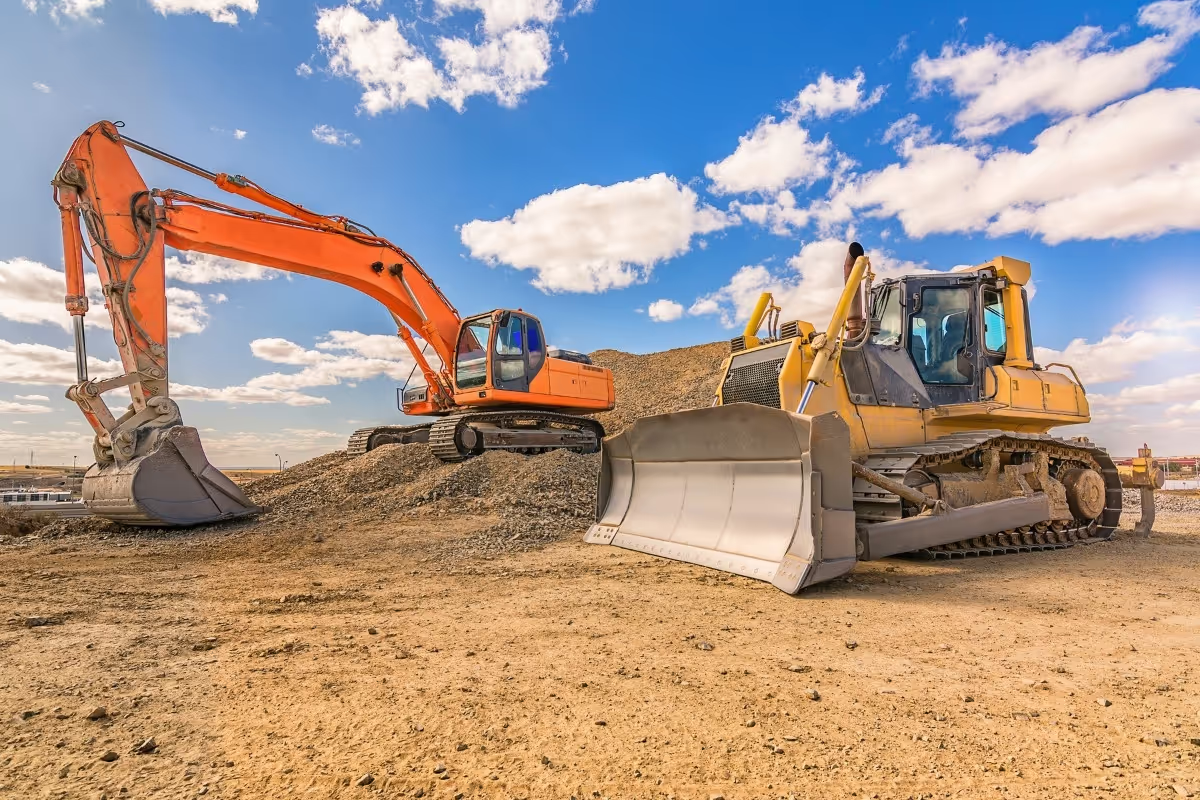
Construction and trades equipment: compact loaders, excavators, lifts, compressors, generators, attachments, concrete tools, diagnostic tools, HVAC equipment, plumbing equipment and shop vehicles.
Manufacturing and industrial equipment: CNC machines, welders, presses, conveyors, packaging machines, robotics, inspection equipment, compressors, dust collection, forklifts and racking.
Logistics and warehouse equipment: forklifts, pallet wrappers, dock levelers, racking, scanners, refrigeration, battery systems, lift gates, warehouse management hardware and safety equipment.
Medical, dental and professional equipment: chairs, imaging systems, sterilization equipment, diagnostic tools, practice technology and fit-out equipment.
Food, retail and service equipment: ovens, refrigeration, commercial laundry, POS hardware, display systems, security systems, cleaning machines and signage.
Technology equipment: servers, network hardware, security systems, IT infrastructure, phones, scanners and bundled installation.
Used equipment can also be financed, but the file needs stronger verification. Lenders may ask for serial numbers, photos, lien searches, inspection details, seller information and proof that the price is reasonable. If you are buying used equipment, read Mehmi’s guide to used equipment financing in Canada before sending a deposit.
Lease structures Mississauga businesses should compare
The best lease structure depends on how long the equipment will earn, how specialized it is, whether you want to own it at the end, and whether your revenue is steady or seasonal. A low monthly payment can still be a bad deal if the term, buyout, fees or flexibility do not fit the business.
Common structures include:
Lease-to-own: Best when you expect to keep the equipment long term and the asset will remain useful after the lease ends.
Fair market value option: Useful when you want potential payment efficiency and flexibility to return, renew or purchase at the end.
Seasonal payments: Helpful for landscaping, construction, snow, tourism, event, agricultural and seasonal service businesses.
Step payments: Useful when equipment has an installation period, ramp-up period or delayed contract start date.
Bundle financing: Combines equipment, delivery, installation, software, training, attachments and setup costs into one structure when the lender accepts the full package.
Sale-leaseback: Lets a business use equity in owned equipment to unlock working capital while keeping the asset in operation.
My honest take: the “best rate” is not always the best approval. If one offer has a slightly lower payment but weak buyout terms, heavy upfront fees, no room for soft costs, or a structure that strains cash flow in the first 90 days, it may be the weaker deal.
To compare numbers before committing, use Mehmi’s equipment financing cost calculator for Canada. For market context, review average equipment financing rates in Canada.
How lenders underwrite equipment financing in Mississauga
Lenders are not only asking whether the equipment is useful. They are asking whether the business can keep paying if a customer pays late, a project is delayed, freight costs rise, the machine needs repairs, or a slower month hits.
Most credit teams think through the 5Cs: character, capacity, capital, collateral and conditions. A credit-risk assessment reference describes 5C analysis as a borrower-creditworthiness framework covering the borrower’s character, repayment capacity, capital at risk, collateral and business or loan conditions.
In plain language:
Character: Does the owner pay obligations on time Are there unexplained delinquencies, collections, NSFs, unpaid taxes or broken payment promises
Capacity: Can the business afford the lease payment after payroll, rent, suppliers, insurance, fuel, repairs, existing obligations and GST/HST
Capital: Is the owner contributing cash or keeping enough cash in the company A down payment is not always needed, but it can help if the asset is used, specialized, older or large relative to revenue.
Collateral: Can the lender identify, insure, register, recover and resell the equipment if the file fails Equipment leasing training materials note that collateral matters because many lessors look to the equipment itself in default, and assets with stronger resale value are more attractive than assets that do not hold value well.
Conditions: What is happening in the business, industry, asset type, purpose, term length and broader economy
As of May 2026, interest-rate context still matters. On April 29, 2026, the Bank of Canada held its target for the overnight rate at 2.25%, with the Bank Rate at 2.5% and the deposit rate at 2.20%. That does not directly set your lease price, but it influences lender funding costs and how carefully lenders test affordability.
Behind the scenes, lenders also think in risk components: probability of default, exposure at default and loss given default. That means: how likely is the borrower to miss payments, how much would still be owing, and how much could the lender lose after recovering the equipment
This is why a $55,000 forklift for an established warehouse with steady deposits can feel easier to approve than a $210,000 highly customized production line for a newer company with uneven revenue. Both may be good business decisions, but they create different risk shapes.
What documents you should prepare before applying
A clean package helps the lender say yes faster. Missing documents create uncertainty, and uncertainty usually means more conditions, more down payment, a shorter term or a slower approval.
Prepare:
Business legal name and operating name.
Owner information and signing authority.
Equipment quote, invoice or purchase agreement.
Year, make, model, serial number and photos for used equipment.
Vendor legal name and contact details.
Three to six months of business bank statements.
Recent financial statements or tax returns, especially for larger transactions.
Proof of contracts, purchase orders or job pipeline if the equipment supports growth.
Details of existing leases, financing obligations and CRA balances.
Proof of insurance or broker contact.
Proof of down payment, if required.
Void cheque or PAD form when moving toward funding.
Internal credit guidelines for equipment files commonly ask for a dated credit application, equipment specs or vendor quote, corporate profile where possible, vendor legal name, brief summary of activity sector and reason for financing, and lease structure details. For larger, weaker-credit, older-asset or refinancing files, they often call for more bank statements, financials, photos, registration details, buyout information or proof of payment.
For a more complete preparation list, use Mehmi’s equipment financing checklist before applying and equipment financing approval documents in Canada.
Conditions precedent, covenants and monitoring
Approval is not funding. A lender may approve the transaction but still require specific items before money is released.
These pre-funding items are called conditions precedent. Commercial lending materials describe conditions precedent as requirements a business must meet before funds are lent, and covenants as clauses that help the lender monitor performance after funding.
For equipment financing, conditions precedent may include:
Final invoice.
Proof of insurance with lender/loss payee wording.
Serial number confirmation.
Down payment confirmation.
Corporate signing documents.
PPSA registration.
Vendor verification.
Updated bank statements.
Lien search or lien discharge for used equipment.
Inspection, photos or appraisal for older or specialized assets.
After funding, monitoring is usually simple for smaller leases: make payments, keep insurance active, keep the equipment in the business, do not sell it without permission, and communicate if something changes.
For larger equipment packages, monitoring may include annual financials, limits on unauthorized asset sales, reporting obligations, ownership-change notice, or minimum insurance requirements.
The warning signs lenders notice before a missed payment are usually patterns: repeated NSFs, cancelled insurance, deposit declines, unpaid taxes, supplier pressure, silence after requests, or attempts to move or sell financed equipment without consent.
GST/HST, tax and Ontario-specific gotchas
Canadian equipment financing has tax and cash-flow details that a generic article often misses. GST/HST, input tax credits, CCA, lease expense treatment and PPSA registration can all change how a deal feels after funding.
CRA explains that GST/HST registrants can generally claim input tax credits for the GST/HST paid on eligible expenses used only in commercial activities, subject to eligibility and documentation rules.
The practical issue is timing. If tax is paid upfront but recovered later, the business may still feel cash pressure today. If tax is paid over lease payments, cash flow may be smoother, but the accounting treatment should be reviewed with a CPA.
Ontario borrowers should also understand PPSA registration. This is normal in secured equipment financing. It lets the lender register its security interest in the financed asset. It does not mean the borrower is in trouble; it means the lender is documenting collateral properly.
For Canadian tax context, read Mehmi’s guides to GST/HST on equipment leases in Canada and GST/HST input tax credits on financed equipment. Speak with your accountant before choosing a structure mainly for tax reasons.
How to improve approval odds in Mississauga
A strong application does not just show that the business wants equipment. It proves why the equipment is needed, how it will be used, and how the payment will be made.
Use this lender-style checklist before applying:
Bad credit does not automatically kill a file, but it changes the structure. A borrower with bruised credit may need stronger bank statements, a down payment, a shorter term, better collateral, a co-applicant, or proof of contracts. Read Mehmi’s guide to bad-credit equipment financing before applying.
Common mistakes that slow or break approvals
Most approval problems are avoidable. They usually come from weak preparation, unrealistic structure or a mismatch between the equipment and the business.
Avoid these mistakes:
Applying with only a quote screenshot.
Ignoring GST/HST when calculating affordability.
Buying used equipment before confirming liens and serial numbers.
Assuming zero down is realistic for every used or specialized asset.
Choosing the longest term only to lower the payment.
Financing equipment before confirming zoning, parking, installation or power requirements.
Using personal statements when business deposits run elsewhere.
Hiding CRA balances, NSFs or existing payment obligations.
Comparing offers only by rate instead of total structure.
Paying a deposit before understanding approval conditions.
A smart operator does the opposite. They show the equipment, the seller, the business purpose, the repayment source, the fallback plan and the documents upfront.
Anonymous Illustrative Scenario: Mississauga warehouse equipment approval
Illustrative example only; not a statement of a specific funded client transaction.
The payoff from good structuring is simple: the lender can approve a stronger version of the same request when the file explains repayment and recovery clearly.
A Mississauga warehouse and light assembly business needed a $168,000 package: two used forklifts, racking, dock safety equipment, scanners and installation. The business had strong customer demand, but the first request was messy. The owner wanted full financing, the seller quote separated equipment from installation, and the bank statements showed a few large supplier payments that made cash flow look uneven.
The first concern was not whether the equipment was useful. It was the risk stack: used assets, installation costs, multiple vendors, no down payment, and uneven deposits.
The file improved after restructuring.
The owner provided six months of business bank statements, customer purchase orders, a combined equipment schedule, forklift photos, serial numbers, vendor legal names, proof of insurance, and a short explanation that the equipment would increase staging capacity and reduce third-party storage costs. The borrower also agreed to a 10% down payment and separated the highest-risk soft costs from the main equipment schedule.
Under the 5Cs, the file became cleaner:
Character: no missed lease payments and clear explanation of cash-flow timing.
Capacity: deposits supported the payment under a conservative monthly test.
Capital: 10% down reduced lender exposure and showed commitment.
Collateral: forklifts and racking had identifiable value and practical resale use.
Conditions: the equipment supported existing customer demand, not speculative growth.
The approval worked because the borrower changed the conversation from “Can I finance everything?” to “How do we make repayment, collateral and business purpose obvious?”
If you are buying from a non-dealer seller, read Mehmi’s guide to private-sale equipment financing in Canada. If you already own equipment and need to unlock working capital, compare that with sale-leaseback tax implications in Canada.
When to work with Mehmi
A good broker does more than submit an application. The real value is structuring the transaction so the lender understands the asset, borrower, repayment source, collateral and conditions.
Mehmi can help Mississauga businesses compare lease structures, organize documents, review used-equipment details, handle private-sale complexity, and decide whether a standard lease, seasonal structure, bundled equipment package or sale-leaseback is the better path.
A calm next step: send the quote, seller details, business name, equipment purpose and recent bank statements before you commit to the purchase. A practical structure review can prevent the expensive mistake of buying equipment first and trying to fix the financing later.
For broader provincial context, read Mehmi’s guide to equipment financing in Ontario. If your purchase is heavily logistics-related, also review material handling equipment financing in Canada.
Related resource: Browse our equipment financing by city directory for more local financing guides.
Related equipment-financing guides for Mississauga businesses
Businesses reviewing warehousing and commercial trucks can compare financing requirements by asset and by market before submitting a file. These resources add context without implying a local branch, an approved rate or a funded transaction.
- Brampton equipment financing guideCompare local operating needs and equipment types in the Brampton market.
- Milton equipment financing guideCompare local operating needs and equipment types in the Milton market.
- Oakville equipment financing guideCompare local operating needs and equipment types in the Oakville market.
- equipment loan structuresCompare ownership, repayments and collateral requirements in a commercial equipment loan.
- equipment leasing optionsReview lease types, buyouts and end-of-term obligations.
- commercial truck and trailer financingReview vehicle age, kilometres, insurance and transportation underwriting.
To compare a written proposal, review the total amount financed, payment timing, lender fees, up-front contribution, ownership provisions and all conditions, not only the monthly payment.
Mississauga equipment financing: a practical purchase decision
For businesses in warehousing, distribution and manufacturing, the correct structure depends on expected use, ownership preference and the full cost of putting the asset to work. For warehouse equipment, include batteries, chargers, racking compatibility, installation and training in the proposed project budget. Ask for comparable proposals showing upfront cash, fees, collateral or guarantee requirements, payment schedule and any end-of-term obligations. No rate, advance amount or approval is assured before lender review.
Equipment dealers serving Mississauga customers can also explore a B2B vendor financing program that adds a third-party financing route to the sales process.
How it works
3 Steps. No Surprises.
The Mehmi Financial Group experience is simple, quick, and customized to your financial needs.
1
Find the Equipment you need
Whether it be an individual's private sale or equipment listed by a dealer, there are numerous options available.
Browse Used Trucks2
Get In Touch
Share your equipment quote, business location, operating history and financing amount. We help organize the information a lender needs to evaluate your request.
3
Review Your Financing Options
Explore flexible financing options, subject to lender approval and completion of required conditions.
Equipment Financing FAQs for Mississauga Businesses
What types of business equipment may qualify in Mississauga?
Businesses can request a lender review for eligible forklifts, delivery fleets and warehouse automation. The equipment's commercial use, seller, age, condition and borrowing entity help determine available financing structures.
Can a Mississauga warehouse finance electric forklifts and batteries?
A proposal may include eligible forklifts plus certain batteries, chargers or related equipment when the supplier provides itemized pricing. Financing for accessories, infrastructure or installation depends on the lender's program and review.
What documents are commonly requested for a Mississauga equipment-financing application?
Prepare a written seller quote, equipment details, business registration, bank statements, available financials, existing debt information and a description of how the asset will be used. The lender may request additional information.
Is leasing better than an equipment loan?
Not always. Compare who owns the asset, cash required upfront, all scheduled payments, security, maintenance obligations and end-of-term options. An equipment loan and an equipment lease have different contractual effects.
What down payment or interest rate can a Mississauga business expect?
There is no single published down payment or rate that applies to every applicant. Lenders assess the asset, term, financial performance, credit, security and transaction structure. Request a written breakdown of all costs before accepting an offer.
Does Mehmi have to meet the client at a Mississauga branch?
No physical local branch is required for an initial inquiry. Eligible applications can be discussed remotely; lender verification or inspection requirements depend on the transaction. We do not represent that an office exists in every city served.
Can a Mississauga equipment supplier refer customer financing?
Equipment dealers and distributors can explore third-party vendor financing or a co-branded application path. A referred business remains subject to lender eligibility and underwriting; no approval or funding timeline is guaranteed.